Tag Magnetic Particles and Penetrant Testing

Operation and END: a strategic partnership in Quality Control

In an industrial setting, Quality Control is responsible for ensuring that products and processes meet established technical, regulatory, and contractual requirements.

Non-Destructive Testing (END) is an integral part of this Quality Control system. It consists of technical tools used to verify the integrity of materials and components without compromising their future use.

However, in many industrial environments, there is a disconnect between operations and the Quality or END departments.

On one side, those who execute.
On the other, those who inspect.

When this relationship is misunderstood, the perception arises that inspection exists only to point out flaws or interrupt the process. This view generates internal noise and weakens the quality culture.

Operation and END are not competitors. They operate at different stages of the same objective: ensuring the technical conformity and reliability of the final product .


The role of the operation in process integrity

Execution is the foundation of any industrial result.

It is the operational team that applies procedures, controls parameters, performs welding, assembly, and adjustments that determine the component’s performance.

Quality begins in the production process. When execution is consistent and aligned with technical requirements, inspection tends to confirm this conformity.

The operation, therefore, is not merely an executor; it is an active part of the quality control system.

The role of END in technical verification

Non-destructive testing serves to verify whether a product meets integrity criteria.

END does not create discontinuities.
It evaluates what is already present in the material or what is inherent to the manufacturing process.

When a relevant indication is identified, the objective is technical: to prevent an unsuitable condition from progressing in the process or reaching the customer.

Internal inspection reduces major risks, avoids external impacts, and preserves the integrity of the production system.

When conflict arises

Disagreements between operation and quality often arise when inspection is perceived as an obstacle to the pace of production.

However, a nonconformity identified internally represents an opportunity for controlled correction. Conversely, a failure detected externally can compromise contracts, schedules, reputation, and operational safety.

END acts as a validation step within the production flow, not as a barrier, but as a mechanism for technical verification.

When operations and END work as partners

Mature industrial environments exhibit clear characteristics:

  • The operational team understands the acceptance criteria applicable to the process;
  • The inspector understands the variables and limitations of the production process;
  • There is objective technical communication;
  • Adjustments are treated as process improvements, not as personal conflicts.

When integration exists:

✔ Rework decreases
✔ Process predictability increases
✔ Approval rate improves
✔ Trust between departments is strengthened

Inspection is now recognized as part of the quality workflow, and not as an impediment.

Quality culture: shared responsibility

Quality is not exclusive to the END sector.

It involves planning, execution, verification, and continuous improvement. When everyone understands their role within the system, the environment becomes more collaborative and technically consistent.

A strong quality culture reduces costs and improves performance indicators in a sustainable way.

Procedures and products as elements of stability

The partnership between operations and END also depends on a solid technical foundation:

  • clear and well-defined procedures;
  • objective acceptance criteria;
  • Standardization of inspection methods;
  • Reliable and consistent inspection products.

When parameters are clearly defined and the products used deliver consistent, specification-compliant performance, the process becomes more stable and technically reliable. Consistency in results strengthens trust between departments.


Operation and Non-Destructive Testing operate at different stages of the process, but share the same purpose: to ensure that the delivered product conforms to integrity requirements.

Overcoming the idea that the quality sector is merely a “pointer of errors” is essential to consolidating more mature, cooperative, and efficient industrial environments.

When execution and verification work in an integrated way, the result is a more stable, safe, and reliable production system.


Excellence in products for those seeking reliable results.

Metal-Chek provides complete solutions for Non-Destructive Testing, with products developed according to the main ASTM, ISO, ASME, NM and PETROBRAS standards, contributing to consistent and technically reliable inspections.

– Read more technical content about END on our blog
– Follow Metal-Chek on Instagram: @metalchek and on LinkedIn

Visual Protection

In non-destructive testing using Liquid Penetrant (LP) and fluorescent Magnetic Particle (MP) methods, the reliability of the inspection depends on a precise combination of factors: quality products, appropriate accessories, UV luminaires within technical specifications, and, most importantly, the correct visualization of the indications.

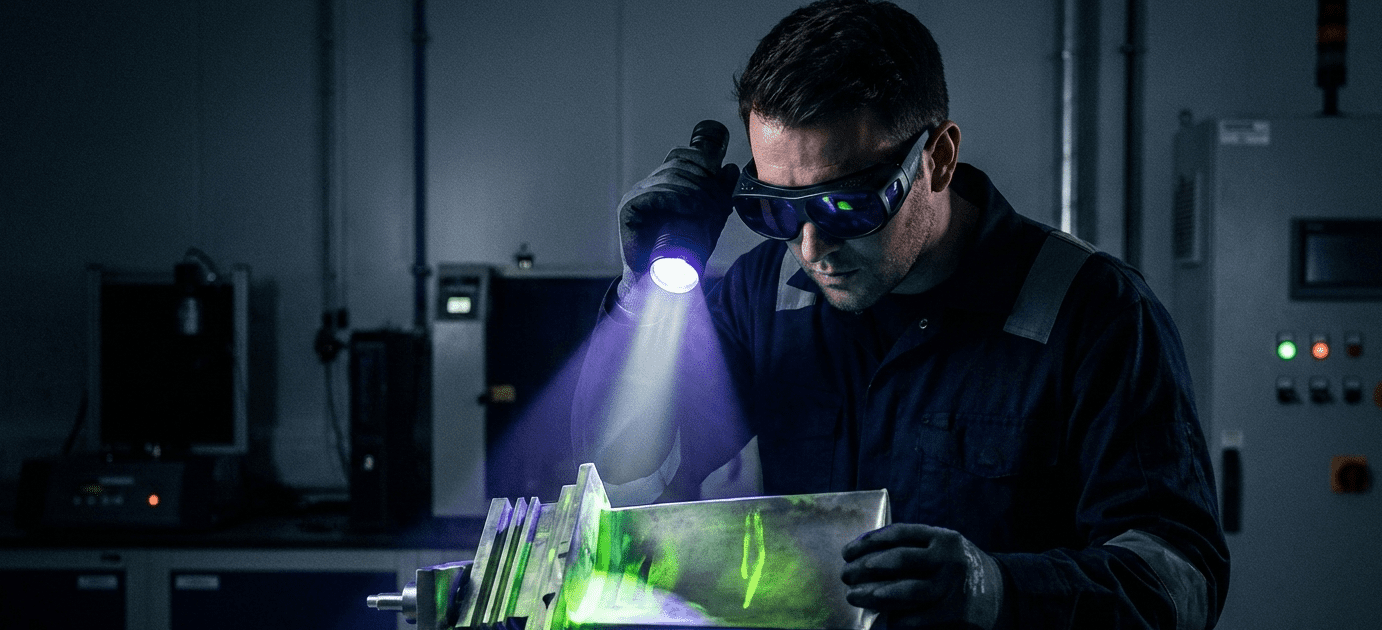
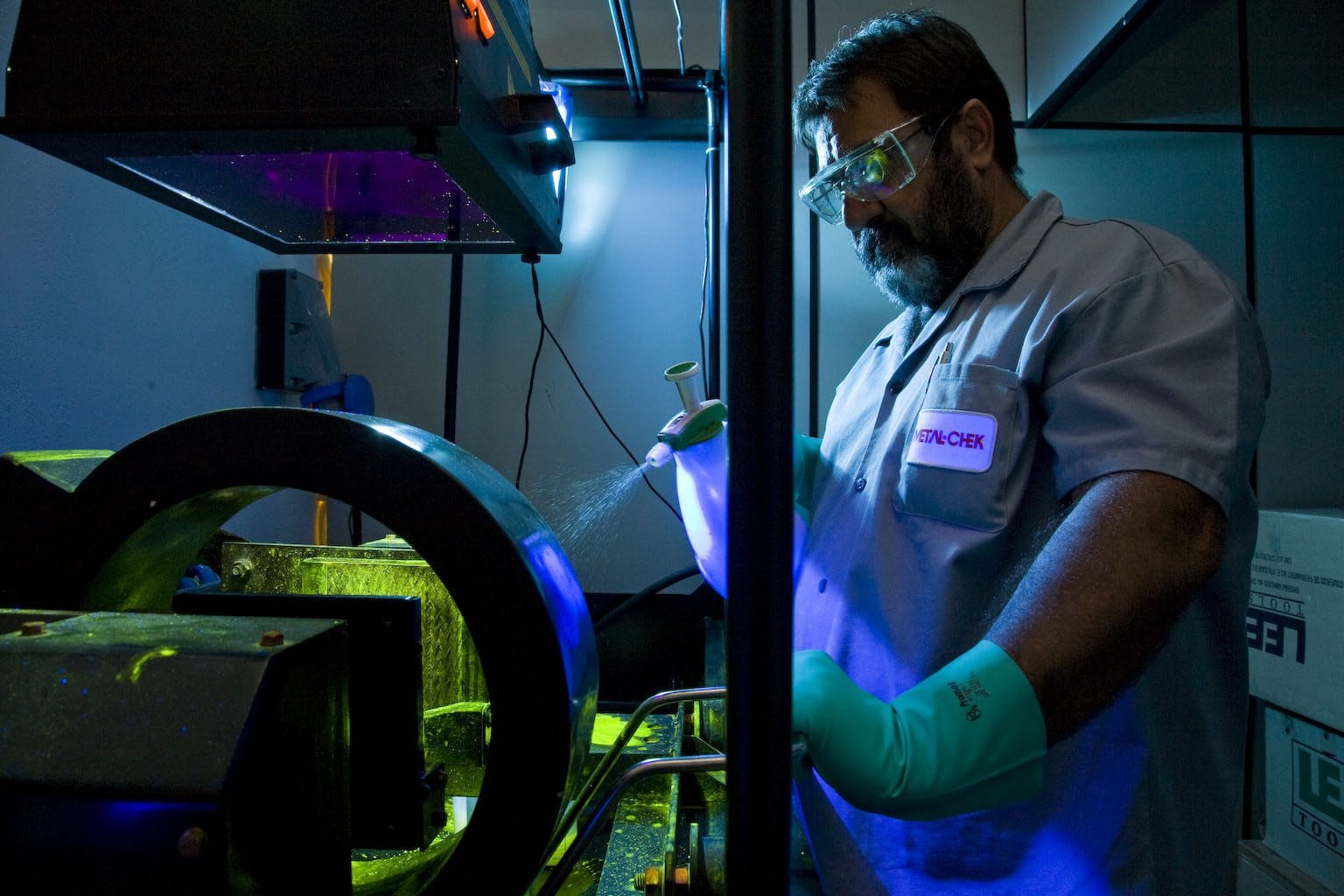
Within this context, one often underestimated aspect deserves special attention: the inspector’s eye protection. The use of glasses with an appropriate UV-A radiation filter is not only an occupational safety measure, but also a factor that directly impacts the quality of the interpretation of the results.


Fluorescence Assays and UV-A Radiation

Fluorescent END methods are based on the excitation of materials that emit visible light when exposed to type A ultraviolet (UV-A) radiation , generally with a wavelength around 365 nm .

However, continuous exposure to UV-A radiation requires strict control, both from the point of view of operator safety and the reliability of the inspection.


The Human Factor in Test Reliability

Even with:

  • highly sensitive penetrating fluorescent lenses,
  • fluorescent magnetic particles formulated according to technical standards,
  • Even with UV lamps at the minimum required intensity, the test may be compromised if the inspector is not using adequate eye protection .

Vision is the primary tool for interpretation in fluorescent END. Any factor that causes:

  • eye strain,
  • glare,
  • loss of contrast,
  • visual discomfort,

It directly impacts the ability to identify, evaluate, and classify indications.


Function of UV-A Filtering Glasses in LP and PM Tests

Safety glasses with specific UV-A filters play a fundamental technical role during fluorescent inspections. Their function goes beyond basic protection.

Key technical benefits:

  • Eye protection against prolonged exposure to UV-A radiation.
    Reduces risks associated with continuous exposure during inspection shifts.
  • Improved contrast of fluorescent indicators:
    The filter reduces light reflected from the surface and enhances the visualization of the fluorescent glow emitted by the penetrant or particles.
  • Reduced eye strain:
    Less eye effort results in more consistent and reliable inspections, especially in repetitive tasks.
  • Increased accuracy in interpretation:
    A clearer and more comfortable field of vision contributes to safer technical decisions.

In industrial environments, where residual lighting and reflections can interfere with inspection, this visual benefit is even more relevant.


Integration with Quality Products and Accessories

Metal-Chek develops solutions for fluorescent testing by considering the entire process, and not just the isolated chemical product.

For LP and PM fluorescent methods to achieve their maximum performance, integration between the following is essential:

  • Fluorescent penetrants and fluorescent magnetic particles developed in accordance with technical standards;
  • UV lamps with appropriate wavelength and intensity compatible with regulatory requirements;
  • Appropriate accessories , including safety glasses with UV-A filters compatible with the test’s operating range.

This systemic approach reduces misinterpretations, improves the repeatability of results, and reinforces a culture of quality in inspections.


Safety, Quality and Technical Responsibility

The use of UV-A protective eyewear should be understood as an integral part of good practices in fluorescent testing , aligned with safety guidelines and END reliability requirements.


Conclusion

Reliable fluorescent testing depends not only on high-performance products and equipment, but also on the human factor , particularly the quality of visualization and the inspector’s protection.

The use of glasses with adequate UV-A filter:

  • protects vision,
  • improves the contrast of the indications,
  • reduces fatigue,
  • and contributes directly to more accurate and reliable results.

In END, having good vision is just as important as applying the method correctly.


Excellence in products for those seeking reliable results.
Metal-Chek provides complete solutions for Non-Destructive Testing: fluorescent penetrants, fluorescent magnetic particles, UV lamps and accessories, developed according to the main ASTM, ISO, ASME, NM and PETROBRAS standards, guaranteeing quality, safety and technical compliance in every inspection.

Continue deepening your knowledge: explore other technical articles on the Metal-Chek blog.

Contact Metal-Chek.
Follow the profile @metalchek

Portability and Efficiency: Advances in UV Lighting

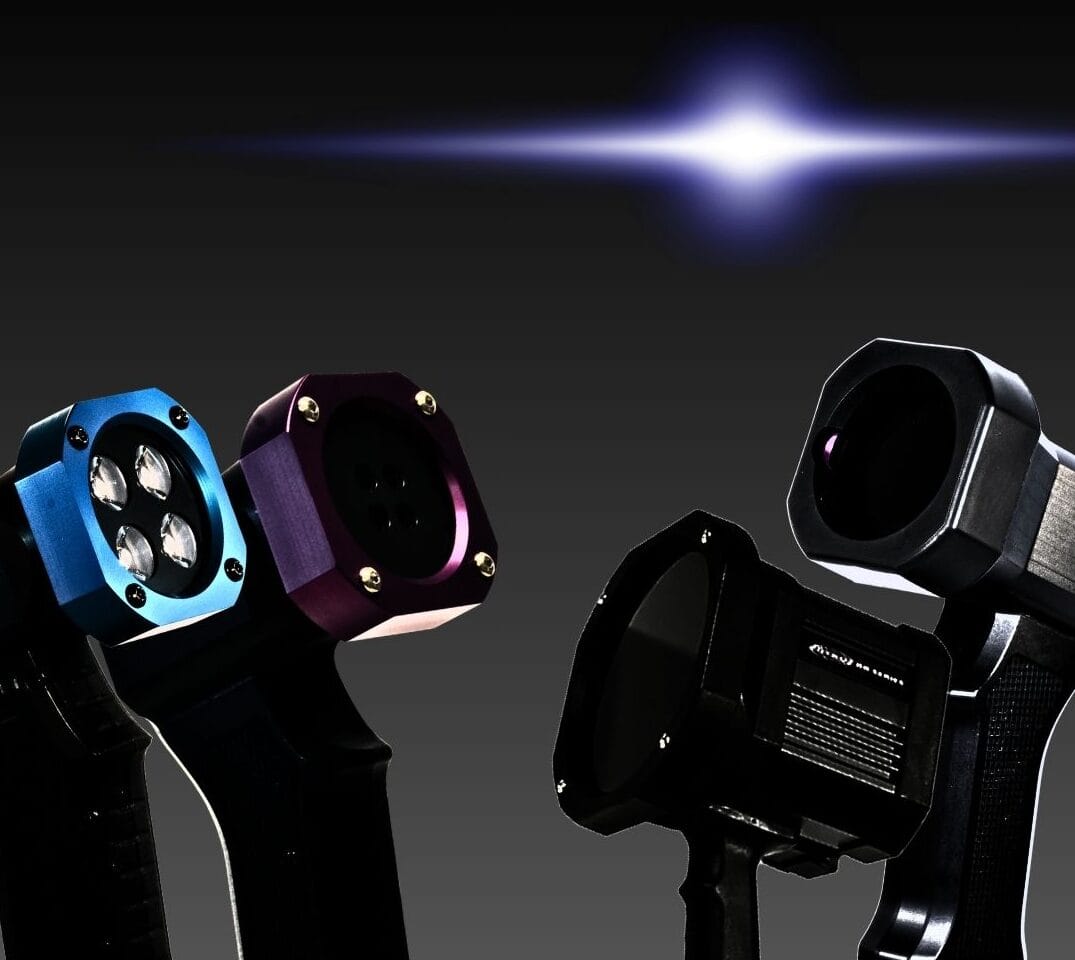
Industrial maintenance is undergoing a silent transformation—and one that is extremely relevant for those working in Non-Destructive Testing (END). UV lamps, essential for Liquid Penetrant (LP) and Magnetic Particle (MP) inspections, have evolved significantly in recent decades, driven mainly by the consolidation of UV LED technology. This change directly impacts the efficiency, quality, and reliability of inspections. More than that, it redefines the role of the inspector, who now has lighter, more durable, and more precise tools to perform critical analyses.


From vapor lamps to UV LEDs: the new era of lighting for END

For many years, mercury vapor-based UV lamps dominated the scene. Although functional, they had clear limitations: intense heating, fragility, high energy consumption, and unstable light.

With the arrival of UV LED lighting, the landscape changed.

Why does UV LED represent a technological leap?

  • Stable and instant lighting , with no warm-up time.
  • Much longer lifespan , reducing replacements and maintenance.
  • Superior energy efficiency , with lower consumption and greater range in battery-powered versions.
  • Increased mechanical strength , reducing field failures.
  • The absence of toxic materials makes the equipment safer and more sustainable.

For those who inspect welds, critical parts, and structural components, this stability and precision are fundamental.


Portability: real productivity for those who work in the field

The inspector rarely works in comfortable spaces. Most inspections take place in hard-to-reach areas, elevated structures, confined spaces, or extensive pipelines.

The advancement of LEDs has allowed UV lamps to become:

  • lighter ,
  • more compact ,
  • more ergonomic ,
  • more resistant ,
  • and with greater operational autonomy .

Direct impacts on the inspector’s routine.

  • Less fatigue during long shifts.
  • Greater agility in accessing critical points.
  • Less reliance on cables or external power sources.
  • Greater precision in illuminating the inspected area.
  • Reliability even in harsh environments.

Portability is no longer a “plus” but a strategic component of operational efficiency.


Durability and energy efficiency: savings that translate into performance

While traditional light bulbs frequently burned out, high-performance LEDs brought consistency and cost reduction.

Main benefits:

  • Less maintenance and less downtime.
  • Extended autonomy with long-lasting batteries.
  • Reduced overall costs thanks to a longer lifespan.
  • Stable UV intensity , ensuring adequate sensitivity in both low-level and mid-life modes.

For ongoing inspections and critical operations, this combination is indispensable.


Regulatory compliance: the importance of ASTM E3022

In END (Non-Destructive Testing), technology alone is not enough: it is necessary to meet the correct standards. ASTM E3022 is the international reference that establishes the minimum requirements for UV LED luminaires used in:

  • Magnetic Particle (MP) Testing
  • Penetrant Testing (PT)

The standard requires rigorous criteria, such as:

  • minimum UV intensity suitable for the method;
  • Uniformity of lighting in the inspection area;
  • Visible radiation control;
  • thermal stability;
  • Mechanical strength suitable for industrial use.

Why is this fundamental?

Because lighting failures mean detection failures.
Without compliance with ASTM E3022, there are real risks:

  • indications that do not appear;
  • Unnecessary rework;
  • inconsistent results;
  • Problems in audits and certifications;
  • security commitments.

The standard ensures that the inspector works with adequate lighting to detect even the most subtle indications.


The practical impact of these advances on the quality of inspections

The evolution of UV LED lighting directly influences:

  • The accuracy of discontinuity detection;
  • the pace at which inspections are carried out;
  • The ergonomics of fieldwork;
  • The safety and traceability of the process;
  • The reliability of the results delivered.

In sectors such as oil and gas, automotive, aerospace, and metalworking, this translates to lower operational risk and greater control over asset integrity.


UV LED lighting as a protagonist in the new era of END

The combination of portability, energy efficiency, durability, and regulatory compliance has transformed UV LED luminaires into essential tools for modern inspections.

Technology not only makes the inspector’s job easier — it raises the quality of the entire industrial maintenance chain.


Stay tuned for updates!

We will soon be presenting important news related to our line of lighting fixtures for END (Non-Destructive Testing).
Follow the blog and our social media to stay updated on the launch.
Technical lighting, precision, and innovation for those who demand reliable results.

Fluorescence in Non-Destructive Testing: Technology that Amplifies Results

In industrial inspection, fluorescence in non-destructive testing (END) is a technology that significantly enhances sensitivity and visual accuracy.

Applied in methods such as Liquid Penetrant (LP)Magnetic Particle (MP), and Leak Detection (DV), this technique allows for the identification of minute discontinuities and micro-leaks invisible to the naked eye. The result is greater safety, reliability, and operational performance.


What is fluorescence?

Fluorescence is an optical phenomenon in which certain substances absorb energy from ultraviolet (UV-A) light and re-emit it in the form of visible light .
In non-destructive testing (END), this physical principle is used to enhance the contrast of indications on metallic and non-metallic parts, facilitating the identification of surface or subsurface defects .

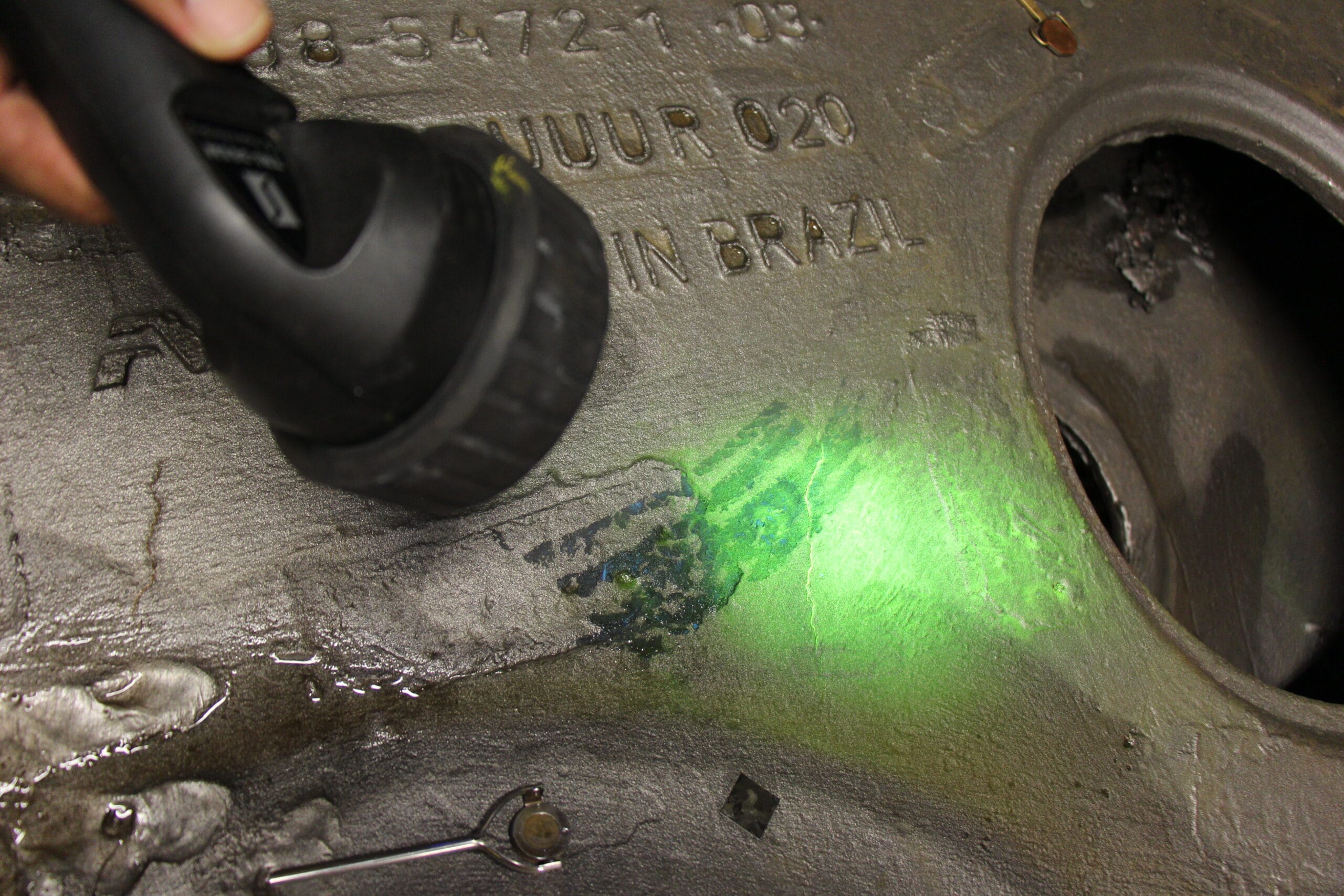
When UV-A light (365 nm) strikes the inspected material, the fluorescent particles or dyes react by emitting intense light—typically in shades of green, yellow, or orange. This makes discontinuities clearly visible, even in hard-to-reach areas.
The result is a highly sensitiveprecise, and visually clear test that allows for quick and reliable decisions.


Applications of fluorescence in END methods

1. Liquid Penetrant Testing (LP)

The LP fluorescent (Type I) method is indicated for detecting surface-open discontinuities, such as cracks, pores, lack of fusion, and other defects that may compromise the integrity of a component.

After cleaning and applying the penetrant, the excess is removed and the developer is applied. Under UV-A light, the remaining liquid in the discontinuities emits intense fluorescence, clearly revealing the indications.

Among the main advantages is its versatility of application.
The method can be used on metallic and non-metallic materials, whether magnetic or non-magnetic, such as aluminum, magnesium, austenitic stainless steels, and titanium.
It can also be applied to ceramics, glass, and some types of plastics, provided they are non-porous materials.

Metal-Chek Products:

  • FP-91 and FP-91 HI – Water-washable penetrants, Type I – Method A, Level 2, ideal for inspections requiring greater sensitivity.

Compatible with D70, D72 and D702 developers.


2. Magnetic Particle Testing (MPT)

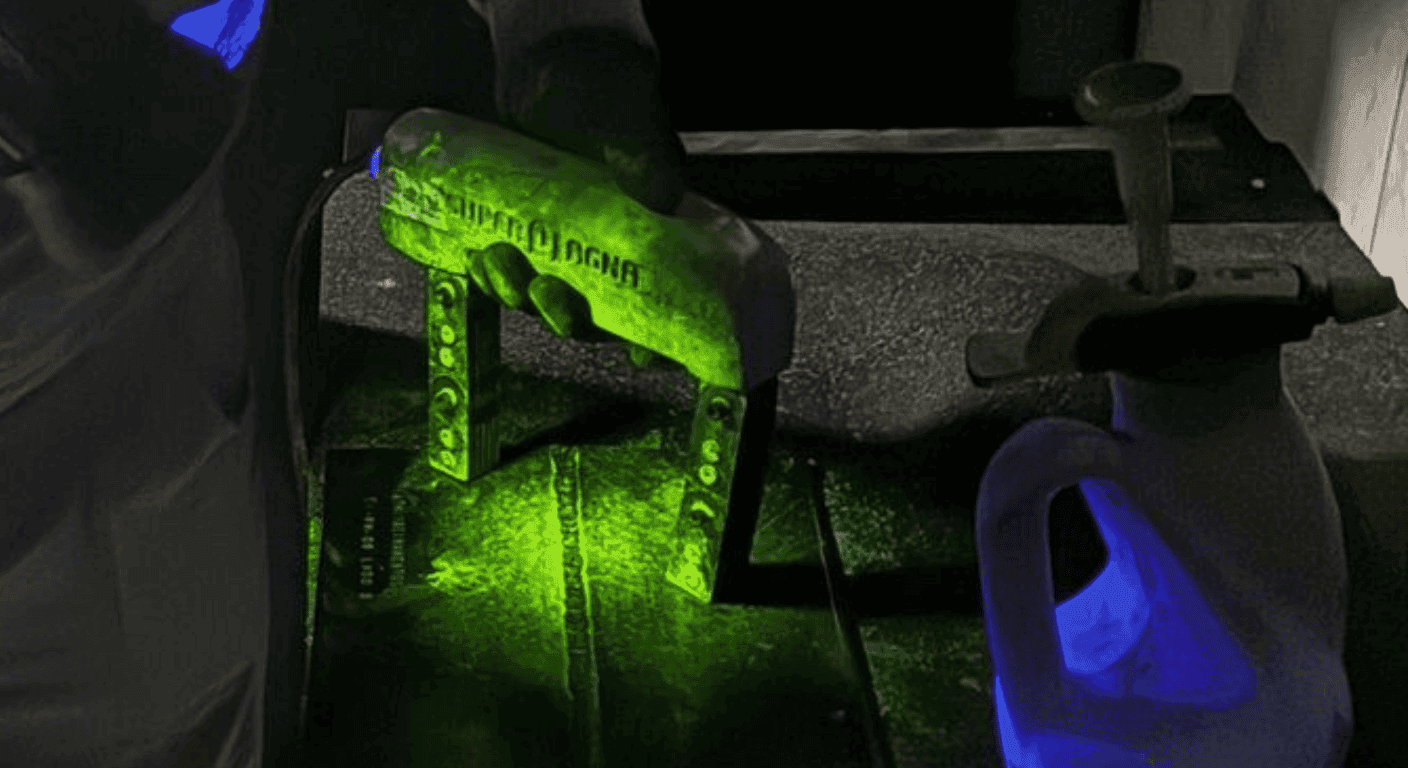
In ferromagnetic materials, fluorescence enhances the detection of surface and subsurface discontinuitiesFluorescent magnetic particles
accumulate in regions where the magnetic field escapes, forming visible indications under UV-A light. For magnetic particle testing to be effective, it is essential that the part be magnetized. The application of a magnetic field —circular, longitudinal, or combined—creates magnetic flux lines in the material.

Metal-Chek offers the Supermagna Yoke HMM6, an alternating current (AC) electromagnetic yoke developed for visible and fluorescent testing. The equipment provides a stable magnetic field and high mobility, making it widely used in industrial, petrochemical, and predictive maintenance inspections.

Metal-Chek Products:

  • Supermagna LY 800 – High-sensitivity fluorescent dry-process magnetic particle.
  • Supermagna LY 2000, LY 2000 V, LY 3000 and LY 3000 V – Wet-applied fluorescent magnetic powder particles, applicable with OMC 10 MMS (oil) or BC 502 SN + water vehicles.
  • Supermagna CLY 2000 VO MMS BP / CLY 3000 O MMS BP / VO MMS BP – Ready-to-use wet (oil) baths with high mobility and contrast.
  • Supermagna DLY 2000 – Water-dispersible wet magnetic particle.
  • Supermagna CRL 265 AG/SN – Dual concentrate (fluorescent/visible), applicable under visible (white) or UV-A light in environments up to 1000 lx.

3. Leak Detection (Leak Testing)

In leak tests, fluorescent additives allow visualization of micro-leaks in hydraulic, pneumatic, and lubrication systems.
Under UV-A light, even the smallest leaks become visible, enabling immediate repairs and preventing critical failures.

Metal-Chek Products:

  • Oil-Glo Ultra SPI Series
    • SPI-OGG (Green) , SPI-OGB (Blue) and SPI-OGW (White) — Fluorescent detectors for oily fluids.
    • Non-flammable, they do not alter the properties of fluids and are NSF certified .
  • Water-Glo Ultra SPI Series – Green (WGG) and blue (WGB) fluorescent dyes for aqueous systems.

UV-A Lighting Equipment

For fluorescent testing, it is essential to use UV-A (365 nm) light sources with a minimum intensity of 1000 µW/cm² on the surface being examined, in accordance with END technical standards.
This intensity ensures adequate contrast and accurate reading of the indications.


Benefits of fluorescence in END

The correct application of fluorescence brings significant technical advantages:

  • High visual sensitivity , revealing minute discontinuities.
  • Greater contrast and clarity of the indications.
  • Safe and versatile application in different methods and materials.
  • Technical compliance with national and international standards.
  • Reduction of rework and operational errors.

Furthermore, fluorescence improves the reliability of results and strengthens quality control in critical inspections.


Fluorescence in non-destructive testing is an essential technology that raises the standard of precision, safety, and reliability in industrial inspections.
By applying this technique in liquid penetrant testing (LP), mechanical testing (PM), and visual diffusion (DV), enhanced visualization, high sensitivity, and immediate results are obtained, reducing failures and ensuring operational reliability.

With the complete Metal-Chek product line — which includes penetrants and fluorescent particles, leak detection additives, magnetization equipment, and UV-A illumination — your industrial inspection reaches new levels of quality and technical compliance.


See beyond the visible — Metal-Chek fluorescent technology.
Solutions for Non-Destructive Testing.

Talk to our experts
and follow us on @metalchek

Technical Standards Governing Penetrant and Magnetic Particle Testing

The importance of technical standards in Non-Destructive Testing

Non-destructive testing (END) is essential to ensure the integrity of equipment and components used in various industrial sectors.
Among the most widely used methods are liquid penetrant testing (LP) and magnetic particle testing (PM).

Both allow the identification of discontinuities that could compromise the safety and performance of metal structures, welds, shafts, or castings, etc.

To ensure the quality and standardization of results, there is a set of national and international technical standards that establish criteria for execution, materials, and test conditions.

Next, see what these rules are and what each one determines in summary.


ASTM E1417 – Standard Practice for Liquid Penetrant Testing

It is the main international standard for the Penetrant Testing method.
It defines the essential parameters for the safe and accurate execution of the test, including:

  • Classification of penetrants (fluorescent and colored);
  • removal methods (water washable, post-emulsifiable, solvent removable);
  • lighting and sensitivity requirements;
  • stages of the process, such as cleaning, penetration, and development.
  • process controls.

ISO 3452 – Non-Destructive Testing – Penetrant Testing

The ISO 3452 series establishes international standards for materials and equipment.
Among its main topics are:

  • Part 1: General principles;
  • Part 2: Penetrant material requirements;
  • Part 3: Reference blocks;
  • Part 4: Equipment;
  • Part 5: Requirements for liquid penetrant testing at temperatures above 50 °C.

NM 334 – Non-destructive testing — Penetrant testing — Discontinuity detection

Mercosur standard that defines the main requirements for LP inspections in the national context, including:

  • technical terminology and symbology;
  • test stages (pre-cleaning, application, penetration, removal, development and evaluation);
  • minimum lighting levels;

ASTM E165 – Standard Practice for Liquid Penetrant Testing for General Industr y

Standard that defines the general procedures and criteria for liquid penetrant testing (LP) in industrial applications.
Establishes requirements for:

  • Classification of penetrants (fluorescent or colored);
  • removal methods (water, solvent or post-emulsifiable);
  • Control of lighting, temperature, and penetration time;
  • Sensitivity testing and product quality control.

PETROBRAS N-1596

Define:

  • test parameters and minimum/maximum process times;
  • procedural requirements;
  • lighting conditions;
  • Product classification and traceability;
  • Requirements for staff execution and qualification.

PETROBRAS N-2370

Provides:

  • General guidelines for safety, documentation, and traceability;
  • Penetrant testing.

ASME V – Art. 6

An integral part of the ASME Boiler and Pressure Vessel Code (BPVC), it defines the requirements for penetrant testing applied to boilers, pressure vessels, and pressurized equipment.
It contains:

  • Specifications for materials and equipment;
  • sensitivity check of the test system;
  • process control and inspection intervals;
  • Acceptance according to manufacturing codes.

ASTM E709 – Standard Guide for Magnetic Particle Testing

The principal international standard governing magnetic particle testing.
It establishes best practices and application guidelines for:

  • Magnetization techniques (yoke, electrodes, coil, center conductor and direct contact);
  • use of colored and fluorescent particles;
  • Electrical current control and field direction;
  • Verification of particle concentration and illumination (visible and UV).

ASTM E3024 – Standard Practice for Magnetic Particle Testing for General Industry

It complements ASTM E709 and provides specific instructions for inspections in general industry.


NM 342 – Non-destructive testing — Magnetic particles — Discontinuity detection

It establishes technical parameters for conducting the test in accordance with international standards:

  • Dry and wet application;
  • characteristics of magnetic particles and liquid vehicles;
  • Recommended concentration ranges for wet application (0.1 to 0.4 mL for fluorescent and 1.2 to 2.4 mL for colored);
  • Light intensity control for visible and UV-A light.

ASTM E1444 – Standard Practice for Liquid Penetrant Testing for Aerospace

Specifically for the aeronautical and aerospace sector, it defines detailed practices for magnetic particle (PM) testing.
It establishes:

  • requirements for magnetic materials and vehicles;
  • concentration limits and bath control;
  • UV-A and white light checks;
  • Strict calibration and acceptance criteria.

PETROBRAS N-1598

It defines the criteria for performing the PM method on ferromagnetic materials.
It covers:

  • magnetization techniques;
  • UV lighting requirements and field strength;
  • calibration procedures.

ASME V – Art. 7

Part of the ASME Boiler and Pressure Vessel Code, it defines the requirements for magnetic particle testing of pressurized equipment and welded components.
It covers:

  • Types of electric current and magnetization techniques;
  • magnetic field intensity control;
  • detection methods;
  • Acceptance and qualification criteria for the testing system.

ISO 9934 – Non-Destructive Testing – Magnetic Particle Testing

The ISO 9934 series establishes international standards for materials and equipment.
Among its main topics are:

  • Part 1: General principles;
  • Part 2: Detection method;
  • Part 3: Equipment;

Importance of technical standards for the reliability of END (Non-Destructive Testing).

The standards governing liquid penetrant and magnetic particle methods are the technical basis that ensures reliability and regulation  of Non-Destructive Testing.
They guide everything from product development to practical application in the industrial environment, ensuring quality, safety, and standardization in every inspection.

Knowing these standards is essential for anyone working in quality control, maintenance, and inspection — whether in heavy industry, petrochemicals, aeronautics, or metallurgy.


Important notice:

This content is for educational purposes only. The application of the test methods and parameters must follow a qualified procedure approved by a Level 3 Inspector .


Solution in Non-Destructive Testing

Metal-Chek provides complete END solutions: penetrant liquids , magnetic particles , yoke and accessories , developed according to the main ASTM, ISO , ASME, NM, PETROBRAS standards, guaranteeing quality, safety and technical compliance in every inspection.

Discover the complete Metal-Chek product line.

Contact our team.

Follow @metalchek

Visual Inspection (Visual Testing – VT): The First Steps to Identify Equipment Faults

Every effective inspection begins with observation — not just what the eyes see, but what a technical and experienced eye is able to interpret. Visual Inspection (VI) is the initial step in identifying discontinuities , defects, wear, and anomalies that can compromise the integrity and performance of equipment.

More than just a superficial check, VT acts as an initial filter in quality control, directly contributing to cost reductionrisk prevention, and increased operational efficiency.

Furthermore, visual inspection serves as the gateway to more advanced non-destructive testing techniques, such as penetrant testing, magnetic particle testing, and ultrasound. In other words, when a visual indicator is detected, it’s the right time to deepen the analysis with complementary and more sensitive methods.

Although it seems simple, visual inspection requires much more than just “looking”:

  • Technical training
  • Knowledge of acceptance criteria
  • Adequate lighting
  • Support tools and instrumentation
  • Evidence documentation

Visual Inspection in the Industry 4.0 Era

Those who think that Visual Inspection (VI) has lost importance with the advancement of automation are mistaken. On the contrary — it has evolved and integrated with new technological resources, expanding its reach, precision, and speed.

Today, VT is an active part of Industry 4.0 and can be combined with state-of-the-art digital solutions:

  • Artificial intelligence for image recognition.
  • Drones for inspections at heights or in hazardous areas.
  • 4K cameras with thermal sensors
  • Predictive analytics connected to digital dashboards

Most common applications of visual inspection.

Visual Inspection (VI) is widely used in various industrial sectors as a quick and effective assessment tool. Its main objective is to identify visible irregularities that may compromise the structural integrity, functionality, or safety of components and equipment.

The following table summarizes the main applications and what is sought to be identified in each case:

ApplicationWhat are we trying to identify?
WeldingCracks, porosity, lack of fusion or penetration
Pressurized equipmentCorrosion, deformation, leaks
Metal structuresDeformations, warping, cracks
Ducts and pipingLeaks, oxidation, deterioration
Machines and moving partsWear and tear, misalignment, fractures

Equipment and Resources Used in Visual Inspection

Although many visual inspections are done with the naked eye, the use of auxiliary equipment significantly enhances the accuracy and reliability of the test. Some resources used include:

 Adequate natural or artificial light: Ensures adequate visibility. Poor lighting can compromise the detection of discontinuities.

Magnifying glasses and magnifying lenses: They amplify small details, allowing the identification of surface cracks, porosity, inclusions, or lack of fusion in welds.

Borescopes and industrial endoscopes: Optical instruments used for inspecting hard-to-reach areas, such as pipes, internal welds of pressure vessels, and aeronautical components.

Rulers, gauges and jigs: Tools for measuring dimensions, weld angles, weld bead profiles and alignments.

High-resolution cameras: They facilitate photographic documentation and historical comparison during periodic inspections.

Digital inspection and recording software: With the advancement of Industry 4.0, integrating visual inspections with digital systems allows for recording occurrences, generating reports, and maintaining traceability in accordance with regulatory requirements.

Tip:
In low-light environments, the use of adequate artificial light is not optional — it’s mandatory.

Best practices in performing visual inspections.

To ensure the effectiveness of visual inspection and the reliability of results, it is essential to adopt well-defined operational practices. Standardizing execution through written procedures and operational checklists helps minimize human error and ensure consistency in assessments. A simplified model is presented below that can be adapted to the needs of each sector:

BEFORE INSPECTION:

  • Check that the surface is clean (free of contaminants such as paint, oil, grease, rust, dust, or debris).
  • Check the ambient lighting (it should be sufficiently intense and evenly distributed, allowing for an accurate assessment of the surface. It is important to avoid reflections, shadows, or glare, especially on polished materials or those with irregular geometry. In locations with little natural light, the use of adjustable and directional artificial light sources is recommended to ensure good visibility).
  • Assess the inspector’s physical and visual condition (e.g., fatigue, use of glasses).
  • Assess the need for additional equipment and resources.

DURING THE INSPECTION:

  • Observe surface continuity: deformations, cracks, oxidation.
  • Check weld beads: profile, spatter, lack of fusion.
  • Use magnifying glasses on areas with suspicion or small details.
  • Photographing and documenting irregularities
  • Assess the need for additional tests (liquid penetrant, magnetic particles, etc.).

AFTER INSPECTION:

  • Record keeping and traceability (maintaining a history of inspections, photos, reports, inspection maps, and checklists with acceptance criteria. These records ensure traceability, effective audits, and support decision-making).
  • Storing records digitally ensures traceability and facilitates audits.

Integration of Visual Inspection with Other END Methods

Visual Inspection (VI) is the starting point for most Non-Destructive Testing (END). While it can identify various surface flaws, it does not always provide sufficient information for a complete assessment of the component’s integrity. Therefore, it is essential to integrate it with complementary methods, especially when there are visual suspicions that require technical confirmation.

The table below shows how VT connects to the main END methods and the benefits of this combination:

Complementary MethodApplication after VTCombined benefits
Penetrant Testing (PT)Detection of cracks and open discontinuities on the surface.Confirms and verifies suspicious visual indications.
Magnetic Particles (MP)Inspection of ferromagnetic parts. Detects surface and subsurface flaws.Increased sensitivity in critical areas, such as welds.
Ultrasound (UT)Assess the internal integrity of the part.It identifies internal flaws that are not visible externally.
Radiography (RT)Reveals volumetric discontinuities in welds and castings.High reliability and permanent visual documentation.

Normative References

Visual inspection is governed by several technical standards that ensure standardized procedures, reliable results, and compliance with legal and industrial requirements. Below, we highlight some applicable technical standards:

  • ISO 17637 – Visual Inspection of Welds in Metallic Materials: establishes requirements for performing visual inspection of welds, including acceptance criteria and recommended techniques.
  • NBR 14842 – Visual Inspection of Welds: national procedures and requirements that guide the practice of visual inspection of welds.
  • ASME Section V, Article 9 – Requirements for Visual Inspection: a standard widely used in the pressure equipment and boiler making industry.
  • Petrobras Technical Standards (Examples: N-1596, N-1598, N-2370) – Specific guidelines for visual inspections in the oil and gas sector.

The First Line of Defense for Quality

Visual inspection is much more than just a keen eye—it’s an essential technical barrier against failures that compromise safety, productivity, and regulatory compliance.

Implementing a well-structured visual inspection program is the first step towards operational excellence. Furthermore, when combined with Metal-Chek methods such as Liquid Penetrant, Magnetic Particle, and Leak Detection, visual inspection transforms into an ecosystem of industrial reliability.

Next Steps for Your Company

To strengthen your visual inspection program and increase the reliability of your processes, consider:

✅ Assess the maturity of your visual inspection program.

✅ Empower your team with training based on recognized standards.

✅ Standardize checklists and procedures with specialized technical support.

✅ Invest in quality accessories and equipment to complement the visual stage.

If your company wants to increase process reliability and ensure technical compliance, Metal-Chek is your ideal partner.

Speak with our technical team and discover how we can help transform your inspection routines into competitive advantages. 

Follow us on Instagram: @metalchek

Contact us at: (11) 3515-5287

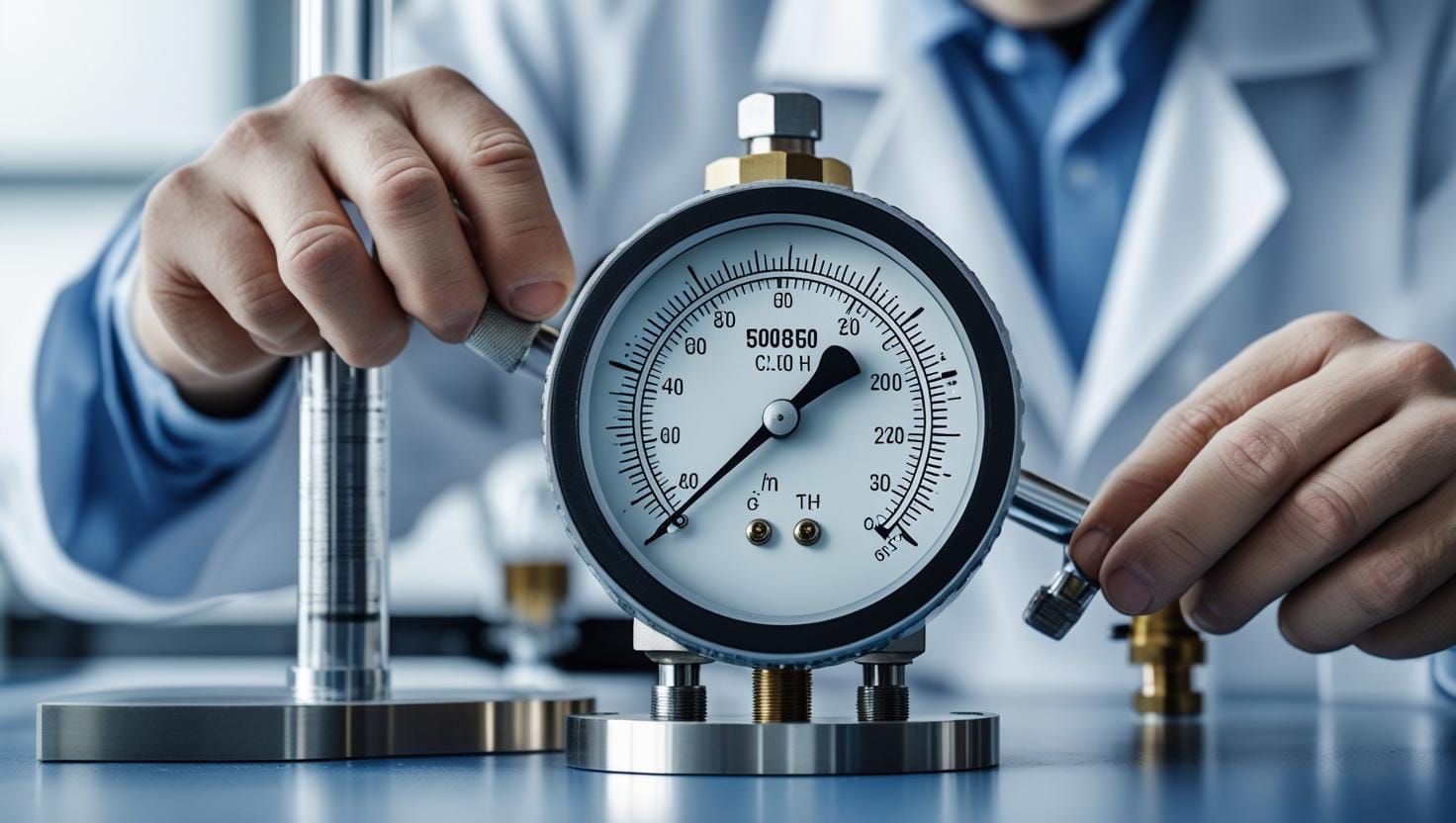
The Importance of Calibration in END Equipment for Reliable Results

If you want to guarantee accuracy, compliance, and operational safety in your Non-Destructive Testing (END), equipment calibration is not an optional step—it’s indispensable.
Companies that neglect this practice face serious risks:
❌ Inaccurate reports
❌ Undetected failures
❌ Non-conformities in audits
❌ Operational and reputational damage

➡️ When equipment is out of calibration, reliability disappears — along with operational safety.

What is Calibration and why is it Vital in END?

Calibration is a process of comparing two instruments (the measurand and the measured). This comparison involves calculating error and uncertainty, and these results are presented in a document called a calibration certificate.

  • ✅ Relationship between measurement values ​​and uncertainties; 
  • ✅ Technical standards are being met;

Standards such as ASME Section V, ASTM E1417, ASTM E1444, ASTM E3024, and ASTM E709 require that your equipment be calibrated for the results to have technical and legal validity.

Why is calibration a key differentiator?

1. Ensures Technical Precision

  • False positives → good parts are discarded unnecessarily.
  • False negatives → errors go unnoticed.

Both put security at risk, increase costs, and compromise the company’s reputation.

2. Avoid Penalties in Audits

Industries such as oil and gas, aeronautics, rail, and automotive are inflexible regarding non-compliant equipment.
Golden tip: Always demand certificates traceable to the RBC (Brazilian Calibration Network) or recognized international standards.

3. Reduces costs associated with rework.

Investing in calibration is cheaper than correcting errors caused by miscalibrated equipment.

Which equipment needs to be calibrated?

Penetrant Testing (PT)

  • Radiometers/Photometers
  • Thermometers
  • Water pressure gauges
  • Compressed air pressure gauges

Magnetic Particle (MP)

  • Gaussmeters (Residual)
  • Magnetic Field Meters
  • Ammeters
  • Timers
  • Magnetizing equipment (Stationary Machines)
  • Settling tubes

When should the equipment be calibrated?

The ideal calibration frequency is determined according to applicable standards.

How to Guarantee Traceability?

Compliance isn’t something you improvise. Follow these practices:

  • ✔ Hire laboratories accredited by Inmetro (ABNT NBR ISO/IEC 17025);
  • ✔ Archive and update calibration certificates;
  • ✔ Use digital checklists with automatic due date alerts;

[PRACTICAL CHECKLIST] How to Organize Your Calibration Routine

StepAction
PlanningMap all equipment that requires calibration.
HiringChoosing an accredited laboratory
Follow-upCreate due date alerts
DocumentationArchive calibration certificates and evidence.
Internal VerificationUse reference standards for control.

Calibration means Safety, Reliability, and Quality.

In the world of Non-Destructive Testing, calibration is an act of technical responsibility and a commitment to safety.

Metal-Chek offers the best consumables and accessories to ensure your penetrant testing, magnetic particle testing, and leak detection are accurate, traceable, and reliable.

You may have the best partner laboratory — but if your products are not of high quality, the results will be compromised.

Ready to increase the reliability of your tests?

→ Contact our technical team right now.
We’ll help you select the best Metal-Chek products to make your tests safer and more effective.

Follow us on Instagram: @metalchek

Contact us at: (11) 3515-5287

Predictive Maintenance in Industry: Benefits of Non-Destructive Testing

Operational reliability is one of the cornerstones of modern industry. With increasing pressure to reduce costs and enhance asset safety and efficiency, predictive maintenance has become essential. In this context, non-destructive testing (END) plays a decisive role, adding precision and safety to technical and operational decision-making.

The adoption of continuous monitoring technologies and smart sensors has driven the digital revolution in industry, aligning with the principles of Industry 4.0 . Within this ecosystem, ENDs (Non-Destructive Testing) are fundamental for validating data and expanding the ability to anticipate failures.

This article explores how the integration of sensors, monitoring systems, and methods such as liquid penetrant testing , magnetic particle testing, and leak detection contributes to the efficiency of predictive maintenance. We also present how Metal-Chek, a national leader in END products, enhances this integration with technology, quality, and regulatory compliance.

Predictive Maintenance: Far Beyond Traditional Inspection

Predictive maintenance relies on collecting and analyzing data in real time to predict failures and avoid unexpected downtime. It is a strategy focused on the actual condition of the equipment, in contrast to corrective (post-failure) or preventive (fixed interval) maintenance.

Common tools of predictive maintenance:

  • Temperature, vibration, and pressure sensors;
  • Spectral and eddy current analysis;
  • Infrared thermography;
  • Ultrasound and tribological analysis (oil monitoring);
  • And of course, Non-Destructive Testing , which complements automated alerts with a detailed and visual approach to the failure.

Technical and economic benefits:

  • Prevention of unscheduled downtime;
  • Increased lifespan of components and assets;
  • Cost reduction through reduced rework and parts replacement;
  • Improved safety in industrial operations and the trade of high value-added products;

Companies in the industrial and commercial sectors have been increasingly investing in technologies that allow for greater operational predictability, aligning themselves with the global trend of digital transformation in industry.

Non-Destructive Testing: The Basis of High-Precision Inspection

Non-destructive testing (END) techniques are inspection methods that analyze materials, parts, and welds without compromising their structural integrity. They are widely used to detect cracks, inclusions, porosity, delamination, and other defects that cannot be visually identified.

In predictive maintenance, END (Non-Destructive Testing) offers:

  • Visual and technical confirmation of anomalies detected by sensors;
  • Monitoring the spread of structural defects;
  • Photographic record and traceable technical documentation;
  • Support for decision-making based on concrete evidence;
  • Reducing uncertainty during planned interventions;
  • Compliance with national and international standards for quality, safety, and traceability.

Main methods:

  • Penetrant Liquid (PL) : excellent for surface cracks in metals and non-metallic materials;
  • Magnetic Particles (MP) : used on ferromagnetic materials, detects surface and subsurface cracks;
  • Industrial Ultrasound : ideal for locating internal defects with high precision;
  • Industrial radiography : provides internal images of complex structures;
  • Eddy Current : useful for thin layers and quick inspections;
  • Infrared thermography : thermal visualization of abnormal heating points.

These methods are routinely applied in inspections of welding, boilers, pressurized pipelines, valves, aeronautical structures, and parts subject to mechanical wear. The advantage lies in the early detection of cracks, porosity, delamination, and other types of structural defects, even in aggressive or difficult-to-access environments.

Industry 4.0 and the Intelligent Integration between Sensors and END

Industry 4.0 is transforming the way we manufacture, maintain, and manage industrial assets. The connectivity between sensors, software, machines, and people enables a systemic and predictive view of the entire operation.

In this context, ENDs (Non-Destructive Testing) take on a new function: to physically validate the data collected automatically . In other words, the sensors detect abnormal operating patterns, while the tests confirm (or rule out) the presence of real structural flaws.

Practical example:

A sensor detects increased vibration in a critical motor. Subsequently, a penetrant testing is performed on the support base area, revealing a superficial “U”-shaped crack. This visual confirmation allows for localized interventions, reducing downtime.

Benefits of integration:

  • Correlation between digital data and physical evidence;
  • Decisions based on technical grounds;
  • Optimization of maintenance plans;
  • Unnecessary replacements are avoided;
  • Minimizing downtime;
  • Increasing predictability and reducing uncertainty.

The integration between ENDs (Non-Destructive Testing) and sensors is an essential step towards achieving autonomous maintenance and reliability-based management . This approach fits perfectly into the digitalization strategies of Brazilian industry and commerce.

Metal-Chek Solutions: High Performance for Predictive Inspections

Metal-Chek offers a complete line of products for Non-Destructive Testing (END) , developed with high-quality raw materials and rigorous manufacturing control.
The Penetrant Liquids , Removers, and Developers meet the requirements of AMS 2644 and Petrobras N-2370 standards, and also comply with Petrobras N-1596, ASME Section V, ASTM E1417, and ISO 3452-3 standards.

In the Magnetic Particle line, SuperMagna offers consumables with balanced particle size, ensuring maximum sensitivity and precision in detecting discontinuities. The particles are manufactured according to AMS 3040 to 3046 standards and meet the requirements of Petrobras N-1598, ASTM E1444, ASME Section V, and ASTM E709 standards.

This credibility positions the brand as a strategic partner for companies that adopt predictive maintenance with a focus on efficiency and safety.

These products are present in segments such as oil and gas, aerospace, rail, mining, power generation, and industrial manufacturing, consolidating the application of END as an integral part of predictive strategy.

Featured solutions:

Penetrant Liquid

Metal-Chek’s penetrant liquid is ideal for detecting surface discontinuities in metallic and non-metallic materials (such as aluminum, stainless steel, nickel alloys, ceramics, and technical plastics). The product line ranges from visible to fluorescent products, offering high penetration and contrast power.

Process steps:

  1. Surface cleaning;
  2. Application of the penetrant (visible or fluorescent);
  3. Controlled penetration time;
  4. Excess removal;
  5. Applying the developer;
  6. Assessment by a qualified inspector.

Highlights of the Metal-Chek Line:

  • VP 30: Visible, water-washable – ideal for rough surfaces.
  • VP 31: solvent-removable visible – suitable for critical inspections of metals subject to oxidation.
  • FP 91: Water-washable fluorescent – ​​general use with medium sensitivity.
  • High Temperature VP 302: inspections of parts operating between 52 °C and 120 °C.

Magnetic Particles

An effective method for detecting surface and subsurface cracks and discontinuities in ferromagnetic materials. The SuperMagna line offers extreme precision and sensitivity. Available in dry and wet versions, fluorescent or visible.

Application:

  • Cast, rolled, machined or welded parts ;
  • Inspections during or after manufacturing;
  • Surfaces exposed to high temperatures (up to 300 °C in some products).

How it works:

  • Magnetizing the workpiece with a yoke or stationary equipment;
  • Particle application (dry or wet methods);
  • Visual identification of the defect by the agglomeration of particles in the magnetic leakage field.

Highlights of the SuperMagna Line:

  • SuperMagna LY 3000: latest generation, wet fluorescent, extremely high sensitivity.
  • SuperMagna WD 55 / YD 404: dry process, for hot parts (up to 300°C)
  • SuperMagna LY 2000: the best-known wet fluorescent printer on the national market.
  • SuperMagna CRL 265: dual particle, ideal for environments with alternating visible and UV-A inspection.

Equipment:

YOKE HMM6: high-performance, robust, and certified portable equipment for use in demanding industrial environments.

These products are present in segments such as oil and gas, aerospace, rail, mining, power generation, and industrial manufacturing, consolidating the application of END as an integral part of predictive strategy.

Real-World Applications of Predictive Maintenance with END

1. Aeronautical Industry

  • High operational risk requires strict control.
  • Lightweight alloy parts, such as titanium and aluminum, are routinely inspected with fluorescent penetrant liquid .
  • The part’s history is digitally recorded for complete traceability.

2. Iron and Steel Industry and Metallurgy

  • High temperatures and mechanical stress accelerate degradation.
  • Magnetic particle inspection reveals cracks in cylinders, rollers, and shafts while they are still in the production line.
  • Maintenance can be planned without interrupting the production process.

3. Power Generation (Hydroelectric, Thermal, Wind Power Plants)

  • Turbines, ducts, and blades require periodic inspection.
  • Sensors detect abnormal vibrations or noises.
  • ENDs confirm the failure before there is a risk of collapse.

4. Railways

  • Rails and axles are subject to cyclic stress.
  • Predictive maintenance allows for scheduling replacements before breakdowns occur.
  • Metal -Chek provides portable kits for quick and effective field inspections.

5. Shipbuilding and Offshore Industry

  • Harsh environments with salinity, humidity, and temperature variations.
  • END (Non-Destructive Testing) is applied to structural welds, valves, hulls, and cable passages.
  • The use of particles and liquids specifically designed for marine environments ensures precision even under adverse conditions.

The Strategic Importance of ENDs in Industry and Commerce

Companies in the industrial and commercial sectors that integrate END (Non-Destructive Testing) into their predictive maintenance process reap significant results: reduced downtime, greater quality control, legal security, and market competitiveness.

In addition to technical benefits, non-destructive testing contributes to:

  • Meeting regulatory requirements (INMETRO, ANP, ANAC, among others);
  • Aligning with ESG and sustainability standards;
  • Avoid fines and losses due to undetected errors;
  • To strengthen the brand image as synonymous with quality and innovation.

Metal-Chek, with over 40 years in the market, directly participates in this evolution, offering technical support, training, and complete solutions adapted to each industrial segment.

The integration of predictive maintenance and non-destructive testing is an irreversible trend. In the era of Industry 4.0, the ability to predict, detect, and correct failures before they cause damage is the differentiating factor that separates efficient companies from vulnerable ones.

Methods such as liquid penetrant testing and magnetic particle testing are indispensable allies in technical inspection, enabling safe, economical, and sustainable production. With Metal-Chek products, this process becomes even more reliable and effective.

Regardless of your industry — energy, transportation, metallurgy, or aerospace — investing in ENDs is investing in excellence.

The integration of predictive maintenance and non-destructive testing represents the most effective path to operational excellence in the Industry 4.0 era. The ability to accurately anticipate failures, make data-driven decisions, and ensure the structural safety of assets is the new competitive differentiator.

Metal-Chek directly contributes to this evolution by providing reliable, standardized products adapted to the realities of the industrial sector. Whether in welding , inspection of critical parts, or continuous monitoring of structures, the presence of END (Non-Destructive Testing) enhances the intelligence of predictive maintenance.

Invest in technology, invest in security, invest in predictability. Count on Metal-Chek.

Did you enjoy the content?
Learn more at: www.metalchek.com.br

If you still have any questions, please contact our  technical team . We’ll be happy to help!

Follow us on Instagram: @metalchek

Contact us at: (11) 3515-5287

Partículas Magnéticas

Non-Destructive Testing Inspectors: Commitment to Safety and Excellence

Today, March 27th, we celebrate Non-Destructive Testing (END) Inspector Day, a special date to recognize the essential work of these professionals who ensure safety and quality in various sectors of industry. We will highlight the main topics related to the profession and its strategic importance to society.

Non-Destructive Testing

Non-destructive testing (END) techniques allow for the evaluation of materials, components, and structures without causing damage. Through advanced methods such as ultrasound, radiography, magnetic particles, and penetrant testing, inspectors, in their crucial role, can detect flaws, cracks, and irregularities, ensuring that products and systems comply with safety and performance standards.

The Role of END Inspectors

END inspectors play a crucial role in accident prevention and quality improvement. They perform meticulous tests, interpret results, and are often responsible for making important decisions for the safe operation of equipment and infrastructure. Beyond technical skills, these professionals need extensive knowledge of standards and regulations, as well as abilities such as attention to detail and critical thinking.

Article content

To become a non-destructive testing (END) inspector, the required degree and studies can vary depending on the desired certification level and the standards of the country or industry. Generally, there are different certification levels, such as Level 1, Level 2, and Level 3, each requiring a specific set of qualifications.

Basic Training

Although there is no specific university degree for non-destructive testing, it is common for inspectors to have technical or higher education in related areas, such as:

  • Engineering
  • Physical
  • Chemical
  • There is also a postgraduate course in Welding and Inspection Engineering.

Certifications

Certifications are essential for working as an END inspector. They certify that the professional has mastered the theoretical and practical knowledge necessary for the role. Some of the best-known certification systems include:

  • ASNT (American Society for Nondestructive Testing): Level 1, Level 2, and Level 3 Certifications.
  • ISO 9712: Widely accepted international certification
  • ABENDI (Brazilian Association of Non-Destructive Testing): Certifications in Brazil.
  • CETRE

Each certification level requires:

  • Specific Training: Courses covering the theory and practice of END methods, such as ultrasound, radiography, and liquid penetrant testing.
  • Professional Experience: Proven work hours in non-destructive testing.
  • Certification Exam: Theoretical and practical assessments to confirm technical competence.

Required Skills

  • In addition to training and certification, an END inspector needs to develop:
  • In-depth knowledge of technical standards (such as ASTM, ASME, and ISO).
  • Analytical skills and attention to detail.
  • Ability to interpret and report results accurately.
  • Constant updating with new technologies and techniques.

By following this path, professionals can reach high levels of specialization, such as Level 3, which allows for project and team management, as well as procedure certification.

Challenges and Continuous Learning

The END (Non-Destructive Testing) sector is dynamic, and inspectors face constant challenges, such as keeping up with technological advancements, new standards, and the increasing complexity of materials and equipment. To excel, professionals need to invest in continuous learning, participating in training, certifications, and events that promote the exchange of experiences and technical improvement.

The importance of END inspectors goes beyond the technical aspects; they are responsible for ensuring the integrity and safety of industries. Their work preserves lives, prevents accidents, and ensures the quality of the products we use daily, from automobiles to the structures of large buildings.

On Non-Destructive Testing Inspector Day, it is essential to recognize the effort and dedication of these professionals. May this date be an invitation to celebrate their achievements, inspire new talent, and reinforce the importance of their work for society.

Metal-Chek, in honor of this important day, is promoting an unmissable event that will take place on April 2nd at 7 PM, completely free and via Google Meet. The Webinar: Chat Among Inspectors will provide a space for exchanging experiences, discussing challenges, and sharing knowledge among professionals in the field of Non-Destructive Testing (END).

Participate and take advantage of this unique opportunity to learn, connect with other inspectors, and celebrate the importance of this essential profession for safety and quality in industries.

Translate