Archives October 2025

Supermagnetic Contrast 104 in Magnetic Particle Testing

In Magnetic Particle (MP) testing , the correct contrast between the surface and the magnetic particles is what guarantees the visibility of the indications and the accuracy of the results .
More than just a product, the Supermagna Contrast 104 Metal-Chek in Magnetic Particle Testing represents the practical application of the contrast concept in visible inspections, meeting the requirements of ASTM E709 , NM 342 and PETROBRAS N-1598 standards .


Function of Supermagna Contrast 104 in Magnetic Particle Testing

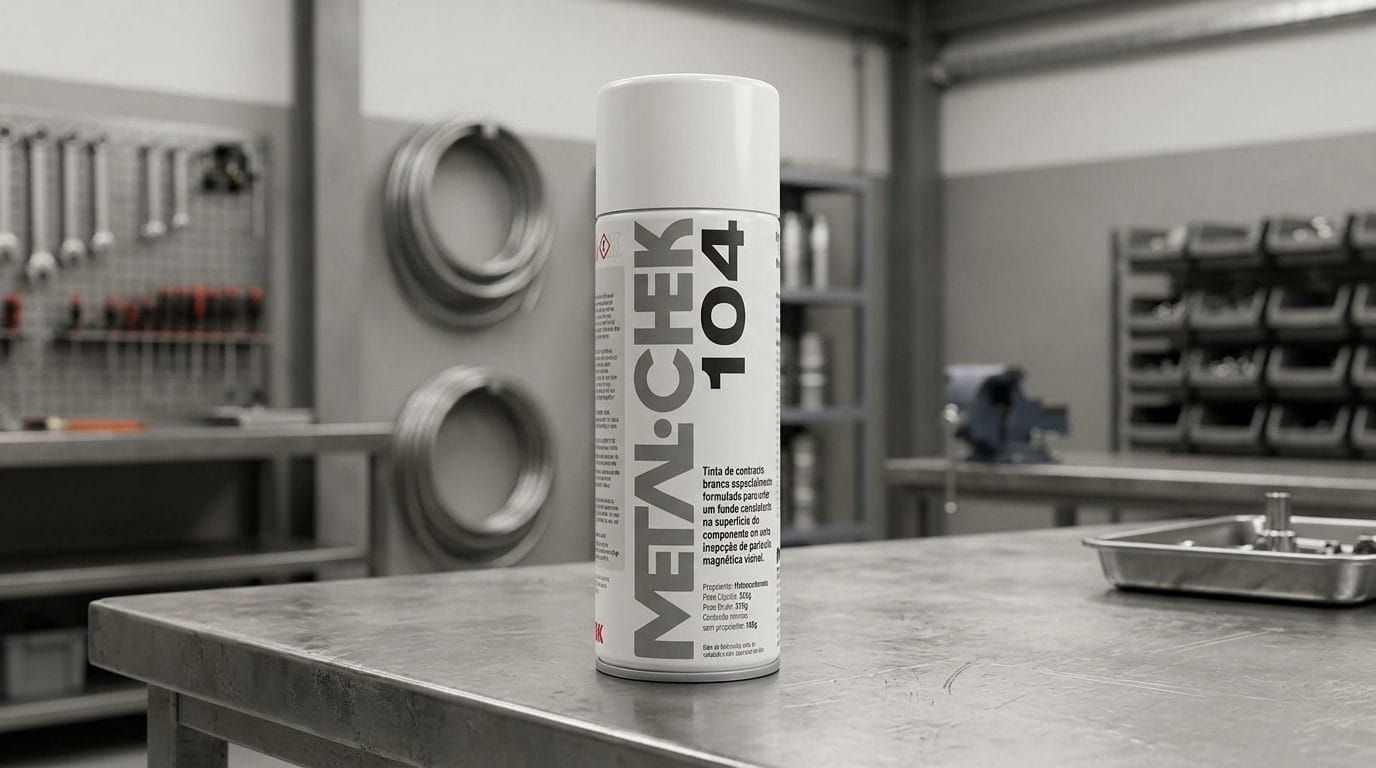
The Supermagna Contrast 104 in Magnetic Particle Testing functions to create a uniform white background on the surface of the part or inspection area, upon which colored magnetic particles (visible method, usually black or red) accumulate, making indications of discontinuities more visible under ambient light. The uniform white background increases the visual difference between the part and the particles accumulated over possible surface discontinuities.

Without adequate contrast, subtle indications may go unnoticed, reducing the sensitivity of the assay and compromising the reliability of the results.

In summary, the Supermagna Contrast 104:

  • It forms a highly reflective white background , ideal for visible testing;
  • It increases the optical contrast between the surface and magnetic particles;
  • It facilitates the visual interpretation of the instructions by the inspector;
  • It directly contributes to the reproducibility and standardization of PM tests.

When to use Supermagna Contrast 104

Supermagna Contrast 104 is indicated for colored magnetic particle testing (visible method) , conducted under visible illumination with a minimum intensity of 1076 lux , as established by ASTM E709 , NM 342 and PETROBRAS N-1598 standards .

Precautions when applying and removing

In order to guarantee optimal performance and avoid interference with the result, it is recommended:

1. Surface preparation

The area to be inspected must be dry, clean, and free of oil, grease, paint, or mill scale . Prior cleaning with E59 Metal-Chek
is recommended , ensuring a perfectly prepared surface to receive Supermagna Contrast 104.

2. Uniform application

Supermagna Contrast 104 should be applied in a thin, even layer , avoiding excess.
Very thick layers compromise the sensitivity of the assay.

3. Drying

Allow to dry completely before applying the magnetic particles.
The surface should have a uniform, matte, and non-reflective appearance .

4. Removal

After testing, Supermagna Contrast 104 can be removed with a remover such as E59 or TMC 10 Metal-Chek , ensuring thorough cleaning without damaging the surface.


Why choose the Supermagna Contrast 104 Metal-Chek?

The Supermagna Contrast 104 Metal-Chek was developed for professionals seeking precision and performance in magnetic particle testing.

Main benefits:

  • High coverage and quick drying , optimizing inspection time;
  • An adherent and uniform layer , respecting the thickness limits;
  • Intense optical contrast that highlights even the smallest details;
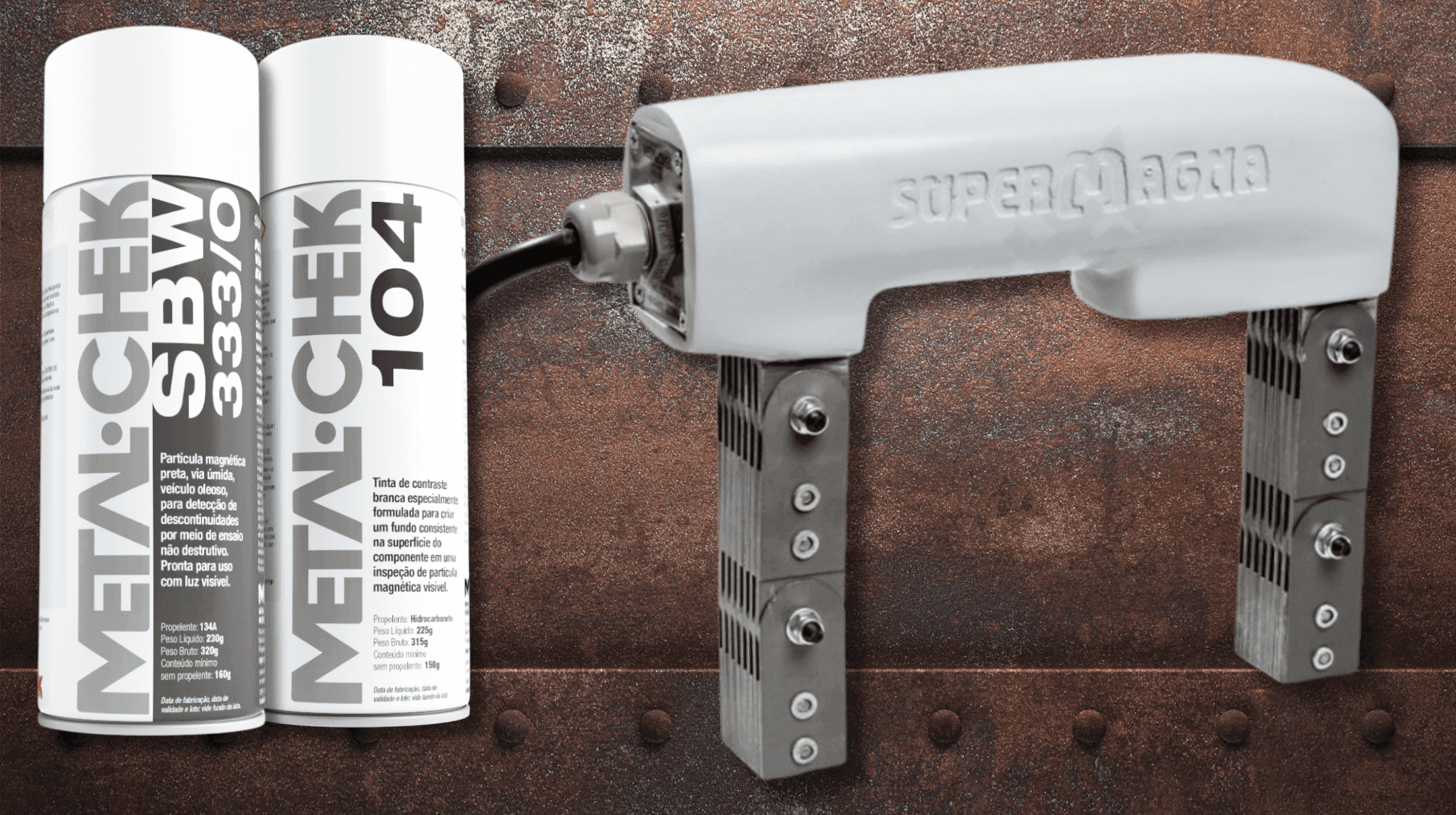
  • Compatible with Supermagna BW 333, RW 222, SBW 333/O, SRW 222/O and YD 404 colored magnetic particles .

Technical notice

This content is for educational purposes only. The application of the test methods and parameters must follow a qualified procedure approved by a Level 3 Inspector .


Metal-Chek Excellence

The Supermagna Contrast 104 is more than just a support product:
it is an essential technical element to guarantee quality, sensitivity, and safety in visible magnetic particle testing.

Using the Supermagna Contrast 104 Metal-Chek means investing in standard, precision and reliability , fundamental pillars for those seeking excellence in Non-Destructive Testing .

“Precision is visibility — ensure reliable results with the Supermagna Contrast 104 Metal-Chek.”

Talk to our experts
and follow us on  @metalchek
Pear-shaped Decanter Tube: Concentration Control

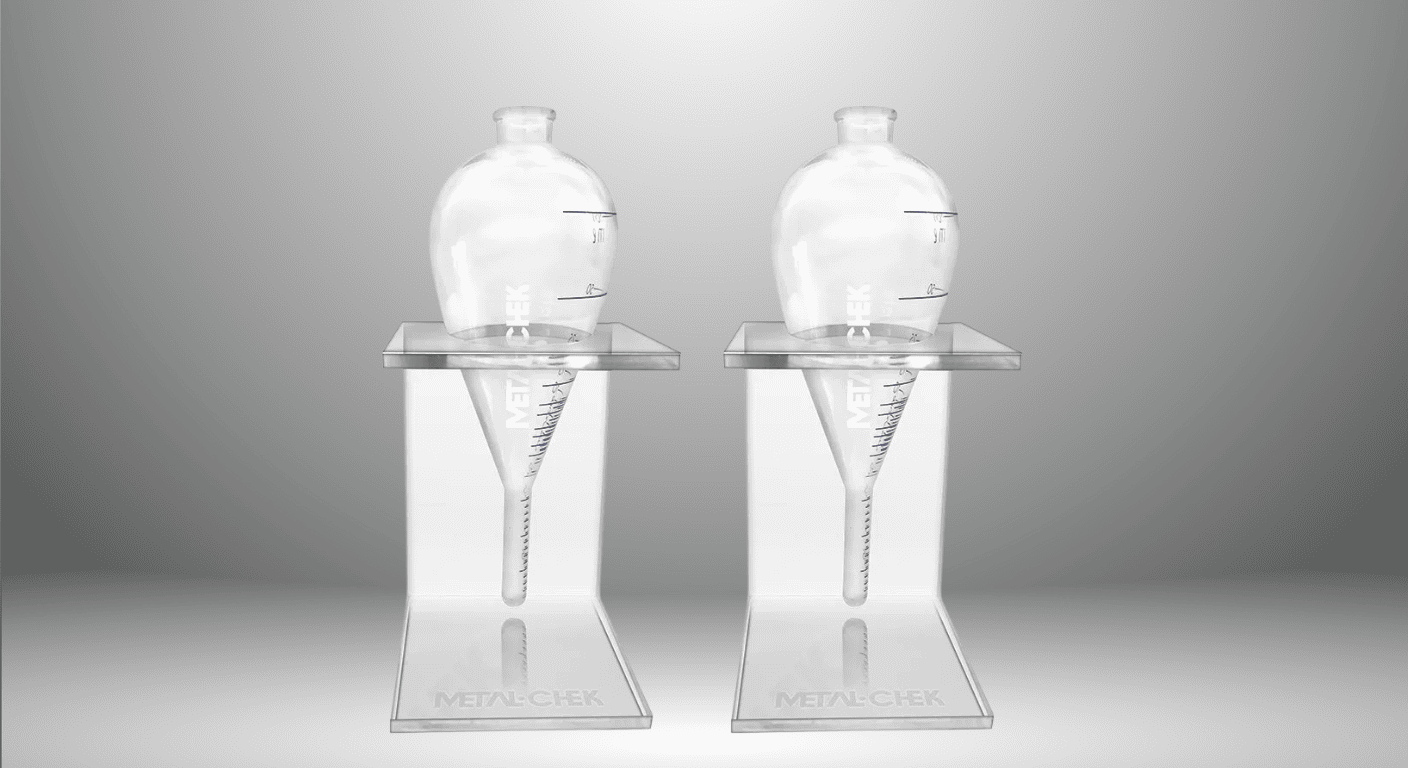
Understand how the pear-shaped decanting tube contributes to the precision and reproducibility in controlling the concentration of magnetic particles (MP) , in accordance with applicable technical standards.


The role of the per a type decanting tube

Magnetic particle testing (MPT) is widely used to detect surface and subsurface discontinuities in ferromagnetic materials. In wet
testing , the appropriate concentration of magnetic particles in the bath is crucial for the sensitivity and repeatability of the results.

One technical detail makes all the difference: the use of the “pear” type decanting tube , an essential accessory for measuring the bath concentration with precision, speed, and traceability .


Supermagna Pear-Type Decanter Tube: what it is and how it works

The Supermagna Pear-shaped Decanter Tube is an auxiliary accessory used to determine the quantity of magnetic particles per volume of fluid in the suspension used in wet dispersion testing. With a graduated scale, it allows for the reading of the volume of particles settled after a period of rest.

There are two main models , developed according to the type of particle:

  • Supermagna Decanting Tube with a 0.1 ml scale (fine scale): suitable for colored particles ;
  • Supermagna Decanting Tube with a full scale of 0.05 ml (most sensitive scale):suitable forfluorescent particles.

Main applications:

  • Verification of the correct concentration of the magnetic particle bath before performing the test;
  • Assessment of contamination levels in the bath during use.

Why concentration control is essential

With continuous use, the magnetic particle bath can undergo changes that directly compromise the reliability of the results. Among the main causes are:

  • Evaporation of the liquid phase;
  • Natural settling of particles;
  • Contamination by oil, dirt, or metallic residue.

These variations can affect the sensitivity of the assay:

  • Excess particles : generate false readings and increase background noise;
  • Low concentration : reduces visibility and makes it difficult to detect actual discontinuities.

In addition to proper control, the quality of the magnetic particles used is a determining factor in the test’s performance.

Metal-Chek magnetic particles are developed with specific formulations to meet regulatory requirements .


How to properly use the Supermagna Pear-shaped Decanter Tube

The use of the Supermagna pear-shaped decanter tube
must follow the specific instructions for each product and vehicle, in addition to the guidelines of the qualified test procedure. Generally, the process involves agitating the suspension for homogenization, filling the tube to the indicated volume, and allowing it to stand for a sufficient time for the particles to settle by gravity.

After the defined period, the decanted volume is read, observing the interface between the fluid and the particles.
The reading must be performed according to the type of particle used:
– For colored particles , visible light should be used to provide good visibility of the separation line between the fluid and the particles.
– For fluorescent particles , the reading requires the use of ultraviolet (UV-A) light , in a darkened environment, according to the requirements established by applicable standards.

The results obtained serve as a comparison with the reference values ​​indicated by the manufacturer of the magnetic particles or according to the technical procedure approved by a Level 3 Inspector , ensuring that the concentration control is in accordance with the established practices for the test.


Normative references

Concentration control with the Supermagna pear-shaped decanter tube is supported by the main international and national standards applicable to magnetic particle testing, such as:

  • ASTM E709 – Standard Guide for Magnetic Particle Testing
  • NM 342 – Non-Destructive Testing — Magnetic Particles — Discontinuity Detection
  • PETROBRAS N-1598 – Magnetic Particle Testing
  • ASME Section V, Article 7 – Magnetic Particle Examination

Good practices and frequency of control

To maintain suspension stability , it is recommended to :

  • Perform concentration checks daily (or before each inspection shift);
  • Record the results in spreadsheets or quality control forms;
  • Renew the bath whenever there is visible contamination, foam, or variation outside the defined limits ;
  • Periodically check the physical condition of the settling tube (cracks, dirt, or illegible scale).

These practices contribute to reproducibility in testing and reliability in results , in order to avoid rework and waste.


Technical notice

This content is for educational purposes only. The application of the test methods and parameters must follow a qualified procedure approved by a Level 3 Inspector .


Metal-Chek Excellence

Excellence in products for those seeking reliable results.
Metal-Chek provides complete solutions for Non-Destructive Testing (END) : magnetic particles, contrast dyes, yokes, accessories, and settling tubes — all developed according to the main ASTM , ASME , NM , and PETROBRAS standards .

Talk to our experts
and follow us on @metalchek
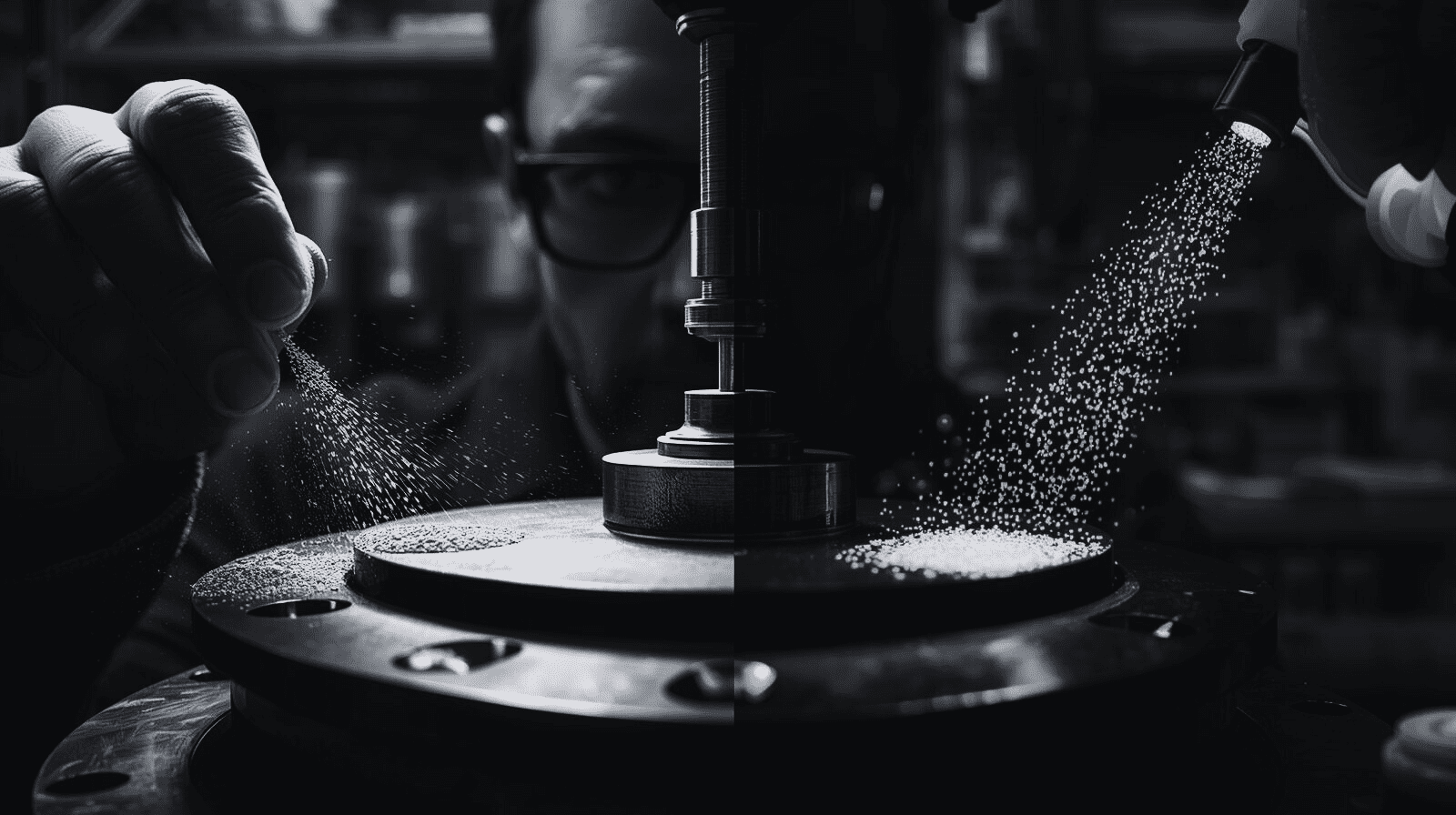
Magnetic Particles: Difference between dry and wet methods

Discover the differences between the dry and wet methods of magnetic particle testing, their practical applications, and how to ensure reliable results according to technical standards.

The importance of the correct method in Non-Destructive Testing

Magnetic particle testing ( MPT) is widely used in industry to detect surface and subsurface discontinuities in ferromagnetic materials.
The method is valued for its sensitivity, speed, and low operating cost , and is applied in sectors such as oil and gas, automotive, metallurgical, and aeronautical .

However, to ensure accurate results, it is essential to understand the differences between dry and wet methods , as each has specific characteristics and applications.


Principle of the test

The magnetic particle method is based on the magnetization of a ferromagnetic material . When the magnetic field encounters a discontinuity, a leakage field
is formed , attracting the magnetic particles and creating an indication  on the surface.

These particles can be colored (visible under white light) or fluorescent (visible under UV-A light) , according to ASTM E709 – Standard Guide for Magnetic Particle Testing and NM 342 – Non-destructive testing — Magnetic particles — Discontinuity detection .


Magnetic particle testing – dry method: practicality and speed in the field

The dry method uses magnetic powder particles applied directly to the part during magnetization.
These particles adhere to the leakage field areas, forming indications visible to the inspector.

Main characteristics of the dry method

  • Ideal for field testing or inspections of large structures;
  • It eliminates the need for liquid vehicles, making the process portable and fast ;
  • Suitable for rough, uneven or complex geometric surfaces ;
  • It can be applied to parts at high temperatures (up to 180 °C).

Did you know?

Limitations of the dry method

  • Lower sensitivity than the wet method, especially in small discontinuities;
  • It can lead to uneven particle buildup if not applied properly;
  • The inspector needs experience to interpret the instructions.

Magnetic particle testing – wet method: precision and sensitivity

In wet spectroscopy , magnetic particles are suspended in water or oil , forming a homogeneous suspension applied to the surface during magnetization.
This technique offers greater particle mobility , resulting in improved sensitivity in detecting discontinuities.

Main characteristics of the wet method

  • Suitable for high-precision testing ;
  • It allows the use of fluorescent particles , inspected under UV-A light ;
  • It requires strict control of the suspension regarding concentration and contamination;
  • The measurements are verified using a pear-shaped decanter tube (ASTM E709).

For fluorescent particles , the ideal concentration is between 0.1 and 0.4 mL ; for colored
particles , between 1.2 and 2.4 mL , according to ASTM E709 and NM 342 .

Limitations of the wet method

  • Requires additional equipment (UV flashlight) for the fluorescent technique;
  • A darkened environment is required for fluorescent techniques;
  • Greater process control is needed (concentration and contamination).

Important notice:This article is for educational purposes only. The definition of the test method, technique, and parameters must be carried out by a Level 3 Inspector in a qualified and approved procedure.


Metal-Chek products in compliance with regulations

Metal-Chek offers complete solutions for magnetic particle testing, developed in accordance with the main international standards:

  • Colored and fluorescent magnetic particles (dry and wet methods);
  • Water-based suspension conditioners ;
  • High-opacity contrast inks for inspections under white light;
  • Supermagna HMM6 electromagnetic yokes , robust, portable and standard compliant.

All products are formulated to meet regulatory requirements, ensuring compliance, sensitivity, and repeatability of results.


When to apply each magnetic particle testing method

The dry and wet methods of magnetic particle testing are distinct, and their application should be based on the test conditions and procedural requirements.

Regardless of the method, using reliable products with proven quality is essential to ensure consistent and reproducible results — and that’s where Metal-Chek stands out.


Excellence in products for those seeking reliable results.

Metal-Chek provides complete END solutions: magnetic particles, contrast inks, conditioners, and electromagnetic yokes, developed according to the main ASTM, ASME, NM, and PETROBRAS standards, guaranteeing safety, precision, and technical compliance in every inspection.

Discover the complete Metal-Chek product line.

Contact  our team .

Follow @metalchek

Technical Standards Governing Penetrant and Magnetic Particle Testing

The importance of technical standards in Non-Destructive Testing

Non-destructive testing (END) is essential to ensure the integrity of equipment and components used in various industrial sectors.
Among the most widely used methods are liquid penetrant testing (LP) and magnetic particle testing (PM).

Both allow the identification of discontinuities that could compromise the safety and performance of metal structures, welds, shafts, or castings, etc.

To ensure the quality and standardization of results, there is a set of national and international technical standards that establish criteria for execution, materials, and test conditions.

Next, see what these rules are and what each one determines in summary.


ASTM E1417 – Standard Practice for Liquid Penetrant Testing

It is the main international standard for the Penetrant Testing method .
It defines the essential parameters for the safe and accurate execution of the test, including:

  • Classification of penetrants (fluorescent and colored);
  • removal methods (water washable, post-emulsifiable, solvent removable);
  • lighting and sensitivity requirements;
  • stages of the process, such as cleaning, penetration, and development.
  • process controls.

ISO 3452 – Non-Destructive Testing – Penetrant Testing

The ISO 3452 series establishes international standards for materials and equipment.
Among its main topics are:

  • Part 1: General principles;
  • Part 2: Penetrant material requirements;
  • Part 3: Reference blocks;
  • Part 4: Equipment;
  • Part 5: Requirements for liquid penetrant testing at temperatures above 50 °C.

NM 334 – Non-destructive testing — Penetrant testing — Discontinuity detection

Mercosur standard that defines the main requirements for LP inspections in the national context, including:

  • technical terminology and symbology;
  • test stages (pre-cleaning, application, penetration, removal, development and evaluation);
  • minimum lighting levels;

ASTM E165 – Standard Practice for Liquid Penetrant Testing for General Industr y

Standard that defines the general procedures and criteria for liquid penetrant testing (LP) in industrial applications.
Establishes requirements for:

  • Classification of penetrants (fluorescent or colored);
  • removal methods (water, solvent or post-emulsifiable);
  • Control of lighting, temperature, and penetration time;
  • Sensitivity testing and product quality control.

PETROBRAS N-1596

Define:

  • test parameters and minimum/maximum process times;
  • procedural requirements;
  • lighting conditions;
  • Product classification and traceability;
  • Requirements for staff execution and qualification.

PETROBRAS N-2370

Provides:

  • General guidelines for safety, documentation, and traceability;
  • Penetrant testing.

ASME V – Art. 6

An integral part of the ASME Boiler and Pressure Vessel Code (BPVC) , it defines the requirements for penetrant testing applied to boilers, pressure vessels, and pressurized equipment.
It contains:

  • Specifications for materials and equipment;
  • sensitivity check of the test system;
  • process control and inspection intervals;
  • Acceptance according to manufacturing codes.

ASTM E709 – Standard Guide for Magnetic Particle Testing

The principal international standard governing magnetic particle testing .
It establishes best practices and application guidelines for:

  • Magnetization techniques (yoke, electrodes, coil, center conductor and direct contact);
  • use of colored and fluorescent particles;
  • Electrical current control and field direction;
  • Verification of particle concentration and illumination (visible and UV).

ASTM E3024 – Standard Practice for Magnetic Particle Testing for General Industry

It complements ASTM E709 and provides specific instructions for inspections in general industry .


NM 342 – Non-destructive testing — Magnetic particles — Discontinuity detection

It establishes technical parameters for conducting the test in accordance with international standards:

  • Dry and wet application;
  • characteristics of magnetic particles and liquid vehicles;
  • Recommended concentration ranges for wet application (0.1 to 0.4 mL for fluorescent and 1.2 to 2.4 mL for colored);
  • Light intensity control for visible and UV-A light.

ASTM E1444 – Standard Practice for Liquid Penetrant Testing for Aerospace

Specifically for the aeronautical and aerospace sector , it defines detailed practices for magnetic particle (PM) testing .
It establishes:

  • requirements for magnetic materials and vehicles;
  • concentration limits and bath control;
  • UV-A and white light checks;
  • Strict calibration and acceptance criteria.

PETROBRAS N-1598

It defines the criteria for performing the PM method on ferromagnetic materials.
It covers:

  • magnetization techniques;
  • UV lighting requirements and field strength;
  • calibration procedures.

ASME V – Art. 7

Part of the ASME Boiler and Pressure Vessel Code , it defines the requirements for magnetic particle testing of pressurized equipment and welded components.
It covers:

  • Types of electric current and magnetization techniques;
  • magnetic field intensity control;
  • detection methods;
  • Acceptance and qualification criteria for the testing system.

ISO 9934 – Non-Destructive Testing – Magnetic Particle Testing

The ISO 9934 series establishes international standards for materials and equipment.
Among its main topics are:

  • Part 1: General principles;
  • Part 2: Detection method;
  • Part 3: Equipment;

Importance of technical standards for the reliability of END (Non-Destructive Testing).

The standards governing liquid penetrant and magnetic particle methods are the technical basis that ensures reliability and regulation  of Non-Destructive Testing.
They guide everything from product development to practical application in the industrial environment, ensuring quality, safety, and standardization in every inspection.

Knowing these standards is essential for anyone working in quality control, maintenance, and inspection — whether in heavy industry, petrochemicals, aeronautics, or metallurgy.


Important notice:

This content is for educational purposes only. The application of the test methods and parameters must follow a qualified procedure approved by a Level 3 Inspector .


Solution in Non-Destructive Testing

Metal-Chek provides complete END solutions: penetrant liquids , magnetic particles , yoke and accessories , developed according to the main ASTM, ISO , ASME, NM, PETROBRAS standards, guaranteeing quality, safety and technical compliance in every inspection.

Discover the complete Metal-Chek product line.

Contact our team.

Follow @metalchek

Translate