Tag Penetrant Liquid

ASTM E3022-25: Why This Standard Is Essential

In Fluorescent Penetrant (LP) and Fluorescent Magnetic Particle (FM) tests, UV-A light is not just an accessory—it is a critical detection tool. The quality of illumination used by the inspector defines what is seen… and what can go unnoticed.

To ensure that the UV-A source truly offers stability, safety, and adequate performance, the industry has adopted ASTM E3022-25, now considered the most rigorous technical standard in the world for UV-A LED luminaires used in END (Non-Destructive Testing).


Why was ASTM E3022-25 created?

ASTM E3022-25 was created precisely to establish minimum and verifiable requirements that define when a UV-A LED light fixture is truly suitable for industrial inspections, especially in critical applications such as:

  • Aerospace
  • Automotive
  • Oil & Gas
  • Industrial maintenance
  • Welding and structural integrity

In this way, the standard ensures that the luminaire operates within the necessary parameters, guaranteeing that the fluorescence of the penetrants and particles is visible and reliable.


What does ASTM E3022-25 require in practice?

The standard dictates that the luminaire must be tested as a complete unit, not by individual components. This eliminates the possibility of partial tests that do not represent actual performance.

Main requirements that a UV-A luminaire must meet:

Maximum IrradianceFWHM
Irradiance Profile (Beam Profile)LWHM
Minimum working distanceExcitation Irradiance
Thermal stabilityCurrent variation
Emission spectrumTypical battery discharge time*
Peak wavelengthFilter transmittance

* If applicable

This eliminates variations between units and ensures repeatability in the field.

Why is this standard important for safety and for the outcome of the inspection?

A non-compliant light fixture can:

  • Reduce the useful inspection area;
  • Change the intensity without the operator noticing;
  • To utilize a wavelength and have a broad spectrum and reduce fluorescence;
  • Increase the risk of undetected failures;
  • Generating non-conformities in technical audits (NADCAP, etc.).

For industries that work with critical components — such as structural welds, shafts, bearings, rotors, aeronautical components, and automotive parts — this difference is crucial.


Relationship of ASTM E3022-25 with other END standards

The standard is cited and used as a reference in several technical documents, such as:

  • ASTM E1417, ASTM E165 (Liquid Penetrant)
  • ASTM E1444, ASTM E709, ASTM E3024 (Magnetic Particles)
  • ISO 3059 (Lighting requirements for END)

This reinforces the importance of E3022-25 as a quality base for any UV-A lamp used professionally in END (Non-Destructive Testing).


Final message for inspectors, engineers, and quality managers.

ASTM E3022-25 is not merely a regulatory formality.

It represents a commitment to:

Reliability of the indications

  • Operational safety
  • Standardization of inspection
  • Reproducibility of results
  • Compliance with audits

Thus, by using UV-A lamps certified according to this standard, the professional reduces risks, in addition to increasing precision and strengthening the entire quality chain of Non-Destructive Testing.


Stay tuned for updates!

We will soon be presenting important news related to our line of lighting fixtures for END (Non-Destructive Testing).
Follow our blog and social media channels to stay updated on upcoming releases.
Contact our technical consultants .


Excellence in products for those seeking reliable results.

Metal-Chek offers complete solutions for Non-Destructive Testing, developed according to the main technical standards of the sector.
Count on our line of consumables, accessories, and equipment designed to guarantee safety, precision, and compliance in every inspection.

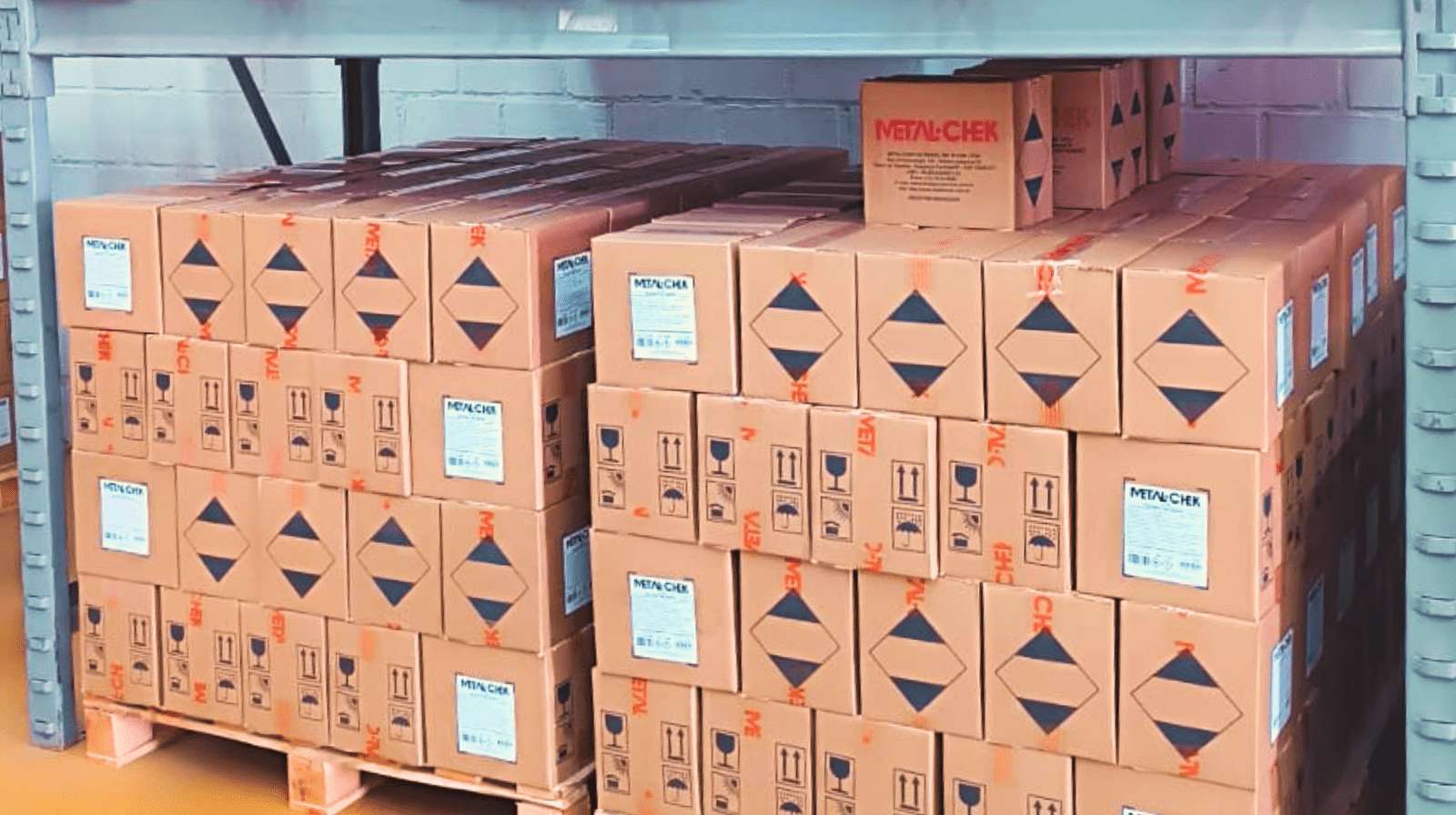
Care and Storage and Expiration Dates of END Consumables

In industrial settings, consumables for Non-Destructive Testing (END) are true allies of reliability. Penetrant liquids, magnetic particles, and developers are formulated to deliver sensitivity , contrast, and stability —three pillars that support the precision of inspections.

One critical point that cannot be overlooked: storage. When done improperly, it accelerates product degradation and directly compromises the test results.

And in industrial inspection, a mistake never comes alone — it translates into rework, costs, and risks.

Therefore, taking care of expiration dates and storage conditions is not just a good practice:  it is fundamental to maintaining the performance and technical compliance required in industrial inspections.

Why proper storage is essential

END consumables undergo rigorous formulations, developed to maintain their properties throughout use. However, factors such as humidity, temperature, and expiration date can compromise them.

  • sensitivity in detecting discontinuities,
  • contrast of the indications,
  • chemical stability
  • Repeatability of results .

When exposed to unsuitable conditions, they may:

  • to crowd together,
  • evaporate,
  • change color, odor or viscosity,
  • lose sensitivity,
  • to generate false indications or mask real flaws.

A degraded product can alter the test results.

Effects of moisture on END consumables

Moisture is one of the main factors that affect the quality of consumables.
When present in excess, it can cause clumping of powdered consumables, changes in product characteristics,  affecting performance and sensitivity.

To avoid these effects, it is important to store the products in dry, well-ventilated places, protected from condensation and sudden temperature changes. In addition, it is recommended to keep the packaging tightly closed, especially in environments with high relative humidity.

Temperature and chemical stability

Temperature has a direct impact on the chemical stability of END consumables. Excessive heat
can alter pigments, cause the evaporation of volatile components, and compromise the performance of penetrants, developers, and magnetic suspensions.
Extreme cold, on the other hand, can cause the crystallization of components , rendering the product unusable.

To ensure optimal stability and sensitivity, it is recommended to store consumables as follows:

  • In cool environments , with controlled temperatures between 5°C and 40°C;
  • Keep away from heat sources, direct sunlight, and open flames;
  • Avoid prolonged exposure to temperature variations.

Validity and usage control

Each consumable has an expiration date defined by the manufacturer, which must be strictly respected.
After this period, there is no guarantee of stability or performance — the product may show changes in color, odor, viscosity, or the formation of residues, indicating degradation of the active components.

In addition to the expiration date, it’s important to check:

  • Storage conditions ;
  • Label integrity and batch identification .

Good practice includes using the FIFO (first in, first out) principle, ensuring that older products are consumed before new ones.

Good storage practices

  1. Store upright to prevent leaks or deformation of the packaging.
  2. Avoid stacking cans or aerosols to prevent pressure damage.
  3. Keep the products sealed until the moment of use.
  4. Do not mix products from different manufacturers — chemical compatibility is not guaranteed.
  5. Visually inspect the product before use: changes in appearance indicate loss of stability.
  6. Use appropriate storage methods , keeping them away from electrical sources and intense heat.

These measures help preserve the original characteristics of END consumables and ensure testing with maximum repeatability and reliability.

Why follow these guidelines?

Following good storage and expiration date control practices reduces costs, avoids rework, and ensures the integrity of inspection results .
Proper preservation of END consumables is an essential part of quality management in industrial inspections , ensuring that each application maintains the expected performance standard from the first to the last use.


Properly storing and controlling END consumables is an investment in reliability, safety, and durability .
By maintaining ideal temperature, humidity, and shelf-life conditions, inspection ensures consistent results that comply with industry technical requirements.

The inspection begins long before the test is performed — it begins in the warehouse.


Metal-Chek provides complete solutions for Non-Destructive Testing: penetrant liquids, magnetic particles, developers and accessories, developed with cutting-edge technology to offer safety, precision and reliable results in every inspection.

○ Need technical support? Our Metal-Chek consultants are ready to help.

○ Keep learning: explore more technical articles about END on our blog .

○ Join the community of END inspectors and professionals — follow @metalchek .

Chemical Compatibility in Non-Destructive Testing (END)

The reliability of results in Non-Destructive Testing (END) depends directly on the chemical compatibility between the products used. Mixing penetrant liquids, removers, and developers from different manufacturers can compromise sensitivity, generate reading errors, and even invalidate the test.

To ensure consistent performance, traceability, and chemical stability at all stages, it is essential to use complete systems from a single manufacturer—such as the Metal-Chek line—always strictly following the manufacturer’s technical guidelines and applicable procedures.

The Importance of Chemical Compatibility in Non-Destructive Testing

In Non-Destructive Testing (END) , product compatibility is one of the most critical factors in ensuring accurate results.
In methods such as Liquid Penetrant Testing (LP) , each step— pre-cleaning, penetration, removal, and development —depends on a specific and controlled chemical formulation.

Mixing products from different manufacturers, even within the same category, can directly impact the sensitivity of the assay.

All materials used in an assay must be chemically compatible and, preferably, from the same manufacturer.
This standardization ensures the traceabilityrepeatability, and reliability of the results, as well as guaranteeing that the assembly was developed and tested to operate in chemical equilibrium under controlled conditions.

Risks of Mixing Different Products in Non-Destructive Testing

The use of penetrating fluids, removers, and developers of different brands or chemical compositions compromises the integrity of the process.
Among the main risks are:

  • Loss of contrast between the background and the indications;
  • Improper removal of the penetrant during cleaning;
  • Unexpected chemical reactions between solvents, pigments, and additives;
  • Forming false indications in reading;

These factors can lead to false results, rework, and delays, as well as jeopardize the reliability of the inspection and operational safety.

Metal-Chek Line for Liquid Penetrant Testing (LP)

The Metal-Chek line was developed to ensure complete chemical compatibility between all stages of the assay — pre-cleaning, penetration, removal, and development — guaranteeing stable performance, adequate sensitivity, and reproducible results in any industrial application.

Technical Compliance

Metal-Chek products are developed in accordance with applicable national and international standards and must be used in a compatible system by properly trained and qualified personnel.
The combined use of Metal-Chek products ensures uniformity of performance, traceability, and technical compliance, eliminating the risk of incompatibility between stages and guaranteeing accurate and reliable results.


Chemical compatibility is the key factor in ensuring the reliability of liquid penetrant testing.

Mixing products from different manufacturers compromises the chemical balance of the process and can lead to incorrect results, rework, and even inspection failures.

To ensure sensitivity, traceability, and performance in accordance with international standards, it is essential to use all products from the same system and manufacturerstrictly following the manufacturer’s guidelines and applicable procedures.

Compatibility equals reliability — use the complete Metal-Chek system and ensure accurate results.


Continue Learning with Metal-Chek

Explore other technical articles on our blog .Discover our complete line of LP and PM products, developed according to ASTM, ISO, ASME, NM and PETROBRAS standards.Talk to our technical consultants and find the ideal solution for your inspection process.Follow our Instagram page: @metalchek

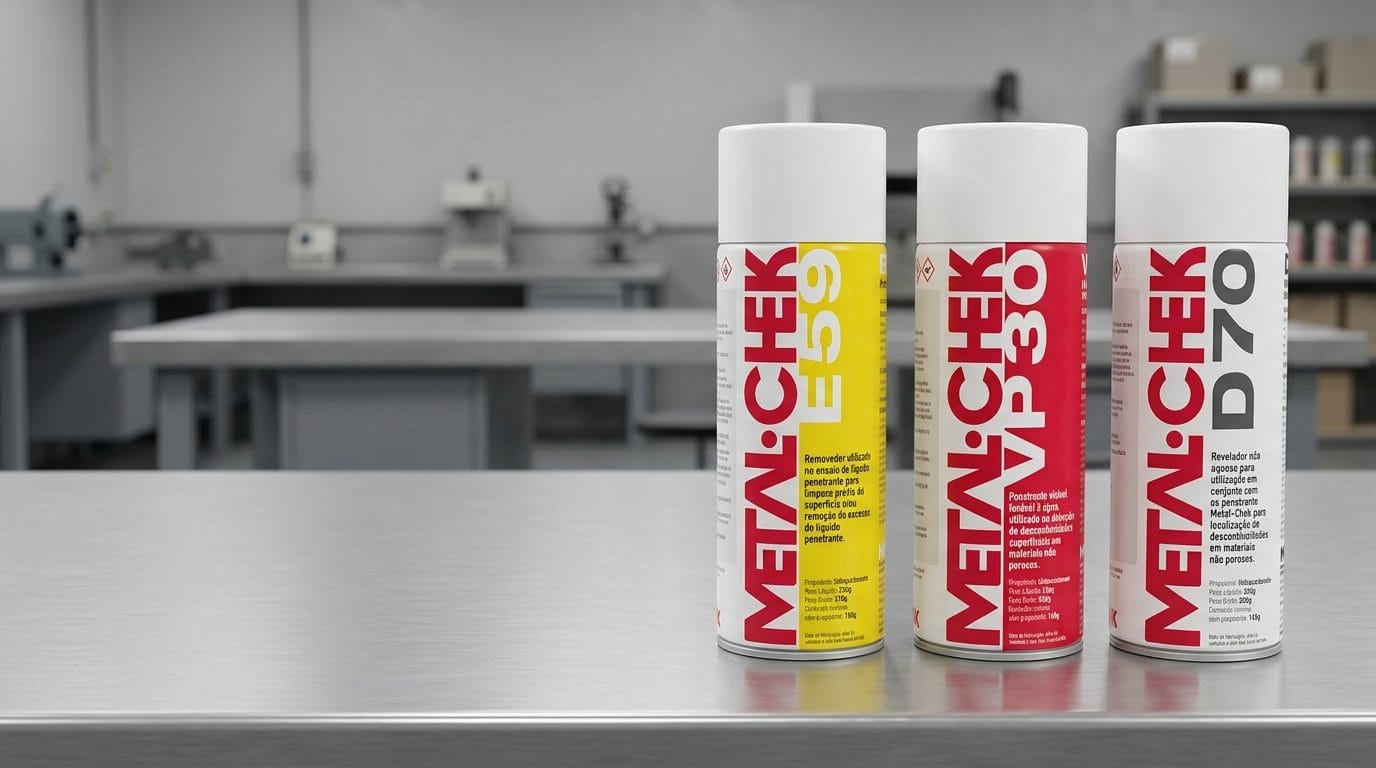
Revealing: Types and Differences

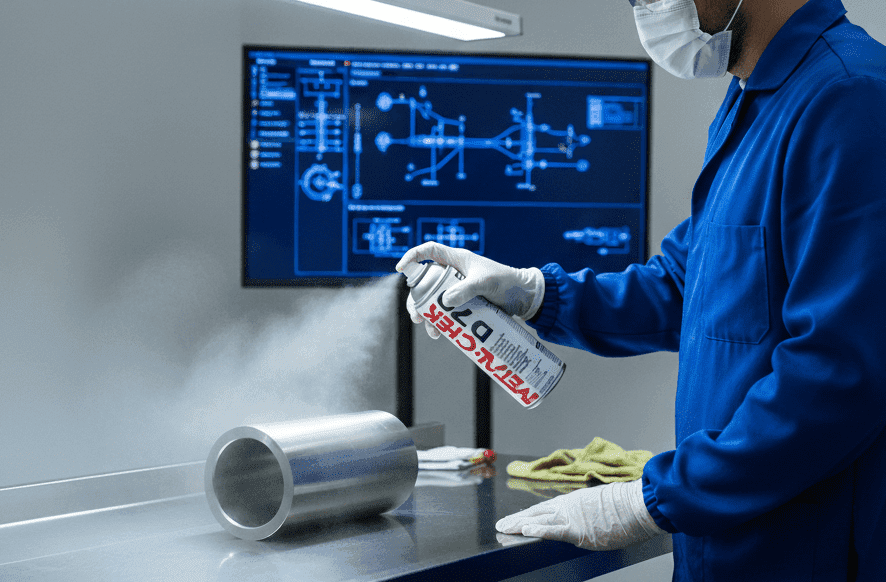
In Liquid Penetrant Testing (LP), the developer plays an essential role: it is what makes the indications of discontinuities visible. Its function is to form a thin, uniform layer on the clean, dry surface, acting by reverse capillary action —promoting the return of the penetrant retained in the discontinuities to the surface, where the visible indication is formed for evaluation under white/visible light (for visible penetrants) or ultraviolet UV-A light (for fluorescent penetrants), allowing for a clear and reliable assessment.

More than just a product, the developer is a crucial factor in the sensitivity and reliability of the test. Therefore, understanding its variations and applications is fundamental for efficient inspection that complies with technical standards.

Types of Developer and Their Differences

Developers are classified according to their form, and the correct choice depends on the type of penetrant and the inspection environment.

The main categories are listed below:

1. Dry Developer

Dry developer consists of fine powder and forms a light, absorbent film. It is applied to the dry surface after the penetrant has been removed.

  • Application: by immersion, dust chamber, electrostatic spray or spraying.
  • Advantages: high sensitivity and solvent-free; ideal for fluorescent penetrants.
  • Metal-Chek product: D72 Powder Developer , ready to use, non-flammable and easy to remove.

2. Aqueous Developer

Developer prepared in aqueous solution, which forms a uniform white film after drying.

  • Application: by immersion or spraying.
  • Advantages: homogeneous coverage, easy dispersion, and concentration control.
  • Metal-Chek product: D76 Water-Soluble Developer , diluted from 15 to 60 g/L of water, indicated for use with fluorescent penetrants.

3. Non-Aqueous Developer

It consists of fine white particles suspended in solvent, forming an opaque, high-contrast white background. It is the most common type in the field, especially in visible penetrant inspections.

  • Application: Apply in a thin, uniform layer by spraying (aerosol or compressed air gun).
  • Advantages: quick drying, excellent contrast, and easy removal.
  • Metal-Chek product: D70 Non-Aqueous Developer , available in bulk (5L) and D70 (HI) hydrocarbon propellant aerosol versions, both suitable for fluorescent and visible penetrants.
  • Operating temperature: 10 to 52 °C.

Good Application Practices (for all types)

  • Apply the developer in a thin, even layer , avoiding excess that could mask indications.
  • Allow to dry  before inspection.
  • Use products within their expiration date and store them according to temperature and ventilation recommendations.
  • Inspect under adequate lighting — white light ≥ 1076 lux for visible penetrants or UV-A ≥ 1000 µW/cm² and ambient light ≤ 21 lux for fluorescent penetrants.

Technical Notice

This content is for educational purposes only.The selection of the developer type, application parameters, and operational precautions must follow a qualified procedure approved by a Level 3 Inspector.


Choosing the right developer directly impacts the sensitivity and reliability of penetrant testing.
Each type— dry , aqueous , or non-aqueous —has specific characteristics that must be selected according to the type of penetrant, the inspection conditions, and the required level of sensitivity. The correct choice enhances the quality of the END and ensures more accurate technical decisions.


Revealing the invisible requires precision — choose Metal-Chek products.
The solution for non-destructive testing.

Continue deepening your knowledge: explore other technical articles on the Metal-Chek blog.

Discover our complete line of LP and PM products.

Speak with our technical consultants and discover the best solution for your inspection process.

Follow Metal-Chek on Instagram: @metalchek

Fluorescence in Non-Destructive Testing: Technology that Amplifies Results

In industrial inspection, fluorescence in non-destructive testing (END) is a technology that significantly enhances sensitivity and visual accuracy.

Applied in methods such as Liquid Penetrant (LP)Magnetic Particle (MP), and Leak Detection (DV), this technique allows for the identification of minute discontinuities and micro-leaks invisible to the naked eye. The result is greater safety, reliability, and operational performance.


What is fluorescence?

Fluorescence is an optical phenomenon in which certain substances absorb energy from ultraviolet (UV-A) light and re-emit it in the form of visible light .
In non-destructive testing (END), this physical principle is used to enhance the contrast of indications on metallic and non-metallic parts, facilitating the identification of surface or subsurface defects .

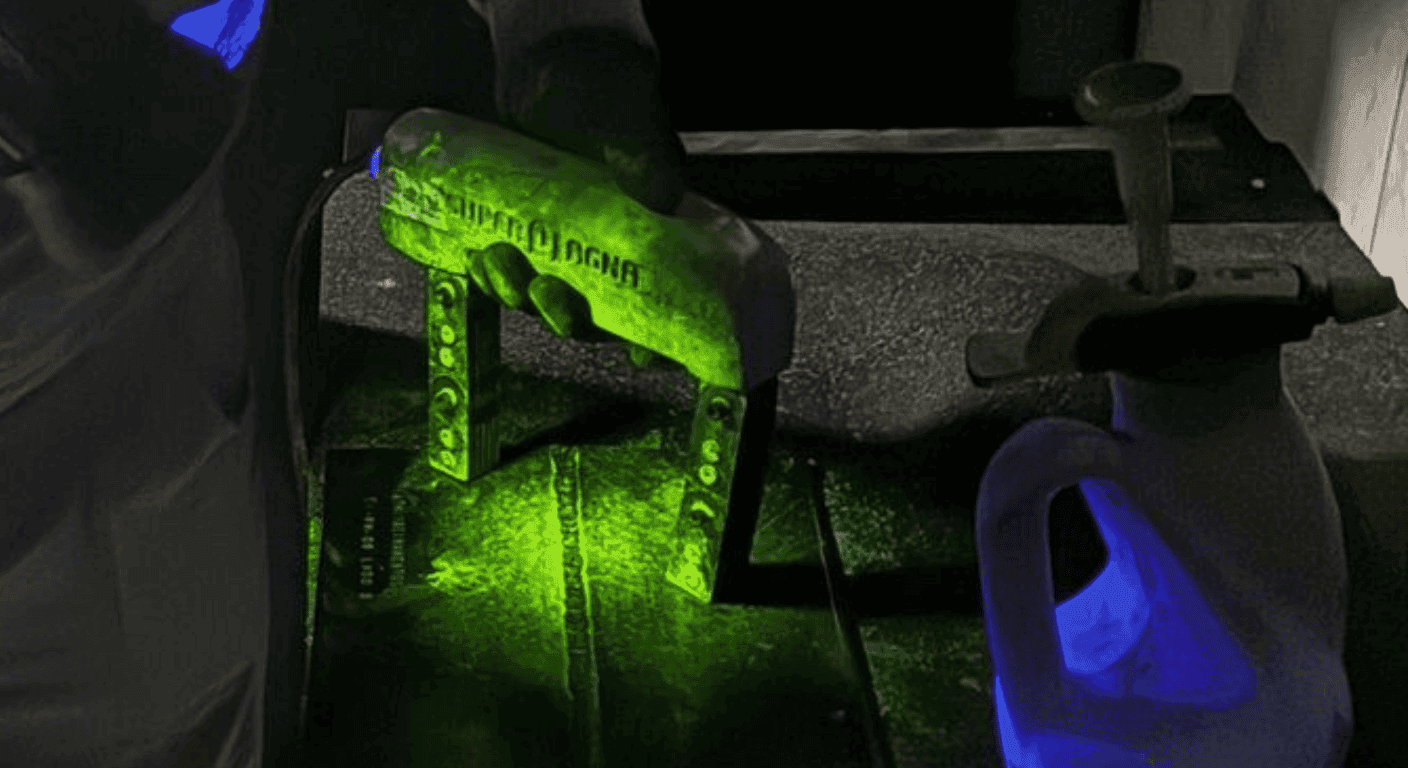
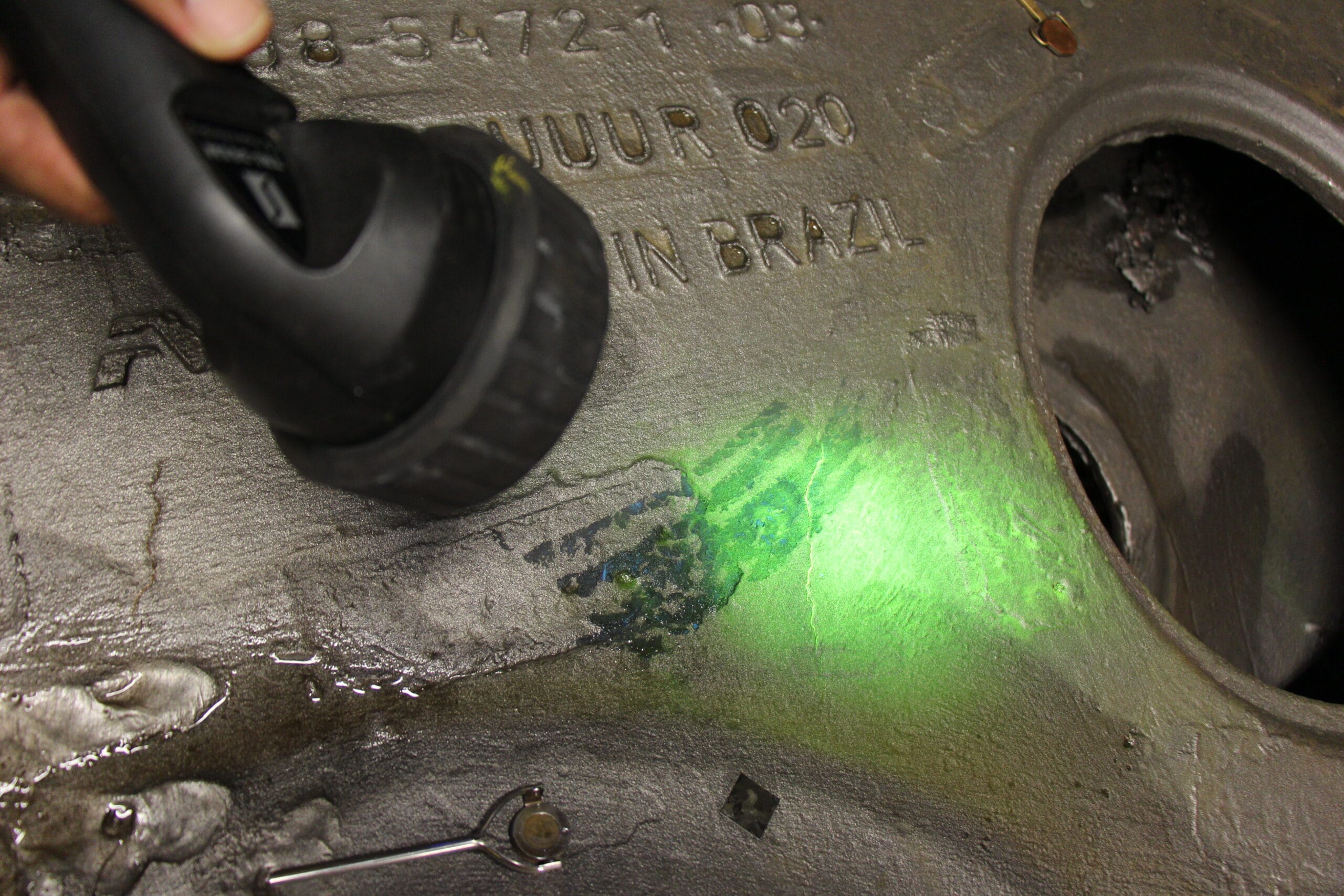
When UV-A light (365 nm) strikes the inspected material, the fluorescent particles or dyes react by emitting intense light—typically in shades of green, yellow, or orange. This makes discontinuities clearly visible, even in hard-to-reach areas.
The result is a highly sensitiveprecise, and visually clear test that allows for quick and reliable decisions.


Applications of fluorescence in END methods

1. Liquid Penetrant Testing (LP)

The LP fluorescent (Type I) method is indicated for detecting surface-open discontinuities, such as cracks, pores, lack of fusion, and other defects that may compromise the integrity of a component.

After cleaning and applying the penetrant, the excess is removed and the developer is applied. Under UV-A light, the remaining liquid in the discontinuities emits intense fluorescence, clearly revealing the indications.

Among the main advantages is its versatility of application.
The method can be used on metallic and non-metallic materials, whether magnetic or non-magnetic, such as aluminum, magnesium, austenitic stainless steels, and titanium.
It can also be applied to ceramics, glass, and some types of plastics, provided they are non-porous materials.

Metal-Chek Products:

  • FP-91 and FP-91 HI – Water-washable penetrants, Type I – Method A, Level 2, ideal for inspections requiring greater sensitivity.

Compatible with D70, D72 and D702 developers.


2. Magnetic Particle Testing (MPT)

In ferromagnetic materials, fluorescence enhances the detection of surface and subsurface discontinuitiesFluorescent magnetic particles
accumulate in regions where the magnetic field escapes, forming visible indications under UV-A light. For magnetic particle testing to be effective, it is essential that the part be magnetized. The application of a magnetic field —circular, longitudinal, or combined—creates magnetic flux lines in the material.

Metal-Chek offers the Supermagna Yoke HMM6, an alternating current (AC) electromagnetic yoke developed for visible and fluorescent testing. The equipment provides a stable magnetic field and high mobility, making it widely used in industrial, petrochemical, and predictive maintenance inspections.

Metal-Chek Products:

  • Supermagna LY 800 – High-sensitivity fluorescent dry-process magnetic particle.
  • Supermagna LY 2000, LY 2000 V, LY 3000 and LY 3000 V – Wet-applied fluorescent magnetic powder particles, applicable with OMC 10 MMS (oil) or BC 502 SN + water vehicles.
  • Supermagna CLY 2000 VO MMS BP / CLY 3000 O MMS BP / VO MMS BP – Ready-to-use wet (oil) baths with high mobility and contrast.
  • Supermagna DLY 2000 – Water-dispersible wet magnetic particle.
  • Supermagna CRL 265 AG/SN – Dual concentrate (fluorescent/visible), applicable under visible (white) or UV-A light in environments up to 1000 lx.

3. Leak Detection (Leak Testing)

In leak tests, fluorescent additives allow visualization of micro-leaks in hydraulic, pneumatic, and lubrication systems.
Under UV-A light, even the smallest leaks become visible, enabling immediate repairs and preventing critical failures.

Metal-Chek Products:

  • Oil-Glo Ultra SPI Series
    • SPI-OGG (Green) , SPI-OGB (Blue) and SPI-OGW (White) — Fluorescent detectors for oily fluids.
    • Non-flammable, they do not alter the properties of fluids and are NSF certified .
  • Water-Glo Ultra SPI Series – Green (WGG) and blue (WGB) fluorescent dyes for aqueous systems.

UV-A Lighting Equipment

For fluorescent testing, it is essential to use UV-A (365 nm) light sources with a minimum intensity of 1000 µW/cm² on the surface being examined, in accordance with END technical standards.
This intensity ensures adequate contrast and accurate reading of the indications.


Benefits of fluorescence in END

The correct application of fluorescence brings significant technical advantages:

  • High visual sensitivity , revealing minute discontinuities.
  • Greater contrast and clarity of the indications.
  • Safe and versatile application in different methods and materials.
  • Technical compliance with national and international standards.
  • Reduction of rework and operational errors.

Furthermore, fluorescence improves the reliability of results and strengthens quality control in critical inspections.


Fluorescence in non-destructive testing is an essential technology that raises the standard of precision, safety, and reliability in industrial inspections.
By applying this technique in liquid penetrant testing (LP), mechanical testing (PM), and visual diffusion (DV), enhanced visualization, high sensitivity, and immediate results are obtained, reducing failures and ensuring operational reliability.

With the complete Metal-Chek product line — which includes penetrants and fluorescent particles, leak detection additives, magnetization equipment, and UV-A illumination — your industrial inspection reaches new levels of quality and technical compliance.


See beyond the visible — Metal-Chek fluorescent technology.
Solutions for Non-Destructive Testing.

Talk to our experts
and follow us on @metalchek

Technical Standards Governing Penetrant and Magnetic Particle Testing

The importance of technical standards in Non-Destructive Testing

Non-destructive testing (END) is essential to ensure the integrity of equipment and components used in various industrial sectors.
Among the most widely used methods are liquid penetrant testing (LP) and magnetic particle testing (PM).

Both allow the identification of discontinuities that could compromise the safety and performance of metal structures, welds, shafts, or castings, etc.

To ensure the quality and standardization of results, there is a set of national and international technical standards that establish criteria for execution, materials, and test conditions.

Next, see what these rules are and what each one determines in summary.


ASTM E1417 – Standard Practice for Liquid Penetrant Testing

It is the main international standard for the Penetrant Testing method.
It defines the essential parameters for the safe and accurate execution of the test, including:

  • Classification of penetrants (fluorescent and colored);
  • removal methods (water washable, post-emulsifiable, solvent removable);
  • lighting and sensitivity requirements;
  • stages of the process, such as cleaning, penetration, and development.
  • process controls.

ISO 3452 – Non-Destructive Testing – Penetrant Testing

The ISO 3452 series establishes international standards for materials and equipment.
Among its main topics are:

  • Part 1: General principles;
  • Part 2: Penetrant material requirements;
  • Part 3: Reference blocks;
  • Part 4: Equipment;
  • Part 5: Requirements for liquid penetrant testing at temperatures above 50 °C.

NM 334 – Non-destructive testing — Penetrant testing — Discontinuity detection

Mercosur standard that defines the main requirements for LP inspections in the national context, including:

  • technical terminology and symbology;
  • test stages (pre-cleaning, application, penetration, removal, development and evaluation);
  • minimum lighting levels;

ASTM E165 – Standard Practice for Liquid Penetrant Testing for General Industr y

Standard that defines the general procedures and criteria for liquid penetrant testing (LP) in industrial applications.
Establishes requirements for:

  • Classification of penetrants (fluorescent or colored);
  • removal methods (water, solvent or post-emulsifiable);
  • Control of lighting, temperature, and penetration time;
  • Sensitivity testing and product quality control.

PETROBRAS N-1596

Define:

  • test parameters and minimum/maximum process times;
  • procedural requirements;
  • lighting conditions;
  • Product classification and traceability;
  • Requirements for staff execution and qualification.

PETROBRAS N-2370

Provides:

  • General guidelines for safety, documentation, and traceability;
  • Penetrant testing.

ASME V – Art. 6

An integral part of the ASME Boiler and Pressure Vessel Code (BPVC), it defines the requirements for penetrant testing applied to boilers, pressure vessels, and pressurized equipment.
It contains:

  • Specifications for materials and equipment;
  • sensitivity check of the test system;
  • process control and inspection intervals;
  • Acceptance according to manufacturing codes.

ASTM E709 – Standard Guide for Magnetic Particle Testing

The principal international standard governing magnetic particle testing.
It establishes best practices and application guidelines for:

  • Magnetization techniques (yoke, electrodes, coil, center conductor and direct contact);
  • use of colored and fluorescent particles;
  • Electrical current control and field direction;
  • Verification of particle concentration and illumination (visible and UV).

ASTM E3024 – Standard Practice for Magnetic Particle Testing for General Industry

It complements ASTM E709 and provides specific instructions for inspections in general industry.


NM 342 – Non-destructive testing — Magnetic particles — Discontinuity detection

It establishes technical parameters for conducting the test in accordance with international standards:

  • Dry and wet application;
  • characteristics of magnetic particles and liquid vehicles;
  • Recommended concentration ranges for wet application (0.1 to 0.4 mL for fluorescent and 1.2 to 2.4 mL for colored);
  • Light intensity control for visible and UV-A light.

ASTM E1444 – Standard Practice for Liquid Penetrant Testing for Aerospace

Specifically for the aeronautical and aerospace sector, it defines detailed practices for magnetic particle (PM) testing.
It establishes:

  • requirements for magnetic materials and vehicles;
  • concentration limits and bath control;
  • UV-A and white light checks;
  • Strict calibration and acceptance criteria.

PETROBRAS N-1598

It defines the criteria for performing the PM method on ferromagnetic materials.
It covers:

  • magnetization techniques;
  • UV lighting requirements and field strength;
  • calibration procedures.

ASME V – Art. 7

Part of the ASME Boiler and Pressure Vessel Code, it defines the requirements for magnetic particle testing of pressurized equipment and welded components.
It covers:

  • Types of electric current and magnetization techniques;
  • magnetic field intensity control;
  • detection methods;
  • Acceptance and qualification criteria for the testing system.

ISO 9934 – Non-Destructive Testing – Magnetic Particle Testing

The ISO 9934 series establishes international standards for materials and equipment.
Among its main topics are:

  • Part 1: General principles;
  • Part 2: Detection method;
  • Part 3: Equipment;

Importance of technical standards for the reliability of END (Non-Destructive Testing).

The standards governing liquid penetrant and magnetic particle methods are the technical basis that ensures reliability and regulation  of Non-Destructive Testing.
They guide everything from product development to practical application in the industrial environment, ensuring quality, safety, and standardization in every inspection.

Knowing these standards is essential for anyone working in quality control, maintenance, and inspection — whether in heavy industry, petrochemicals, aeronautics, or metallurgy.


Important notice:

This content is for educational purposes only. The application of the test methods and parameters must follow a qualified procedure approved by a Level 3 Inspector .


Solution in Non-Destructive Testing

Metal-Chek provides complete END solutions: penetrant liquids , magnetic particles , yoke and accessories , developed according to the main ASTM, ISO , ASME, NM, PETROBRAS standards, guaranteeing quality, safety and technical compliance in every inspection.

Discover the complete Metal-Chek product line.

Contact our team.

Follow @metalchek

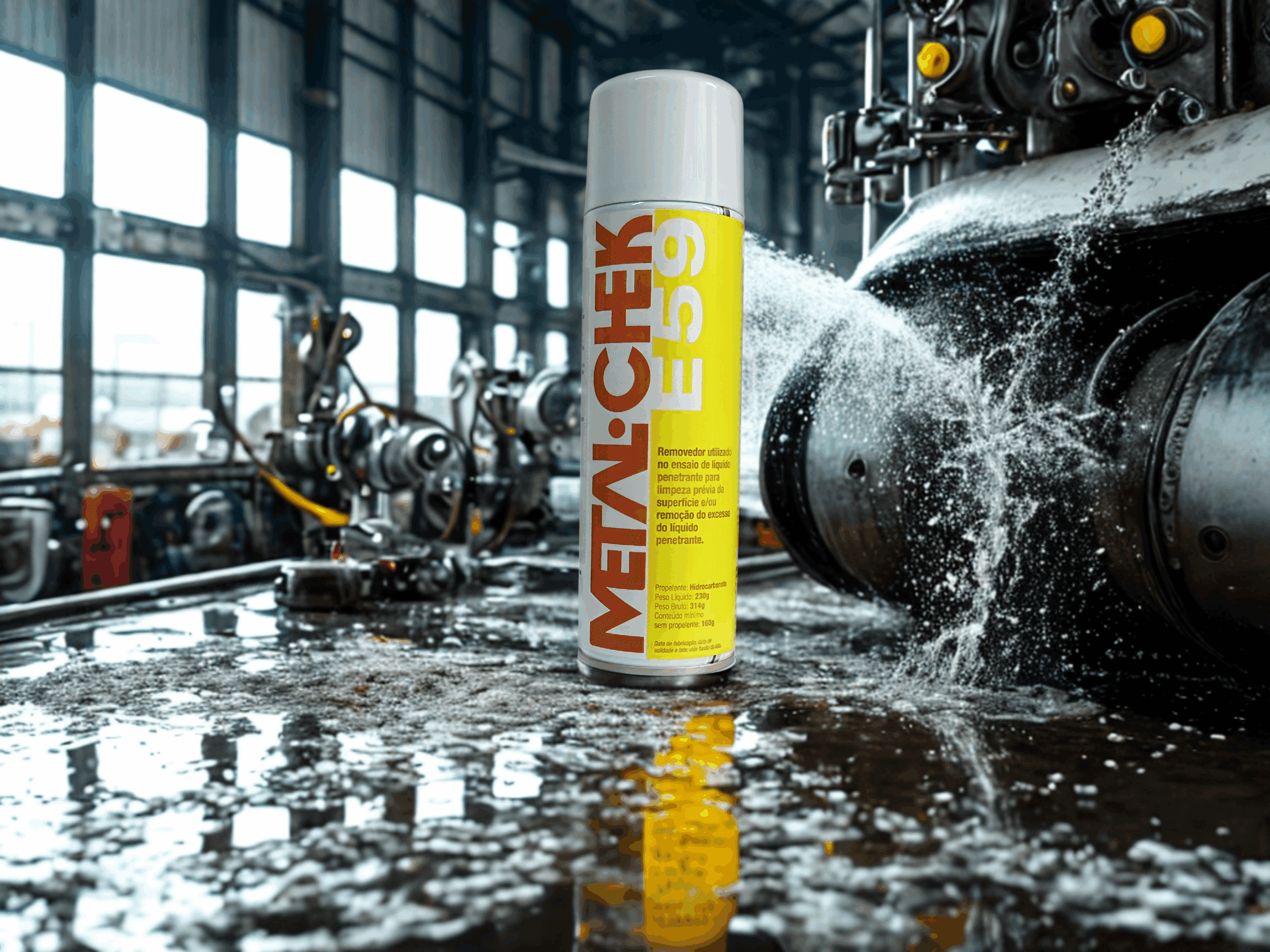
E-59: Aliphatic Solvent for Non-Destructive Testing and Heavy Industrial Cleaning

In industrial maintenance, the efficiency of a solvent goes far beyond cleaning. E-59 is a clear example: developed as an aliphatic solvent, it plays a strategic role in both non-destructive testing (END) and heavy-duty cleaning of industrial components, especially in environments where lubricating oil is a constant challenge.


E-59 in Non-Destructive Testing

In inspection and quality control processes, choosing the correct solvent directly impacts the effectiveness of the tests. E-59 is widely used as part of the surface preparation steps in liquid penetrant testing, ensuring that parts and components are properly cleaned and free of contaminants before the method is applied. This results in greater accuracy in detecting discontinuities.


Applications in Oil Cleaning and Lubrication

Beyond its use in inspection applications, the E-59 is recognized for its high efficiency in removing lubricating oil from engine blocks, mechanical parts, and impregnated surfaces. This versatility makes the product an ally in sectors that deal with high levels of oil contamination, such as engine rebuilding shops, heavy maintenance, and railway industries.


Use in Grinding Shops and the Railway Sector

Engine rebuilding companies use E-59 for the precise cleaning of engines and components, ensuring that the reassembly process occurs under ideal conditions. In the railway sector, especially in locomotive manufacturing companies, the product stands out for its ability to remove oil residue from large and complex parts, where cleanliness is critical for the reliability and durability of the equipment.


Advantages of the E-59

  • High performance aliphatic solvent.
  • Ideal for surface preparation in non-destructive testing.
  • Excellent removal of lubricating oil and grease.
  • Widely used in engine rebuilding shops and locomotive companies.
  • Versatility: suitable for industrial maintenance, inspection, and heavy-duty cleaning.

E-59 is not just a solvent. It represents a practical and reliable solution for sectors that demand deep cleaning and precision in non-destructive testing. Whether in engines, industrial parts, or large railway systems, its application guarantees efficiency, safety, and reliability in day-to-day maintenance.

Want to learn more about the E-59 and its applications? Talk to our team !

Read also: High-Quality Industrial Inspections Begin with a Clean Surface

Follow us on Instagram: @metalchek

How to Specify Non-Destructive Testing (END) in Purchase Proposals (RFQ)

A practical guide for purchasers and supply engineers.

In industry, Non-Destructive Testing (END) is fundamental to ensuring the quality, safety, and conformity of parts and equipment. However, many Requests for Quotations (RFQs) fail because they do not correctly specify what is being requested—whether it is the  contracting of END services  or the  acquisition of supplies and equipment  to perform it.

Below, we present a practical guide to preparing clear and complete RFQs, with real-world examples from Metal-Chek and Supermagna products.


1. Define what you are buying: a service or a supply.

First of all, determine if your RFQ will be for:

  • END service  – the supplier performs the test and delivers the technical report.
  • Materials/supplies/equipment for END  – your team or service provider will use the purchased products to perform the test.

This distinction avoids confusion and ensures that the specifications are suitable for what you want to buy.


2. Specifying the contracting of the END service

When hiring a service, describe how the test should be conducted and what acceptance criteria will be adopted.

a) Method and technique

Specify the method and technique:

  • Example: Liquid penetrant testing, Type I, Method A, Level 2, using  Metal-Chek FP 91
  • Example: Dry magnetic particle extraction, white powder, using  Supermagna WD 55

b) Reference standard

Define the applicable standard (ASTM E165, ASTM E709, ASME Section V, AWS D1.1 or internal standards such as Petrobras N-1596/N-1598).

c) Acceptance criteria

Determine codes and levels (e.g., ASME VIII Div.1, EN 1369, Level 2 or 3).

d) Inspector qualifications

Require SNQC/ABENDI or ASNT SNT-TC-1A certification, Level II or III, depending on the method.

e) Implementation conditions

Include requirements such as cleanliness, adequate lighting (lux or µW/cm²), temperature, humidity, and application times.

f) Documentation and traceability

Request reports with photos, sketches, and part identification, ensuring traceability by batch or serial number.


3. Specifying the purchase of materials and equipment for END

When purchasing supplies or equipment, the RFQ (Request for Quotation) should contain technical details of the product.

a) Penetrant Liquids

  • FluorescentMetal-Chek FP 91 , Type I, Method A, Level 2
  • VisibleMetal-Chek VP 30 , Type II, Method A
  • VisibleMetal-Chek VP 31 , Type II, Method C

b) Developers

  • Dry:  Metal-Chek D72 , form a
  • Non-aqueous:  Metal-Chek D70 , form d, e
  • Aqueous:  Metal-Chek D76 , form b

c) Removers / Cleaners

  • Solvent: Metal-Chek E 59 , Class 2
  • Solvent: Metal-Chek R 501 , Class 1

d) Magnetic Particles

  • White dry track: Supermagna WD 55
  • Yellow dry track: Supermagna YD 404
  • Fluorescent wet process: Supermagna LY 2000
  • Visible red wet path: Supermagna RW 222
  • Visible black wet sample: Supermagna BW 333

e) Equipment


4. Best practices for any END RFQ

  • Be specific: avoid generic terms like “LP test” without specifying the method, type, and standard.
  • Standardize the descriptions across all requests.
  • Approve the technical proposal before the price.
  • Include safety and environmental requirements (PPE, proper disposal of products).

Conclusion

A clear specification — whether for contracting END services or acquiring Metal-Chek and Supermagna supplies — ensures that the process is executed with quality, reduces risks, and avoids rework.

Want to learn more?  Read also: How to choose the ideal penetrant type for each application.

Speak to our technical team.

Follow us on Instagram: @metalchek

Planning an Effective Non-Destructive Testing Program: Essential Checklist

The role of inspections in modern industrial maintenance.

Industrial maintenance has evolved by leaps and bounds in recent decades. With the advancements of Industry 4.0 , new technologies, sensors, and continuous monitoring systems have been integrated into the daily operations of factories and industrial plants. However, no matter how innovative these emerging technologies are, one foundation remains unshaken: inspection through Non-Destructive Testing (END) .

Inspecting without causing damage to parts and structures is a technical, economic, and strategic advantage. In sectors where safety and reliability are critica l— such as oil and gas, aeronautics, automotive, civil construction, metallurgy, and industry and commerce in general — END (Non-Destructive Testing) is indispensable for predicting failures, ensuring the integrity of components, and increasing the lifespan of assets.

In this article, we will present a practical guide to structuring an effective non-destructive testing program. We will cover what should be taken into account, which professionals should be involved, when to apply the techniques, and how to document and interpret the results. By the end, you will have an essential checklist that can be adapted to different industry realities.

Why plan a Non-Destructive Testing program?

Imagine a ship undertaking long sea voyages. Instead of waiting for something to break at sea, a routine of inspections allows for the identification of cracks, corrosion, and structural flaws before they become catastrophic. This applies to an urban bridge, mining equipment, or a pressure vessel in a chemical plant.

A well-structured END (Non-Destructive Testing) program is the cornerstone of efficient industrial maintenance , integrated with the philosophy of predictive maintenance , operational reliability, and occupational safety. Furthermore, it reduces costs associated with unplanned downtime and serious failures.

Essential Checklist: How to Structure an END Program

1. Identify the critical assets.

The first step to an efficient plan is knowing what will be inspected. Make a list of the plant’s most critical assets: equipment operating under high pressure, structures subject to repetitive stress, components exposed to corrosion, or welds in strategic locations.

Practical tip: use tools such as FMEA (Failure Mode and Effects Analysis) or RCM (Reliability-Centered Maintenance) to identify assets that deserve more attention.

2. Define clear objectives.

Each inspection should have a purpose: to detect cracks? To assess the quality of a weld? To check for leaks using penetrant testing? Define the objectives to determine the best technique and frequency of evaluation.

3. Choose the appropriate Non-Destructive Testing methods.

ENDs encompass a range of methods. Among the most common are:

  • ◽ Penetrant Testing (PT): ideal for detecting surface cracks in non-porous metals. Widely used in weld inspection.
  • ◽ Magnetic Particles (MP): efficient for detecting surface and subsurface discontinuities in ferromagnetic materials.
  • ◽ Ultrasound (UT): allows for the verification of internal defects, material thickness, and density variations.
  • ◽ Industrial Radiography (X-ray): ideal for detecting volumetric flaws in welded joints or cast parts.
  • ◽ Visual Inspection (VI): the first line of defense, it must be carried out systematically, with appropriate equipment and lighting.

The choice depends on the type of material, the defect to be detected, the applicable technical standards, and operational feasibility.

4. Determine the frequency of inspections.

Each piece of equipment has an estimated lifespan, but actual operating conditions can accelerate wear and tear and failures. Therefore, the frequency of inspections should consider:

  • ◽History of failures
  • ◽Operating environment (abrasive, corrosive, humid)
  • ◽Mechanical loads and stresses
  • ◽Specific regulatory standards (e.g., NR-13 for pressure vessels)

Practical example: in sectors involving constant inspection and welding, such as boiler making and oil pipelines, the frequency should be more rigorous.

5. Develop standardized operating procedures (SOPs).

Having standardized operating procedures (SOPs) is essential to ensure repeatability, traceability, and quality. These procedures should include:

  • ◽Techniques to be applied
  • ◽Surface preparation steps
  • ◽Equipment and consumables used
  • ◽Acceptance and rejection criteria
  • ◽Photographic records and reports

At Metal-Chek, for example, penetrant, developer, and remover fluids comply with AMS 2644 and Petrobras N-2370 standards, ensuring standardization in critical inspections.

6. Train the technical team.

The professionals responsible for applying END (Non-Destructive Testing) must be qualified, according to the requirements of the ABNT NBR ISO 9712 standard or equivalent international standards. They are classified into three levels:

  • Level 1: Performs inspections following detailed instructions.
  • Level 2: Interprets results, prepares reports, and instructs Level 1.
  • Level 3: Designs and validates procedures, leads audits, and ensures regulatory compliance.

An industry that invests in training and certifying its team reaps the rewards in reliability, safety, and performance.

7. Document and manage the results.

Photographic records, reports, and historical data should be stored in an organized manner. This facilitates trend analysis, audits, and the planning of corrective actions. With the digitization of processes and the arrival of Industry 4.0, integrated management platforms with IoT, sensors, and cloud databases make this process more agile and secure.

Integration with Industry 4.0: END as a link between technology and reliability.

A well-planned inspection program goes beyond conventional maintenance. It integrates with the emerging technologies of Industry 4.0.

  • ◽ Onboard sensors detect vibration, temperature, or microcracks in real time.
  • ◽ Predictive systems warn when a component is close to failure.
  • ◽ Robotic inspections in hard-to-reach locations increase safety.
  • ◽ Predictive analytics software cross-references historical data with recent inspections to predict future failures.

In other words, non-destructive testing ceases to be a one-off action and becomes a strategic part of the company’s operational intelligence.

Inspections and Welding: A Critical Relationship

A large proportion of structural failures originate from poorly executed or degraded welds over time. The correct application of END (Non-Destructive Testing) in this context is vital for:

  • ◽ Ensure weld quality during manufacturing.
  • ◽ Detect thermal or fatigue cracks
  • ◽ Control stress corrosion cracking (especially in harsh industrial environments)

Techniques such as liquid penetrant and magnetic particles are particularly effective in this scenario, with the advantage of low cost and high sensitivity.

Fictional case: Inspection Program at a Metallurgical Plant

Let’s imagine a plant that performs casting and machining of large metal parts. The technical management decided to implement a robust inspection program after recurring failures in transmission shafts.

Steps followed:

  1. Mapping of critical assets: shafts, gearboxes and welds on structural supports.
  2. Choice of END methods: liquid penetrant for welds, ultrasound for shafts.
  3. Drafting SOPs: based on ASTM and Petrobras standards.
  4. Staff training: Level 2 certification for inspectors.
  5. Defined frequency: quarterly inspections and extraordinary inspections after major maintenance.
  6. Digitizing results: cloud-based reports accessible to engineering.

Results: In less than a year, the failure rate dropped by 80%, and operational reliability increased. An example of how planning and technique make a difference in industrial maintenance.

An END plan is a safety and productivity plan.

Planning a non-destructive testing program is not just a technical requirement, but a strategic decision. In times when industry needs to be increasingly efficient, safe, and sustainable, adopting preventive and reliable practices is the right path.

Metal-Chek , as a national leader in providing products and solutions for END (Non-Destructive Testing), is ready to support companies that want to raise the standard of their inspections. Our penetrant liquids , magnetic particles, UV equipment, developers, and removers meet the highest national and international standards.

Whether it’s welding, industrial assembly, or structural integrity analysis, count on Metal-Chek to ensure your inspection program is one step ahead. Because reliability isn’t improvised—it’s built with planning, technique, and excellence.

Final Checklist: Efficient END Program

✅ Map critical assets
✅ Define clear objectives for each inspection
✅ Choose appropriate END methods
✅ Establish periodicity according to standards and criticality
✅ Develop SOPs according to best practices
✅ Train and certify the technical team
✅ Manage and digitize the results

If you want to take the next step and structure your inspection program with the best supplies and equipment, contact the Metal-Chek technical team.

Follow us on Instagram: @metalchek

Contact us at: (11) 3515-5287

Predictive Maintenance in Industry: Benefits of Non-Destructive Testing

Operational reliability is one of the cornerstones of modern industry. With increasing pressure to reduce costs and enhance asset safety and efficiency, predictive maintenance has become essential. In this context, non-destructive testing (END) plays a decisive role, adding precision and safety to technical and operational decision-making.

The adoption of continuous monitoring technologies and smart sensors has driven the digital revolution in industry, aligning with the principles of Industry 4.0 . Within this ecosystem, ENDs (Non-Destructive Testing) are fundamental for validating data and expanding the ability to anticipate failures.

This article explores how the integration of sensors, monitoring systems, and methods such as liquid penetrant testing , magnetic particle testing, and leak detection contributes to the efficiency of predictive maintenance. We also present how Metal-Chek, a national leader in END products, enhances this integration with technology, quality, and regulatory compliance.

Predictive Maintenance: Far Beyond Traditional Inspection

Predictive maintenance relies on collecting and analyzing data in real time to predict failures and avoid unexpected downtime. It is a strategy focused on the actual condition of the equipment, in contrast to corrective (post-failure) or preventive (fixed interval) maintenance.

Common tools of predictive maintenance:

  • Temperature, vibration, and pressure sensors;
  • Spectral and eddy current analysis;
  • Infrared thermography;
  • Ultrasound and tribological analysis (oil monitoring);
  • And of course, Non-Destructive Testing , which complements automated alerts with a detailed and visual approach to the failure.

Technical and economic benefits:

  • Prevention of unscheduled downtime;
  • Increased lifespan of components and assets;
  • Cost reduction through reduced rework and parts replacement;
  • Improved safety in industrial operations and the trade of high value-added products;

Companies in the industrial and commercial sectors have been increasingly investing in technologies that allow for greater operational predictability, aligning themselves with the global trend of digital transformation in industry.

Non-Destructive Testing: The Basis of High-Precision Inspection

Non-destructive testing (END) techniques are inspection methods that analyze materials, parts, and welds without compromising their structural integrity. They are widely used to detect cracks, inclusions, porosity, delamination, and other defects that cannot be visually identified.

In predictive maintenance, END (Non-Destructive Testing) offers:

  • Visual and technical confirmation of anomalies detected by sensors;
  • Monitoring the spread of structural defects;
  • Photographic record and traceable technical documentation;
  • Support for decision-making based on concrete evidence;
  • Reducing uncertainty during planned interventions;
  • Compliance with national and international standards for quality, safety, and traceability.

Main methods:

  • Penetrant Liquid (PL) : excellent for surface cracks in metals and non-metallic materials;
  • Magnetic Particles (MP) : used on ferromagnetic materials, detects surface and subsurface cracks;
  • Industrial Ultrasound : ideal for locating internal defects with high precision;
  • Industrial radiography : provides internal images of complex structures;
  • Eddy Current : useful for thin layers and quick inspections;
  • Infrared thermography : thermal visualization of abnormal heating points.

These methods are routinely applied in inspections of welding, boilers, pressurized pipelines, valves, aeronautical structures, and parts subject to mechanical wear. The advantage lies in the early detection of cracks, porosity, delamination, and other types of structural defects, even in aggressive or difficult-to-access environments.

Industry 4.0 and the Intelligent Integration between Sensors and END

Industry 4.0 is transforming the way we manufacture, maintain, and manage industrial assets. The connectivity between sensors, software, machines, and people enables a systemic and predictive view of the entire operation.

In this context, ENDs (Non-Destructive Testing) take on a new function: to physically validate the data collected automatically . In other words, the sensors detect abnormal operating patterns, while the tests confirm (or rule out) the presence of real structural flaws.

Practical example:

A sensor detects increased vibration in a critical motor. Subsequently, a penetrant testing is performed on the support base area, revealing a superficial “U”-shaped crack. This visual confirmation allows for localized interventions, reducing downtime.

Benefits of integration:

  • Correlation between digital data and physical evidence;
  • Decisions based on technical grounds;
  • Optimization of maintenance plans;
  • Unnecessary replacements are avoided;
  • Minimizing downtime;
  • Increasing predictability and reducing uncertainty.

The integration between ENDs (Non-Destructive Testing) and sensors is an essential step towards achieving autonomous maintenance and reliability-based management . This approach fits perfectly into the digitalization strategies of Brazilian industry and commerce.

Metal-Chek Solutions: High Performance for Predictive Inspections

Metal-Chek offers a complete line of products for Non-Destructive Testing (END) , developed with high-quality raw materials and rigorous manufacturing control.
The Penetrant Liquids , Removers, and Developers meet the requirements of AMS 2644 and Petrobras N-2370 standards, and also comply with Petrobras N-1596, ASME Section V, ASTM E1417, and ISO 3452-3 standards.

In the Magnetic Particle line, SuperMagna offers consumables with balanced particle size, ensuring maximum sensitivity and precision in detecting discontinuities. The particles are manufactured according to AMS 3040 to 3046 standards and meet the requirements of Petrobras N-1598, ASTM E1444, ASME Section V, and ASTM E709 standards.

This credibility positions the brand as a strategic partner for companies that adopt predictive maintenance with a focus on efficiency and safety.

These products are present in segments such as oil and gas, aerospace, rail, mining, power generation, and industrial manufacturing, consolidating the application of END as an integral part of predictive strategy.

Featured solutions:

Penetrant Liquid

Metal-Chek’s penetrant liquid is ideal for detecting surface discontinuities in metallic and non-metallic materials (such as aluminum, stainless steel, nickel alloys, ceramics, and technical plastics). The product line ranges from visible to fluorescent products, offering high penetration and contrast power.

Process steps:

  1. Surface cleaning;
  2. Application of the penetrant (visible or fluorescent);
  3. Controlled penetration time;
  4. Excess removal;
  5. Applying the developer;
  6. Assessment by a qualified inspector.

Highlights of the Metal-Chek Line:

  • VP 30: Visible, water-washable – ideal for rough surfaces.
  • VP 31: solvent-removable visible – suitable for critical inspections of metals subject to oxidation.
  • FP 91: Water-washable fluorescent – ​​general use with medium sensitivity.
  • High Temperature VP 302: inspections of parts operating between 52 °C and 120 °C.

Magnetic Particles

An effective method for detecting surface and subsurface cracks and discontinuities in ferromagnetic materials. The SuperMagna line offers extreme precision and sensitivity. Available in dry and wet versions, fluorescent or visible.

Application:

  • Cast, rolled, machined or welded parts ;
  • Inspections during or after manufacturing;
  • Surfaces exposed to high temperatures (up to 300 °C in some products).

How it works:

  • Magnetizing the workpiece with a yoke or stationary equipment;
  • Particle application (dry or wet methods);
  • Visual identification of the defect by the agglomeration of particles in the magnetic leakage field.

Highlights of the SuperMagna Line:

  • SuperMagna LY 3000: latest generation, wet fluorescent, extremely high sensitivity.
  • SuperMagna WD 55 / YD 404: dry process, for hot parts (up to 300°C)
  • SuperMagna LY 2000: the best-known wet fluorescent printer on the national market.
  • SuperMagna CRL 265: dual particle, ideal for environments with alternating visible and UV-A inspection.

Equipment:

YOKE HMM6: high-performance, robust, and certified portable equipment for use in demanding industrial environments.

These products are present in segments such as oil and gas, aerospace, rail, mining, power generation, and industrial manufacturing, consolidating the application of END as an integral part of predictive strategy.

Real-World Applications of Predictive Maintenance with END

1. Aeronautical Industry

  • High operational risk requires strict control.
  • Lightweight alloy parts, such as titanium and aluminum, are routinely inspected with fluorescent penetrant liquid .
  • The part’s history is digitally recorded for complete traceability.

2. Iron and Steel Industry and Metallurgy

  • High temperatures and mechanical stress accelerate degradation.
  • Magnetic particle inspection reveals cracks in cylinders, rollers, and shafts while they are still in the production line.
  • Maintenance can be planned without interrupting the production process.

3. Power Generation (Hydroelectric, Thermal, Wind Power Plants)

  • Turbines, ducts, and blades require periodic inspection.
  • Sensors detect abnormal vibrations or noises.
  • ENDs confirm the failure before there is a risk of collapse.

4. Railways

  • Rails and axles are subject to cyclic stress.
  • Predictive maintenance allows for scheduling replacements before breakdowns occur.
  • Metal -Chek provides portable kits for quick and effective field inspections.

5. Shipbuilding and Offshore Industry

  • Harsh environments with salinity, humidity, and temperature variations.
  • END (Non-Destructive Testing) is applied to structural welds, valves, hulls, and cable passages.
  • The use of particles and liquids specifically designed for marine environments ensures precision even under adverse conditions.

The Strategic Importance of ENDs in Industry and Commerce

Companies in the industrial and commercial sectors that integrate END (Non-Destructive Testing) into their predictive maintenance process reap significant results: reduced downtime, greater quality control, legal security, and market competitiveness.

In addition to technical benefits, non-destructive testing contributes to:

  • Meeting regulatory requirements (INMETRO, ANP, ANAC, among others);
  • Aligning with ESG and sustainability standards;
  • Avoid fines and losses due to undetected errors;
  • To strengthen the brand image as synonymous with quality and innovation.

Metal-Chek, with over 40 years in the market, directly participates in this evolution, offering technical support, training, and complete solutions adapted to each industrial segment.

The integration of predictive maintenance and non-destructive testing is an irreversible trend. In the era of Industry 4.0, the ability to predict, detect, and correct failures before they cause damage is the differentiating factor that separates efficient companies from vulnerable ones.

Methods such as liquid penetrant testing and magnetic particle testing are indispensable allies in technical inspection, enabling safe, economical, and sustainable production. With Metal-Chek products, this process becomes even more reliable and effective.

Regardless of your industry — energy, transportation, metallurgy, or aerospace — investing in ENDs is investing in excellence.

The integration of predictive maintenance and non-destructive testing represents the most effective path to operational excellence in the Industry 4.0 era. The ability to accurately anticipate failures, make data-driven decisions, and ensure the structural safety of assets is the new competitive differentiator.

Metal-Chek directly contributes to this evolution by providing reliable, standardized products adapted to the realities of the industrial sector. Whether in welding , inspection of critical parts, or continuous monitoring of structures, the presence of END (Non-Destructive Testing) enhances the intelligence of predictive maintenance.

Invest in technology, invest in security, invest in predictability. Count on Metal-Chek.

Did you enjoy the content?
Learn more at: www.metalchek.com.br

If you still have any questions, please contact our  technical team . We’ll be happy to help!

Follow us on Instagram: @metalchek

Contact us at: (11) 3515-5287
Translate