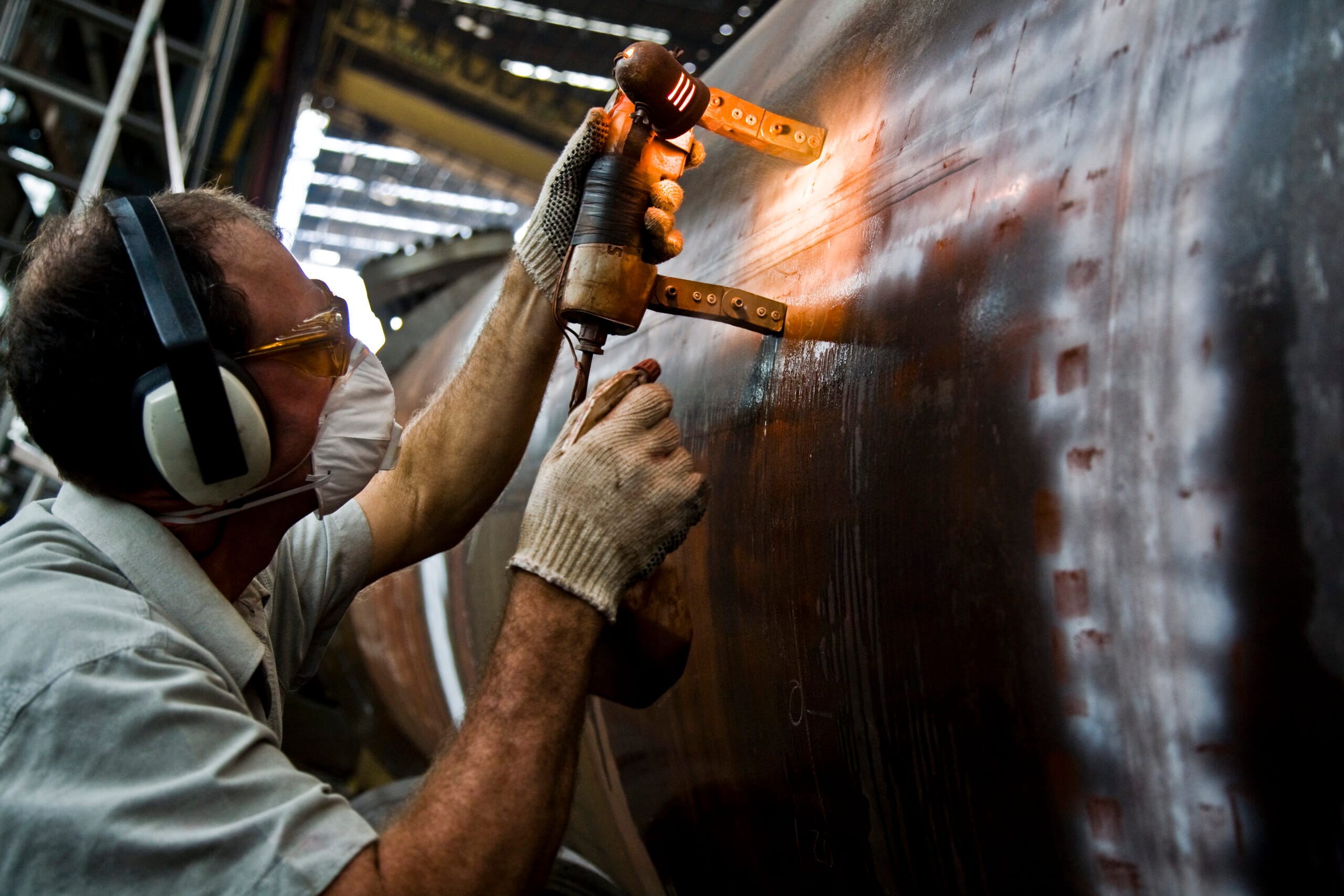
Tag Magnetic Particle

Technical Standards Governing Penetrant and Magnetic Particle Testing

The importance of technical standards in Non-Destructive Testing

Non-destructive testing (END) is essential to ensure the integrity of equipment and components used in various industrial sectors.
Among the most widely used methods are liquid penetrant testing (LP) and magnetic particle testing (PM).

Both allow the identification of discontinuities that could compromise the safety and performance of metal structures, welds, shafts, or castings, etc.

To ensure the quality and standardization of results, there is a set of national and international technical standards that establish criteria for execution, materials, and test conditions.

Next, see what these rules are and what each one determines in summary.


ASTM E1417 – Standard Practice for Liquid Penetrant Testing

It is the main international standard for the Penetrant Testing method.
It defines the essential parameters for the safe and accurate execution of the test, including:

  • Classification of penetrants (fluorescent and colored);
  • removal methods (water washable, post-emulsifiable, solvent removable);
  • lighting and sensitivity requirements;
  • stages of the process, such as cleaning, penetration, and development.
  • process controls.

ISO 3452 – Non-Destructive Testing – Penetrant Testing

The ISO 3452 series establishes international standards for materials and equipment.
Among its main topics are:

  • Part 1: General principles;
  • Part 2: Penetrant material requirements;
  • Part 3: Reference blocks;
  • Part 4: Equipment;
  • Part 5: Requirements for liquid penetrant testing at temperatures above 50 °C.

NM 334 – Non-destructive testing — Penetrant testing — Discontinuity detection

Mercosur standard that defines the main requirements for LP inspections in the national context, including:

  • technical terminology and symbology;
  • test stages (pre-cleaning, application, penetration, removal, development and evaluation);
  • minimum lighting levels;

ASTM E165 – Standard Practice for Liquid Penetrant Testing for General Industr y

Standard that defines the general procedures and criteria for liquid penetrant testing (LP) in industrial applications.
Establishes requirements for:

  • Classification of penetrants (fluorescent or colored);
  • removal methods (water, solvent or post-emulsifiable);
  • Control of lighting, temperature, and penetration time;
  • Sensitivity testing and product quality control.

PETROBRAS N-1596

Define:

  • test parameters and minimum/maximum process times;
  • procedural requirements;
  • lighting conditions;
  • Product classification and traceability;
  • Requirements for staff execution and qualification.

PETROBRAS N-2370

Provides:

  • General guidelines for safety, documentation, and traceability;
  • Penetrant testing.

ASME V – Art. 6

An integral part of the ASME Boiler and Pressure Vessel Code (BPVC), it defines the requirements for penetrant testing applied to boilers, pressure vessels, and pressurized equipment.
It contains:

  • Specifications for materials and equipment;
  • sensitivity check of the test system;
  • process control and inspection intervals;
  • Acceptance according to manufacturing codes.

ASTM E709 – Standard Guide for Magnetic Particle Testing

The principal international standard governing magnetic particle testing.
It establishes best practices and application guidelines for:

  • Magnetization techniques (yoke, electrodes, coil, center conductor and direct contact);
  • use of colored and fluorescent particles;
  • Electrical current control and field direction;
  • Verification of particle concentration and illumination (visible and UV).

ASTM E3024 – Standard Practice for Magnetic Particle Testing for General Industry

It complements ASTM E709 and provides specific instructions for inspections in general industry.


NM 342 – Non-destructive testing — Magnetic particles — Discontinuity detection

It establishes technical parameters for conducting the test in accordance with international standards:

  • Dry and wet application;
  • characteristics of magnetic particles and liquid vehicles;
  • Recommended concentration ranges for wet application (0.1 to 0.4 mL for fluorescent and 1.2 to 2.4 mL for colored);
  • Light intensity control for visible and UV-A light.

ASTM E1444 – Standard Practice for Liquid Penetrant Testing for Aerospace

Specifically for the aeronautical and aerospace sector, it defines detailed practices for magnetic particle (PM) testing.
It establishes:

  • requirements for magnetic materials and vehicles;
  • concentration limits and bath control;
  • UV-A and white light checks;
  • Strict calibration and acceptance criteria.

PETROBRAS N-1598

It defines the criteria for performing the PM method on ferromagnetic materials.
It covers:

  • magnetization techniques;
  • UV lighting requirements and field strength;
  • calibration procedures.

ASME V – Art. 7

Part of the ASME Boiler and Pressure Vessel Code, it defines the requirements for magnetic particle testing of pressurized equipment and welded components.
It covers:

  • Types of electric current and magnetization techniques;
  • magnetic field intensity control;
  • detection methods;
  • Acceptance and qualification criteria for the testing system.

ISO 9934 – Non-Destructive Testing – Magnetic Particle Testing

The ISO 9934 series establishes international standards for materials and equipment.
Among its main topics are:

  • Part 1: General principles;
  • Part 2: Detection method;
  • Part 3: Equipment;

Importance of technical standards for the reliability of END (Non-Destructive Testing).

The standards governing liquid penetrant and magnetic particle methods are the technical basis that ensures reliability and regulation  of Non-Destructive Testing.
They guide everything from product development to practical application in the industrial environment, ensuring quality, safety, and standardization in every inspection.

Knowing these standards is essential for anyone working in quality control, maintenance, and inspection — whether in heavy industry, petrochemicals, aeronautics, or metallurgy.


Important notice:

This content is for educational purposes only. The application of the test methods and parameters must follow a qualified procedure approved by a Level 3 Inspector .


Solution in Non-Destructive Testing

Metal-Chek provides complete END solutions: penetrant liquids , magnetic particles , yoke and accessories , developed according to the main ASTM, ISO , ASME, NM, PETROBRAS standards, guaranteeing quality, safety and technical compliance in every inspection.

Discover the complete Metal-Chek product line.

Contact our team.

Follow @metalchek
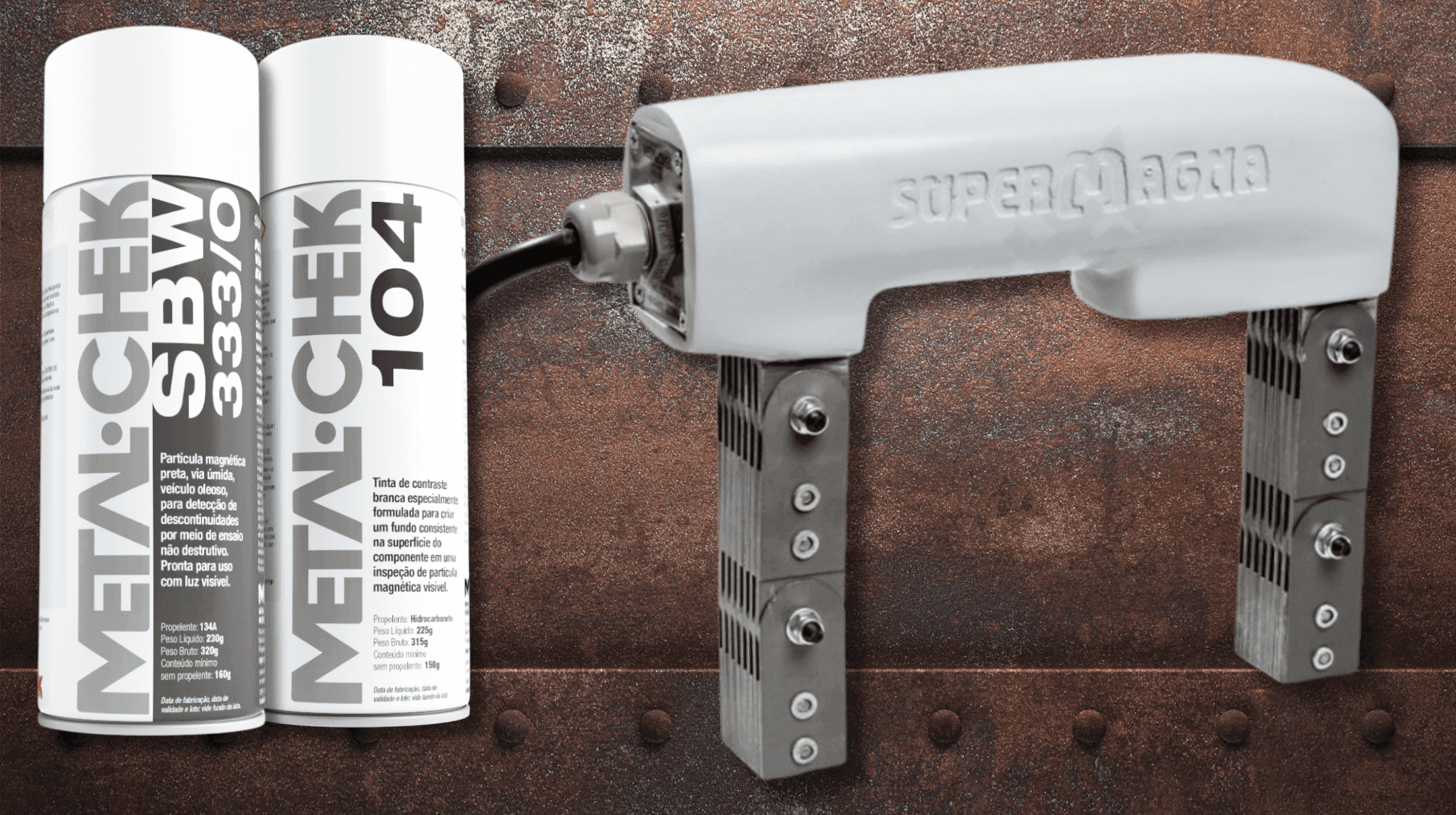
Magnetic Particle Inspection: How the Supermagna Yoke HMM6 + SBW 333/O + Contrast 104 Combination Ensures Accuracy and Reliability

Discover how the Metal-Chek Supermagna Yoke HMM6, SBW 333/O and 104 Contrast combination ensures faster, more accurate and safer magnetic particle inspections, in compliance with technical standards.


Why reliable inspection is vital in industry

In industry, reliability means economy and safety . After all, an unidentified surface discontinuity can compromise the operation of critical equipment, generate rework, unscheduled downtime, and even accidents.
Therefore , the application of Non-Destructive Testing (END) techniques is indispensable. Among the available methods, magnetic particle inspection (MPI) stands out for its high sensitivity to ferromagnetic materials.

However, simply having good equipment is not enough: it is also essential to have the right magnetic particles and an efficient contrast agent to guarantee consistent results.
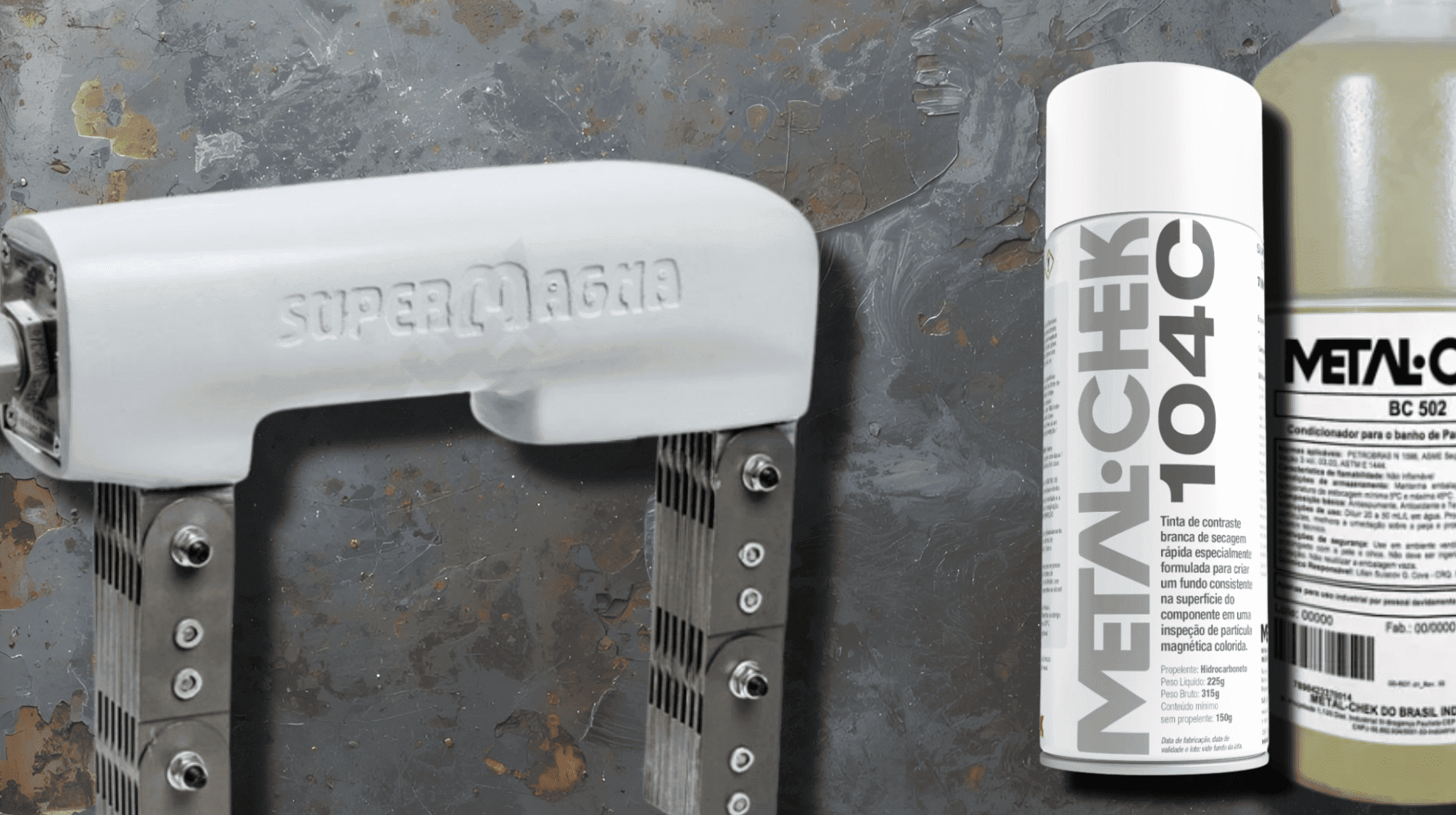
This is precisely where Metal-Chek’s proposal comes in: the combination of the Supermagna Yoke HMM6, the SBW 333/O and the Contrast Agent 104. Together, these products form a complete system that ensures fast, accurate and safe inspections.


Supermagna Yoke HMM6: Power and Robustness in the Field

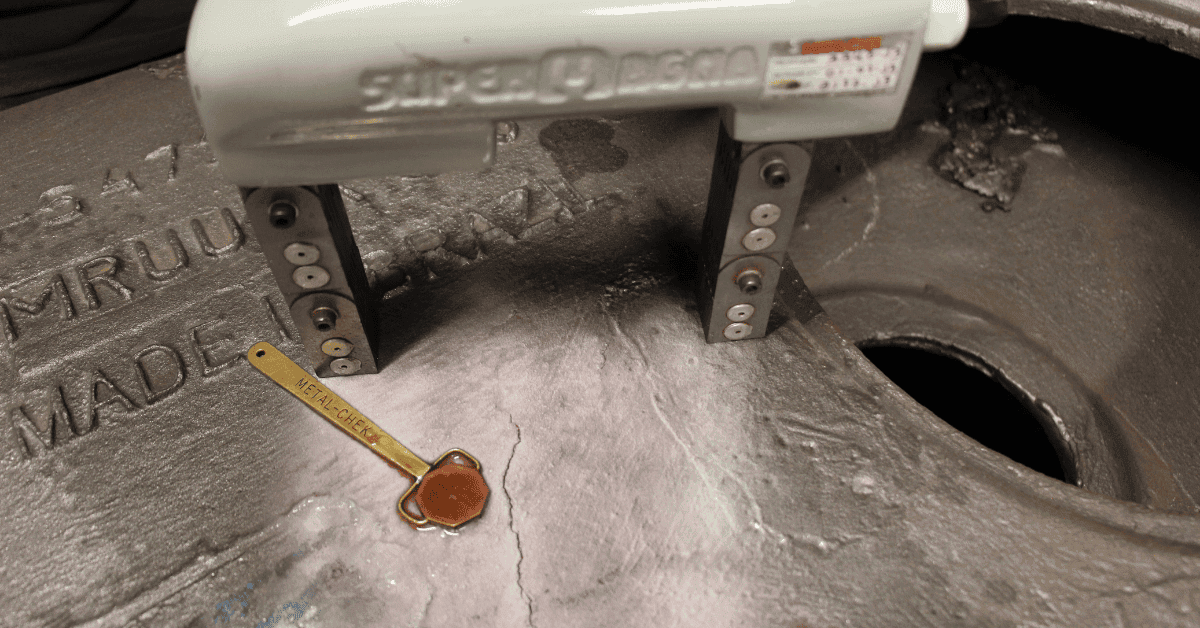
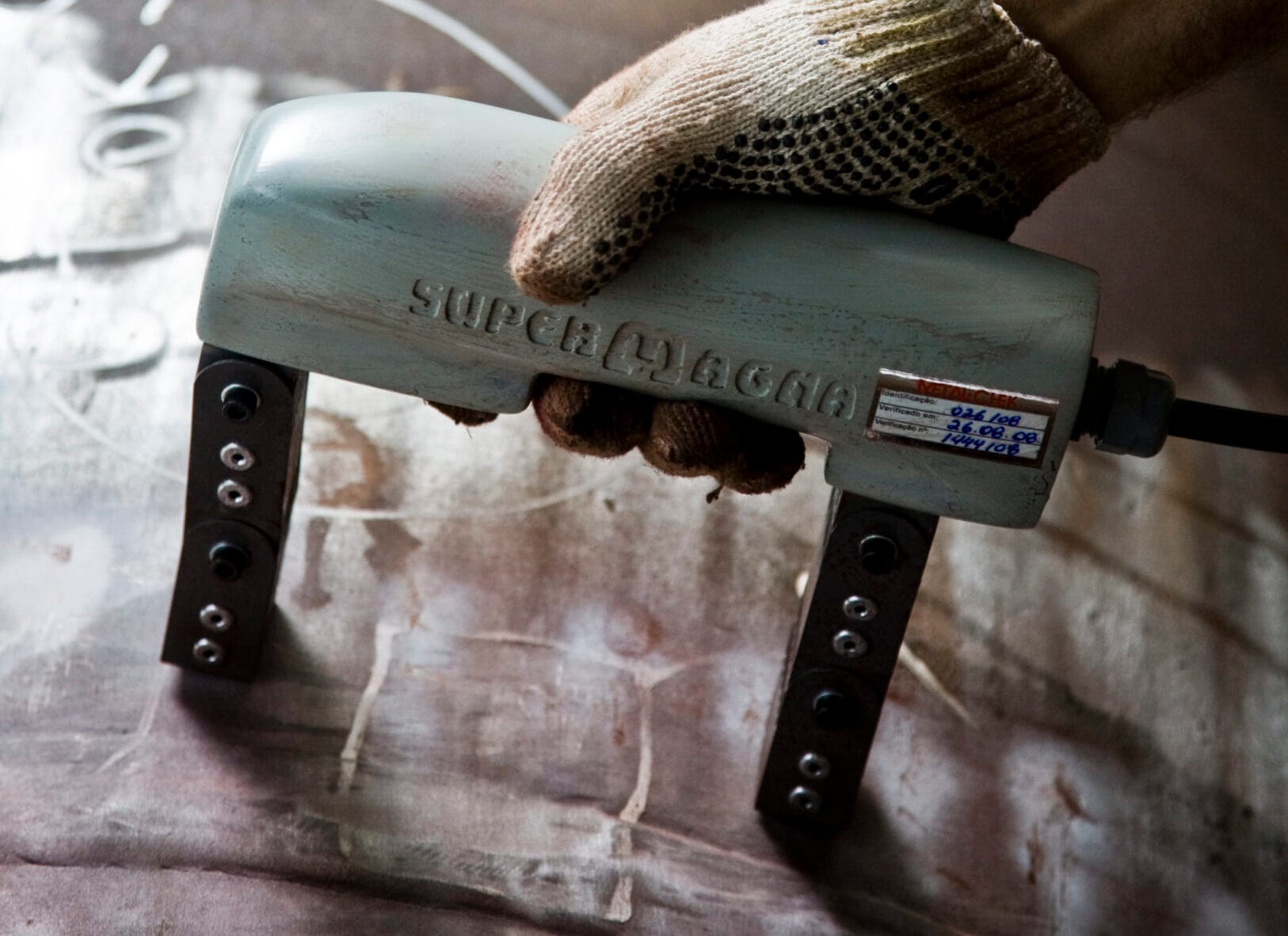
The Supermagna Yoke HMM6 is a portable electromagnetic device designed to generate the magnetic field (AC – Alternating Current) necessary for magnetic particle inspection using the yoke technique.
Furthermore, its robust construction makes it ideal for both field and factory use.

Main features:

  • Portable and robust – ideal for field and factory inspections.
  • With no current conduction through the part – magnetization is achieved by an magnetic field, ensuring greater safety.
  • Applications – welding, metal structures, castings and forgings.
  • Regulatory – complies with the main national and international standards. 

SBW 333/O: Visible Magnetic Particles in Oily Suspension

Magnetic particles are responsible for making visible the discontinuities present in the magnetized part.

SBW 333/O is an oil-based suspension for visible wet manifolds, formulated to offer high sensitivity and stability.

This ensures clear and consistent indications during the inspection process.

Highlights:

  • Ready to use.
  • Excellent visualization of discontinuities in finished products.
  • High definition of indications under visible light, with excellent sensitivity.

Contrast 104: Enhanced Visibility

Contrast 104 creates a white background that enhances the indications of visible magnetic particles, ensuring maximum definition and reliability in inspection.

In other words, it improves the readability of the information and contributes to a more accurate interpretation.

Main functions:

  • It increases the contrast between the particles and the surface.
  • Increased sensitivity of the assay.
  • Compliance with technical standards.

How the Supermagna Yoke HMM6 + SBW 333/O + Contrast 104 Combination Works

In a simple and efficient way, the process occurs in four stages:

  1. Application of Contrast 104 – uniform white background on the area to be inspected.
  2. Magnetization with the Supermagna Yoke HMM6 – generation of a magnetic field on the workpiece.
  3. Application of SBW 333/O – visible oily suspension deposited on the magnetized surface.
  4. Interpretation of results – particles accumulate in field escape regions, immediately revealing surface discontinuities.

Advantages of the Metal-Chek Combination

  • High sensitivity – greater accuracy in detecting surface discontinuities.
  • Operational speed – visible indicators at the time of inspection.
  • Versatile application – sectors such as oil & gas, energy, metallurgy, automotive, naval and nuclear.

Furthermore, this combination reduces rework and increases the efficiency of inspection teams.


Technical Reference Standards

The combination of Supermagna Yoke HMM6 + SBW 333/O + Contrast 104 meets the requirements of international and national standards, such as:

  • ASTM E709
  • ASTM E3024
  • ISO 9934 (1 and 2)
  • NM 342
  • ASME BPVC Section V, Article 7
  • PETROBRAS N-1598

Why choose Metal-Chek?

Metal-Chek is a national leader in Non-Destructive Testing solutions , with products developed according to rigorous quality standards and tested in real industrial applications.

Therefore, by adopting the Supermagna Yoke HMM6 + SBW 333/O + Contrast 104 combination, your company gains in:

  • Reliability of results.
  • Speed ​​in execution and interpretation.
  • Safety and operational efficiency.

Magnetic particle inspection is a well-established method among Non-Destructive Testing and remains essential for ensuring the integrity of metallic components and structures. Its effectiveness, however, depends directly on the quality of the equipment and products.

With the combination of the Supermagna Yoke HMM6, the SBW 333/O and the 104 ContrastMetal-Chek delivers a complete solution for performing Non-Destructive Testing.

In this way, the inspection gains in reliability, speed, and operational safety.
This integration ensures:
• Reliability and accuracy in the results.
• Speed ​​in the execution and interpretation of the indications.
• Safety and efficiency in industrial operations.

If your company’s goal is to raise inspection standards and strengthen process reliability, count on Metal-Chek.

Metal-Chek – a leader in solutions for Non-Destructive Testing.

Speak with our experts and get your questions answered.

Follow our news at: @metalchek

Complete Magnetic Particle Inspection

THE POWER OF COMBINATION

Discover how the combination of Supermagna Yoke HMM6, magnetic powder particles, BC 502 SN Conditioner and 104C Contrast ensures fast, compliant and safe magnetic particle inspections.

In industrial maintenance, the reliability of inspections is crucial to avoid rework, equipment failures, and costs associated with unscheduled downtime.

Among Non-Destructive Testing (END) methods, magnetic particle inspection (MPI) is one of the most widespread techniques for detecting surface and subsurface discontinuities in ferromagnetic materials .

For reliable results, good magnetization equipment alone is not enough. High-quality magnetic particles, a suitable conditioner, and an effective contrast agent are also necessary.

This is where Metal-Chek stands out, offering a robust combination for the industry: the Supermagna Yoke HMM6magnetic powder particles associated with the BC 502SN Conditioner and the 104C Contrast.


Supermagna Yoke HMM6: Robustness and Compliance

The Supermagna Yoke HMM6 is an electromagnetic yoke designed to generate the necessary magnetic field during inspection.

Main features:

  • Portable and robust – ideal for field and factory inspections.
  • Safe – it does not conduct current through the part, but induces a longitudinal magnetic field.
  • Versatile – suitable for inspecting welds, castings, forgings, metal structures, etc.

Regulatory – complies with the main national and international standards.


Magnetic Particles + BC 502 SN Conditioner

The use of magnetic powder particles, combined with BC 502 SN Conditioner, is the most widely adopted method for forming stable and efficient suspensions.

Function of magnetic particles:

  • They make surface and subsurface discontinuities visible by accumulating in regions where the applied magnetic field escapes.
  • The concentration can be adjusted according to the procedure.
  • Available in different options for visible or fluorescent inspections.

Function of BC 502 SN Conditioner:

  • It guarantees corrosion protection .
  • Allows for uniform dispersion of particles .
  • It promotes proper moisturization and mobility  on the surface.
  • Compliant with technical standards requirements.

104C Contrast: Enhanced Visibility and Precision

Contrast 104C is applied before magnetization and magnetic particle bathing, creating a uniform white background.

Main functions:

  • It increases the contrast between the particles and the surface.
  • Increased sensitivity of the assay.
  • Compliance with technical standards.

How the Combination Works

  1. Applying Contrast 104C – creates a contrasting and uniform white background.
  2. Magnetization with the Supermagna Yoke HMM6 – generates the necessary magnetic field.
  3. Application of the prepared suspension (particles + BC 502 SN) – the particles agglomerate in the leakage field regions, forming indications.
  4. Interpretation – with a white background and highlighted particles, the inspector can quickly and reliably identify discontinuities.

Advantages of the Combination

  • High sensitivity in detecting discontinuities.
  • Operational speed , with results visible immediately.
  • Regulatory reliability , in accordance with ASTM, ISO, AMS, ASME and PETROBRAS standards.
  • Flexibility , allowing adjustments to particle concentration.
  • Safety is ensured through the use of a robust and secure yoke in various environments.

Technical Standards Supporting the Set

The combination meets the requirements of international and national standards, such as:

  • ASTM E709
  • ASTM E3024
  • ISO 9934 (1 and 2)
  • NM 342
  • ASME BPVC Section V, Article 7
  • PETROBRAS N-1598

Magnetic particle inspection is an essential technique for industrial maintenance and quality assurance. However, its efficiency depends on choosing the right equipment and supplies.

The combination of the Supermagna Yoke HMM6magnetic particles with BC 502 SN Conditioner, and 104C Contrast ensures a fast, reliable, and safe inspection process.

With this complete solution, Metal-Chek reinforces its commitment to providing cutting-edge technology for Non-Destructive Testing, meeting the needs of the industry with excellence.

Speak with our  technical team  and discover how we can help transform your inspection routines into competitive advantages. 

Follow us on Instagram: @metalchek

How to Perform an Efficient Magnetic Particle Inspection: A Guide for Professionals

Discover how to plan and execute magnetic particle inspections, ensuring speed, reliability, and compliance with technical standards.


Industrial inspections can present challenges such as lack of infrastructure, space limitations, adverse conditions, and the need for fast and reliable results.

In this context, Non-Destructive Testing (END) using magnetic particles (MP) stands out as a practical solution for detecting surface discontinuities in ferromagnetic materials .

This practical guide is aimed at maintenance professionals, inspectors, and engineers, showing how to perform magnetic particle inspections efficiently, safely, and in compliance with regulations, even outside of controlled laboratory environments.


Surface Preparation

One of the biggest challenges in inspections is dealing with surfaces contaminated by grease, oil, welding spatter, or oxidation. Proper area preparation is essential to avoid false readings.

Recommended techniques:

• Steel brush (manual or rotary): quick removal of oxidation from welds and metal structures.
• Grinding: suitable for removing coatings and persistent oxidation.
• Solvents and clean cloths: remove grease and oils.

The better the preparation, the greater the reliability of the inspection.


Choice of Technique

The type of application of magnetic particles should consider environmental conditions, available time, and required sensitivity.

  • Dry process:

Advantages → ideal for surfaces with high temperatures

Limitations → lower sensitivity to small discontinuities

  • Wet method (water or oil):

Advantages → high sensitivity, suitable for detecting small discontinuities.

  • Colored wet process

Advantages → visible under white light, no need for special lighting fixtures.

Limitations → operating temperature

  • Fluorescent wet particles:

Advantages → maximum sensitivity under UV-A light.

Limitations → operating temperature, visible only under UV-A light.


Safety in Confined Spaces

Inspections of tanks, vessels, and confined structures require additional safety measures:

  • Use portable and robust equipment , such as the Supermagna Yoke HMM6 , which works in different positions and does not conduct current through the workpiece.
  • Respect occupational safety standards (e.g., NR-33 – Safety in Confined Spaces).

Choosing robust equipment is crucial for reducing risks and increasing reliability in challenging environments.


Technical Standards Governing Testing

Magnetic particle inspection can follow recognized standards to ensure reliable results:

  • ASTM E709
  • ISO 9934 (1 to 2)
  • PETROBRAS N-1598
  • ASME Section V, Article 7

Recommended Equipment for Inspections

For magnetic particle inspections, the ideal solution is to use equipment that combines durability, safety, and regulatory compliance.

The Supermagna Yoke HMM6, for example, is designed to meet these needs:

  • Portable and robust.
  • Safe in potentially explosive atmospheres.
  • Meets ASTM, ISO, ASME and PETROBRAS standards.
  • Suitable for inspections of welds, metal structures, castings, forgings, etc.

Magnetic particle inspection is a strategic tool for industrial maintenance. When performed correctly — with proper surface preparation, appropriate technique selection, and the use of reliable equipment — it ensures operational safety, regulatory compliance, and cost reduction.

If your company operates in sectors such as oil & gas, energy, automotive or metallurgical, the Metal-Chek Supermagna Yoke HMM6 is the ideal solution to guarantee reliable results within standards.

Speak with our technical team.

Follow us on: @metalchek

Supermagna Yoke HMM6 indispensable in non-destructive testing using magnetic particles

In modern industry, the reliability of equipment and metal structures is a decisive factor for operational safety and cost reduction. A failure in a critical component can generate not only financial losses, but also put lives at risk. It is in this scenario that Non-Destructive Testing (END) plays a strategic role, as it allows the integrity of parts to be evaluated without causing damage.

Among the most widely used END methods, magnetic particle testing (MPT) stands out for its efficiency in detecting surface discontinuities in ferromagnetic materials . Within this method, one piece of equipment proves indispensable: the Supermagna Yoke HMM6 .

The Supermagna Yoke HMM6 is a portable device that has become an essential tool for industrial inspectors and maintenance technicians. Throughout this article, we will explore in detail what the Supermagna Yoke HMM6 is, how it works, its applications, regulatory requirements, and, most importantly, why it is fundamental to ensuring quality and safety in industrial inspections.


What is the Supermagna Yoke HMM6?

The Supermagna Yoke HMM6 is an inverted “U”-shaped electromagnet with two legs (fixed or articulated) that, when placed on a ferromagnetic surface, generates a longitudinal magnetic field between its poles. This field allows for the detection of surface flaws by applying magnetic particles to the inspected area.

Unlike other techniques, the Supermagna Yoke HMM6 does not conduct electrical current through the workpiece, but rather through the coil of the equipment itself. This characteristic offers two major advantages:

  1. Safety: It can be used in potentially explosive or flammable atmospheres, as there is no risk of electrical sparks.
  2. Preservation of the part: there is no risk of overheating or surface damage during the test.

Furthermore, the Supermagna Yoke HMM6 is designed to be both portable and rugged, making it ideal for field inspections, hard-to-reach locations, and situations where inspector mobility is critical.

Magnetic Fundamentals Applied to the Supermagnetic Yoke HMM6

To understand the importance of the Supermagna Yoke HMM6, it is necessary to revisit some basic concepts of magnetism:

  • Magnetic field: the region around a magnet or conductor carrying an electric current where magnetic forces act.
  • Leakage field: interruption in magnetic flux lines caused by a discontinuity, such as a crack or inclusion.
  • Magnetic particles : dry powder or liquid suspension that, when applied to a magnetized surface, accumulates in the leakage field, visually revealing the fault.

The Supermagna Yoke HMM6, by magnetizing the part, highlights these discontinuities immediately.


Applications of the Supermagna Yoke HMM6 in Industry

The Supermagna Yoke HMM6 is widely used in sectors where structural safety and operational reliability are essential.

  • Welding and boilermaking: inspection of weld beads, detection of cracks and lack of fusion.
  • Petrochemical and oil & gas: pressure vessels, piping, flanges and critical connections.
  • Automotive and rail sectors: axles, wheels, gears, rails, and braking systems.
  • Aeronautical and aerospace: inspection of landing gear and structural components.
  • Energy: hydraulic turbines, components for thermal and nuclear power plants.

In all these sectors, the Supermagna Yoke HMM6 stands out for its speed of application and immediate results, allowing for quick decisions regarding repairs or replacements.


Reference Standards

  • ASTM E1444  – Standard practice for magnetic particle testing.
  • ASTM E709  – Standard guide for magnetic particle testing.
  • ASTM E3024 –  Guidelines covering equipment calibration, magnetization techniques, acceptance criteria, and personnel training.
  • PETROBRAS N-1598 –  Establishes mandatory technical requirements and instructions on how to handle non-conformities for Non-Destructive Testing: Magnetic Particles.
  • ASME Section V – Article 7 – Requirements for magnetic particle testing of ferromagnetic materials, applicable to pressure vessels, boilers, and other components covered by the ASME code.

Why is the Supermagna Yoke HMM6 Essential in Industrial Maintenance?

Because it goes far beyond just an inspection tool — it’s a strategic investment in safety, productivity, and compliance.

  • Minimizes unscheduled downtime → detects faults before they escalate into breakdowns.
  • Reduces costs → avoids rework and unnecessary replacements.
  • Increased security → protects people and property.
  • Mobility and practicality → ideal for teams that need agility in the field.
  • Robustness and durability → ideal for intensive use in industrial environments.

The impact on your company

The Supermagna Yoke HMM6 for magnetic particle testing is a key component in industrial maintenance, combining simplicity, efficiency, and regulatory compliance. Its application in different sectors reinforces its relevance as an indispensable piece of equipment in inspection programs.

By choosing the Metal-Chek Supermagna Yoke HMM6, your company is guaranteed reliable results, expert technical support, and advantageous commercial terms.

Speak with our technical team and discover how the Supermagna Yoke HMM6 can increase the safety and efficiency of your inspections.

Follow us on Instagram: @metalchek

How to Specify Non-Destructive Testing (END) in Purchase Proposals (RFQ)

A practical guide for purchasers and supply engineers.

In industry, Non-Destructive Testing (END) is fundamental to ensuring the quality, safety, and conformity of parts and equipment. However, many Requests for Quotations (RFQs) fail because they do not correctly specify what is being requested—whether it is the  contracting of END services  or the  acquisition of supplies and equipment  to perform it.

Below, we present a practical guide to preparing clear and complete RFQs, with real-world examples from Metal-Chek and Supermagna products.


1. Define what you are buying: a service or a supply.

First of all, determine if your RFQ will be for:

  • END service  – the supplier performs the test and delivers the technical report.
  • Materials/supplies/equipment for END  – your team or service provider will use the purchased products to perform the test.

This distinction avoids confusion and ensures that the specifications are suitable for what you want to buy.


2. Specifying the contracting of the END service

When hiring a service, describe how the test should be conducted and what acceptance criteria will be adopted.

a) Method and technique

Specify the method and technique:

  • Example: Liquid penetrant testing, Type I, Method A, Level 2, using  Metal-Chek FP 91
  • Example: Dry magnetic particle extraction, white powder, using  Supermagna WD 55

b) Reference standard

Define the applicable standard (ASTM E165, ASTM E709, ASME Section V, AWS D1.1 or internal standards such as Petrobras N-1596/N-1598).

c) Acceptance criteria

Determine codes and levels (e.g., ASME VIII Div.1, EN 1369, Level 2 or 3).

d) Inspector qualifications

Require SNQC/ABENDI or ASNT SNT-TC-1A certification, Level II or III, depending on the method.

e) Implementation conditions

Include requirements such as cleanliness, adequate lighting (lux or µW/cm²), temperature, humidity, and application times.

f) Documentation and traceability

Request reports with photos, sketches, and part identification, ensuring traceability by batch or serial number.


3. Specifying the purchase of materials and equipment for END

When purchasing supplies or equipment, the RFQ (Request for Quotation) should contain technical details of the product.

a) Penetrant Liquids

  • FluorescentMetal-Chek FP 91 , Type I, Method A, Level 2
  • VisibleMetal-Chek VP 30 , Type II, Method A
  • VisibleMetal-Chek VP 31 , Type II, Method C

b) Developers

  • Dry:  Metal-Chek D72 , form a
  • Non-aqueous:  Metal-Chek D70 , form d, e
  • Aqueous:  Metal-Chek D76 , form b

c) Removers / Cleaners

  • Solvent: Metal-Chek E 59 , Class 2
  • Solvent: Metal-Chek R 501 , Class 1

d) Magnetic Particles

  • White dry track: Supermagna WD 55
  • Yellow dry track: Supermagna YD 404
  • Fluorescent wet process: Supermagna LY 2000
  • Visible red wet path: Supermagna RW 222
  • Visible black wet sample: Supermagna BW 333

e) Equipment


4. Best practices for any END RFQ

  • Be specific: avoid generic terms like “LP test” without specifying the method, type, and standard.
  • Standardize the descriptions across all requests.
  • Approve the technical proposal before the price.
  • Include safety and environmental requirements (PPE, proper disposal of products).

Conclusion

A clear specification — whether for contracting END services or acquiring Metal-Chek and Supermagna supplies — ensures that the process is executed with quality, reduces risks, and avoids rework.

Want to learn more?  Read also: How to choose the ideal penetrant type for each application.

Speak to our technical team.

Follow us on Instagram: @metalchek

Visual Inspection (Visual Testing – VT): The First Steps to Identify Equipment Faults

Every effective inspection begins with observation — not just what the eyes see, but what a technical and experienced eye is able to interpret. Visual Inspection (VI) is the initial step in identifying discontinuities , defects, wear, and anomalies that can compromise the integrity and performance of equipment.

More than just a superficial check, VT acts as an initial filter in quality control, directly contributing to cost reductionrisk prevention, and increased operational efficiency.

Furthermore, visual inspection serves as the gateway to more advanced non-destructive testing techniques, such as penetrant testing, magnetic particle testing, and ultrasound. In other words, when a visual indicator is detected, it’s the right time to deepen the analysis with complementary and more sensitive methods.

Although it seems simple, visual inspection requires much more than just “looking”:

  • Technical training
  • Knowledge of acceptance criteria
  • Adequate lighting
  • Support tools and instrumentation
  • Evidence documentation

Visual Inspection in the Industry 4.0 Era

Those who think that Visual Inspection (VI) has lost importance with the advancement of automation are mistaken. On the contrary — it has evolved and integrated with new technological resources, expanding its reach, precision, and speed.

Today, VT is an active part of Industry 4.0 and can be combined with state-of-the-art digital solutions:

  • Artificial intelligence for image recognition.
  • Drones for inspections at heights or in hazardous areas.
  • 4K cameras with thermal sensors
  • Predictive analytics connected to digital dashboards

Most common applications of visual inspection.

Visual Inspection (VI) is widely used in various industrial sectors as a quick and effective assessment tool. Its main objective is to identify visible irregularities that may compromise the structural integrity, functionality, or safety of components and equipment.

The following table summarizes the main applications and what is sought to be identified in each case:

ApplicationWhat are we trying to identify?
WeldingCracks, porosity, lack of fusion or penetration
Pressurized equipmentCorrosion, deformation, leaks
Metal structuresDeformations, warping, cracks
Ducts and pipingLeaks, oxidation, deterioration
Machines and moving partsWear and tear, misalignment, fractures

Equipment and Resources Used in Visual Inspection

Although many visual inspections are done with the naked eye, the use of auxiliary equipment significantly enhances the accuracy and reliability of the test. Some resources used include:

 Adequate natural or artificial light: Ensures adequate visibility. Poor lighting can compromise the detection of discontinuities.

Magnifying glasses and magnifying lenses: They amplify small details, allowing the identification of surface cracks, porosity, inclusions, or lack of fusion in welds.

Borescopes and industrial endoscopes: Optical instruments used for inspecting hard-to-reach areas, such as pipes, internal welds of pressure vessels, and aeronautical components.

Rulers, gauges and jigs: Tools for measuring dimensions, weld angles, weld bead profiles and alignments.

High-resolution cameras: They facilitate photographic documentation and historical comparison during periodic inspections.

Digital inspection and recording software: With the advancement of Industry 4.0, integrating visual inspections with digital systems allows for recording occurrences, generating reports, and maintaining traceability in accordance with regulatory requirements.

Tip:
In low-light environments, the use of adequate artificial light is not optional — it’s mandatory.

Best practices in performing visual inspections.

To ensure the effectiveness of visual inspection and the reliability of results, it is essential to adopt well-defined operational practices. Standardizing execution through written procedures and operational checklists helps minimize human error and ensure consistency in assessments. A simplified model is presented below that can be adapted to the needs of each sector:

BEFORE INSPECTION:

  • Check that the surface is clean (free of contaminants such as paint, oil, grease, rust, dust, or debris).
  • Check the ambient lighting (it should be sufficiently intense and evenly distributed, allowing for an accurate assessment of the surface. It is important to avoid reflections, shadows, or glare, especially on polished materials or those with irregular geometry. In locations with little natural light, the use of adjustable and directional artificial light sources is recommended to ensure good visibility).
  • Assess the inspector’s physical and visual condition (e.g., fatigue, use of glasses).
  • Assess the need for additional equipment and resources.

DURING THE INSPECTION:

  • Observe surface continuity: deformations, cracks, oxidation.
  • Check weld beads: profile, spatter, lack of fusion.
  • Use magnifying glasses on areas with suspicion or small details.
  • Photographing and documenting irregularities
  • Assess the need for additional tests (liquid penetrant, magnetic particles, etc.).

AFTER INSPECTION:

  • Record keeping and traceability (maintaining a history of inspections, photos, reports, inspection maps, and checklists with acceptance criteria. These records ensure traceability, effective audits, and support decision-making).
  • Storing records digitally ensures traceability and facilitates audits.

Integration of Visual Inspection with Other END Methods

Visual Inspection (VI) is the starting point for most Non-Destructive Testing (END). While it can identify various surface flaws, it does not always provide sufficient information for a complete assessment of the component’s integrity. Therefore, it is essential to integrate it with complementary methods, especially when there are visual suspicions that require technical confirmation.

The table below shows how VT connects to the main END methods and the benefits of this combination:

Complementary MethodApplication after VTCombined benefits
Penetrant Testing (PT)Detection of cracks and open discontinuities on the surface.Confirms and verifies suspicious visual indications.
Magnetic Particles (MP)Inspection of ferromagnetic parts. Detects surface and subsurface flaws.Increased sensitivity in critical areas, such as welds.
Ultrasound (UT)Assess the internal integrity of the part.It identifies internal flaws that are not visible externally.
Radiography (RT)Reveals volumetric discontinuities in welds and castings.High reliability and permanent visual documentation.

Normative References

Visual inspection is governed by several technical standards that ensure standardized procedures, reliable results, and compliance with legal and industrial requirements. Below, we highlight some applicable technical standards:

  • ISO 17637 – Visual Inspection of Welds in Metallic Materials: establishes requirements for performing visual inspection of welds, including acceptance criteria and recommended techniques.
  • NBR 14842 – Visual Inspection of Welds: national procedures and requirements that guide the practice of visual inspection of welds.
  • ASME Section V, Article 9 – Requirements for Visual Inspection: a standard widely used in the pressure equipment and boiler making industry.
  • Petrobras Technical Standards (Examples: N-1596, N-1598, N-2370) – Specific guidelines for visual inspections in the oil and gas sector.

The First Line of Defense for Quality

Visual inspection is much more than just a keen eye—it’s an essential technical barrier against failures that compromise safety, productivity, and regulatory compliance.

Implementing a well-structured visual inspection program is the first step towards operational excellence. Furthermore, when combined with Metal-Chek methods such as Liquid Penetrant, Magnetic Particle, and Leak Detection, visual inspection transforms into an ecosystem of industrial reliability.

Next Steps for Your Company

To strengthen your visual inspection program and increase the reliability of your processes, consider:

✅ Assess the maturity of your visual inspection program.

✅ Empower your team with training based on recognized standards.

✅ Standardize checklists and procedures with specialized technical support.

✅ Invest in quality accessories and equipment to complement the visual stage.

If your company wants to increase process reliability and ensure technical compliance, Metal-Chek is your ideal partner.

Speak with our technical team and discover how we can help transform your inspection routines into competitive advantages. 

Follow us on Instagram: @metalchek

Contact us at: (11) 3515-5287

The Importance of Calibration in END Equipment for Reliable Results

If you want to guarantee accuracy, compliance, and operational safety in your Non-Destructive Testing (END), equipment calibration is not an optional step—it’s indispensable.
Companies that neglect this practice face serious risks:
❌ Inaccurate reports
❌ Undetected failures
❌ Non-conformities in audits
❌ Operational and reputational damage

➡️ When equipment is out of calibration, reliability disappears — along with operational safety.

What is Calibration and why is it Vital in END?

Calibration is a process of comparing two instruments (the measurand and the measured). This comparison involves calculating error and uncertainty, and these results are presented in a document called a calibration certificate.

  • ✅ Relationship between measurement values ​​and uncertainties; 
  • ✅ Technical standards are being met;

Standards such as ASME Section V, ASTM E1417, ASTM E1444, ASTM E3024, and ASTM E709 require that your equipment be calibrated for the results to have technical and legal validity.

Why is calibration a key differentiator?

1. Ensures Technical Precision

  • False positives → good parts are discarded unnecessarily.
  • False negatives → errors go unnoticed.

Both put security at risk, increase costs, and compromise the company’s reputation.

2. Avoid Penalties in Audits

Industries such as oil and gas, aeronautics, rail, and automotive are inflexible regarding non-compliant equipment.
Golden tip: Always demand certificates traceable to the RBC (Brazilian Calibration Network) or recognized international standards.

3. Reduces costs associated with rework.

Investing in calibration is cheaper than correcting errors caused by miscalibrated equipment.

Which equipment needs to be calibrated?

Penetrant Testing (PT)

  • Radiometers/Photometers
  • Thermometers
  • Water pressure gauges
  • Compressed air pressure gauges

Magnetic Particle (MP)

  • Gaussmeters (Residual)
  • Magnetic Field Meters
  • Ammeters
  • Timers
  • Magnetizing equipment (Stationary Machines)
  • Settling tubes

When should the equipment be calibrated?

The ideal calibration frequency is determined according to applicable standards.

How to Guarantee Traceability?

Compliance isn’t something you improvise. Follow these practices:

  • ✔ Hire laboratories accredited by Inmetro (ABNT NBR ISO/IEC 17025);
  • ✔ Archive and update calibration certificates;
  • ✔ Use digital checklists with automatic due date alerts;

[PRACTICAL CHECKLIST] How to Organize Your Calibration Routine

StepAction
PlanningMap all equipment that requires calibration.
HiringChoosing an accredited laboratory
Follow-upCreate due date alerts
DocumentationArchive calibration certificates and evidence.
Internal VerificationUse reference standards for control.

Calibration means Safety, Reliability, and Quality.

In the world of Non-Destructive Testing, calibration is an act of technical responsibility and a commitment to safety.

Metal-Chek offers the best consumables and accessories to ensure your penetrant testing, magnetic particle testing, and leak detection are accurate, traceable, and reliable.

You may have the best partner laboratory — but if your products are not of high quality, the results will be compromised.

Ready to increase the reliability of your tests?

→ Contact our technical team right now.
We’ll help you select the best Metal-Chek products to make your tests safer and more effective.

Follow us on Instagram: @metalchek

Contact us at: (11) 3515-5287

Planning an Effective Non-Destructive Testing Program: Essential Checklist

The role of inspections in modern industrial maintenance.

Industrial maintenance has evolved by leaps and bounds in recent decades. With the advancements of Industry 4.0 , new technologies, sensors, and continuous monitoring systems have been integrated into the daily operations of factories and industrial plants. However, no matter how innovative these emerging technologies are, one foundation remains unshaken: inspection through Non-Destructive Testing (END) .

Inspecting without causing damage to parts and structures is a technical, economic, and strategic advantage. In sectors where safety and reliability are critica l— such as oil and gas, aeronautics, automotive, civil construction, metallurgy, and industry and commerce in general — END (Non-Destructive Testing) is indispensable for predicting failures, ensuring the integrity of components, and increasing the lifespan of assets.

In this article, we will present a practical guide to structuring an effective non-destructive testing program. We will cover what should be taken into account, which professionals should be involved, when to apply the techniques, and how to document and interpret the results. By the end, you will have an essential checklist that can be adapted to different industry realities.

Why plan a Non-Destructive Testing program?

Imagine a ship undertaking long sea voyages. Instead of waiting for something to break at sea, a routine of inspections allows for the identification of cracks, corrosion, and structural flaws before they become catastrophic. This applies to an urban bridge, mining equipment, or a pressure vessel in a chemical plant.

A well-structured END (Non-Destructive Testing) program is the cornerstone of efficient industrial maintenance , integrated with the philosophy of predictive maintenance , operational reliability, and occupational safety. Furthermore, it reduces costs associated with unplanned downtime and serious failures.

Essential Checklist: How to Structure an END Program

1. Identify the critical assets.

The first step to an efficient plan is knowing what will be inspected. Make a list of the plant’s most critical assets: equipment operating under high pressure, structures subject to repetitive stress, components exposed to corrosion, or welds in strategic locations.

Practical tip: use tools such as FMEA (Failure Mode and Effects Analysis) or RCM (Reliability-Centered Maintenance) to identify assets that deserve more attention.

2. Define clear objectives.

Each inspection should have a purpose: to detect cracks? To assess the quality of a weld? To check for leaks using penetrant testing? Define the objectives to determine the best technique and frequency of evaluation.

3. Choose the appropriate Non-Destructive Testing methods.

ENDs encompass a range of methods. Among the most common are:

  • ◽ Penetrant Testing (PT): ideal for detecting surface cracks in non-porous metals. Widely used in weld inspection.
  • ◽ Magnetic Particles (MP): efficient for detecting surface and subsurface discontinuities in ferromagnetic materials.
  • ◽ Ultrasound (UT): allows for the verification of internal defects, material thickness, and density variations.
  • ◽ Industrial Radiography (X-ray): ideal for detecting volumetric flaws in welded joints or cast parts.
  • ◽ Visual Inspection (VI): the first line of defense, it must be carried out systematically, with appropriate equipment and lighting.

The choice depends on the type of material, the defect to be detected, the applicable technical standards, and operational feasibility.

4. Determine the frequency of inspections.

Each piece of equipment has an estimated lifespan, but actual operating conditions can accelerate wear and tear and failures. Therefore, the frequency of inspections should consider:

  • ◽History of failures
  • ◽Operating environment (abrasive, corrosive, humid)
  • ◽Mechanical loads and stresses
  • ◽Specific regulatory standards (e.g., NR-13 for pressure vessels)

Practical example: in sectors involving constant inspection and welding, such as boiler making and oil pipelines, the frequency should be more rigorous.

5. Develop standardized operating procedures (SOPs).

Having standardized operating procedures (SOPs) is essential to ensure repeatability, traceability, and quality. These procedures should include:

  • ◽Techniques to be applied
  • ◽Surface preparation steps
  • ◽Equipment and consumables used
  • ◽Acceptance and rejection criteria
  • ◽Photographic records and reports

At Metal-Chek, for example, penetrant, developer, and remover fluids comply with AMS 2644 and Petrobras N-2370 standards, ensuring standardization in critical inspections.

6. Train the technical team.

The professionals responsible for applying END (Non-Destructive Testing) must be qualified, according to the requirements of the ABNT NBR ISO 9712 standard or equivalent international standards. They are classified into three levels:

  • Level 1: Performs inspections following detailed instructions.
  • Level 2: Interprets results, prepares reports, and instructs Level 1.
  • Level 3: Designs and validates procedures, leads audits, and ensures regulatory compliance.

An industry that invests in training and certifying its team reaps the rewards in reliability, safety, and performance.

7. Document and manage the results.

Photographic records, reports, and historical data should be stored in an organized manner. This facilitates trend analysis, audits, and the planning of corrective actions. With the digitization of processes and the arrival of Industry 4.0, integrated management platforms with IoT, sensors, and cloud databases make this process more agile and secure.

Integration with Industry 4.0: END as a link between technology and reliability.

A well-planned inspection program goes beyond conventional maintenance. It integrates with the emerging technologies of Industry 4.0.

  • ◽ Onboard sensors detect vibration, temperature, or microcracks in real time.
  • ◽ Predictive systems warn when a component is close to failure.
  • ◽ Robotic inspections in hard-to-reach locations increase safety.
  • ◽ Predictive analytics software cross-references historical data with recent inspections to predict future failures.

In other words, non-destructive testing ceases to be a one-off action and becomes a strategic part of the company’s operational intelligence.

Inspections and Welding: A Critical Relationship

A large proportion of structural failures originate from poorly executed or degraded welds over time. The correct application of END (Non-Destructive Testing) in this context is vital for:

  • ◽ Ensure weld quality during manufacturing.
  • ◽ Detect thermal or fatigue cracks
  • ◽ Control stress corrosion cracking (especially in harsh industrial environments)

Techniques such as liquid penetrant and magnetic particles are particularly effective in this scenario, with the advantage of low cost and high sensitivity.

Fictional case: Inspection Program at a Metallurgical Plant

Let’s imagine a plant that performs casting and machining of large metal parts. The technical management decided to implement a robust inspection program after recurring failures in transmission shafts.

Steps followed:

  1. Mapping of critical assets: shafts, gearboxes and welds on structural supports.
  2. Choice of END methods: liquid penetrant for welds, ultrasound for shafts.
  3. Drafting SOPs: based on ASTM and Petrobras standards.
  4. Staff training: Level 2 certification for inspectors.
  5. Defined frequency: quarterly inspections and extraordinary inspections after major maintenance.
  6. Digitizing results: cloud-based reports accessible to engineering.

Results: In less than a year, the failure rate dropped by 80%, and operational reliability increased. An example of how planning and technique make a difference in industrial maintenance.

An END plan is a safety and productivity plan.

Planning a non-destructive testing program is not just a technical requirement, but a strategic decision. In times when industry needs to be increasingly efficient, safe, and sustainable, adopting preventive and reliable practices is the right path.

Metal-Chek , as a national leader in providing products and solutions for END (Non-Destructive Testing), is ready to support companies that want to raise the standard of their inspections. Our penetrant liquids , magnetic particles, UV equipment, developers, and removers meet the highest national and international standards.

Whether it’s welding, industrial assembly, or structural integrity analysis, count on Metal-Chek to ensure your inspection program is one step ahead. Because reliability isn’t improvised—it’s built with planning, technique, and excellence.

Final Checklist: Efficient END Program

✅ Map critical assets
✅ Define clear objectives for each inspection
✅ Choose appropriate END methods
✅ Establish periodicity according to standards and criticality
✅ Develop SOPs according to best practices
✅ Train and certify the technical team
✅ Manage and digitize the results

If you want to take the next step and structure your inspection program with the best supplies and equipment, contact the Metal-Chek technical team.

Follow us on Instagram: @metalchek

Contact us at: (11) 3515-5287

Magnetic Particle Inspection: Concepts, Applications and Technical Standards

You probably already know that magnetic particle inspection (MPI) is a widely used technique in the Non-Destructive Testing (END) sector to detect surface and subsurface discontinuities in ferromagnetic materials. But in this article we will explore further, discussing the fundamental principles of the technique, its industrial applications, and the regulatory requirements that guarantee and guide the effectiveness and reliability of the method.

Fundamental Principles of Magnetic Particle Inspection

The PM technique is based on the magnetization of the material to be inspected. When there is a discontinuity on or near the surface, an interruption of the magnetic field occurs, forming magnetic poles in the region of the defect. By applying finely divided ferromagnetic particles to this area, they accumulate at the poles, making the presence of the discontinuity visible.

2. Principles of the Technique

Magnetic particle inspection is based on the creation of a magnetic field in the test specimen. When there is a discontinuity on or near the surface, an interruption occurs in the magnetic flux lines, resulting in a leakage field. The application of ferromagnetic particles, dry or suspended in liquid, allows these particles to accumulate in the region of the discontinuity, making it visible under white light or ultraviolet light (when fluorescent).

The main elements of the essay include:

  • Magnetization source : direct current, alternating current or pulsed current, depending on the desired inspection depth;
  • Types of magnetic particles : 1. visible: dry or wet or 2. fluorescent: used with UV-A light;
  • Magnetization techniques : direct contact, inductive, magnetic yoke (electromagnetic or permanent), among others;
  • Direction of the magnetic field : longitudinal, transverse, or multidirectional to maximize detection.

3. Industrial Applications

Magnetic particle technology is widely used in sectors where the structural integrity of metallic components is critical.

  • Aeronautics and Aerospace : inspection of landing gear, turbines and support structures;
  • Petrochemicals : pressure vessels, piping, flanges and welding;
  • Iron and Steel Industry and Metallurgy : bars, sheets, forgings and castings;
  • Automotive and Railway : axles, gears, wheels, rails and braking systems;
  • Power generation : hydraulic turbines, components for thermal and nuclear power plants.

4. Applicable Technical Standards

The execution of the magnetic particle test must follow the requirements established by nationally and internationally recognized technical standards:

4.1 Brazilian Standards (ABNT)

  • ABNT NBR NM 335 – Non-destructive testing: Liquid penetrant and magnetic particles (Terms and definitions);
  • ABNT NBR 9934-1 – Non-destructive testing: Magnetic particle testing (Part 1: General principles);
  • ABNT NBR 9934-2 – Part 2: Equipment;
  • ABNT NBR 9934-3 – Part 3: Technical details.

4.2 International Standards

  • ISO 9934 (Parts 1 to 3) – Non-destructive testing: Magnetic particle testing;
  • ASTM E709 – Standard Guide for Magnetic Particle Testing;
  • ASTM E1444/E1444M – Standard Practice for Magnetic Particle Testing;
  • ASME BPVC Section V, Article 7 – Requirements for testing boiler and pressure vessel components.

5. Advantages and Limitations

Advantages:

  • High sensitivity to detecting surface cracks;
  • Applicable to parts with complex geometry;
  • Immediate result;
  • Relatively low cost.

Limitations:

  • Applicable only to ferromagnetic materials;
  • Need for prior and subsequent cleaning;
  • Dependence of the magnetic field orientation on the discontinuity;
  • Subjective results when interpretation is visual.

Magnetic particle inspection remains an indispensable technique in quality assurance and structural integrity control programs across various industrial sectors. Its correct application, in accordance with regulatory requirements, is essential for reliable results. Mastery of technical parameters, inspector training, and proper equipment maintenance are critical factors in ensuring the effectiveness of the test.

Translate