Category Catalog

Elevate Precision: SuperMagna 104 Contrast

Did you know that non-destructive testing (END) is fundamental to ensuring the safety and reliability of industrial components? These tests are essential for detecting flaws without compromising the integrity of the materials. And when the goal is to maximize the efficiency of these tests, SuperMagna Contrast 104 is the ideal choice!

What is SuperMagna Contrast 104 and how does it work?

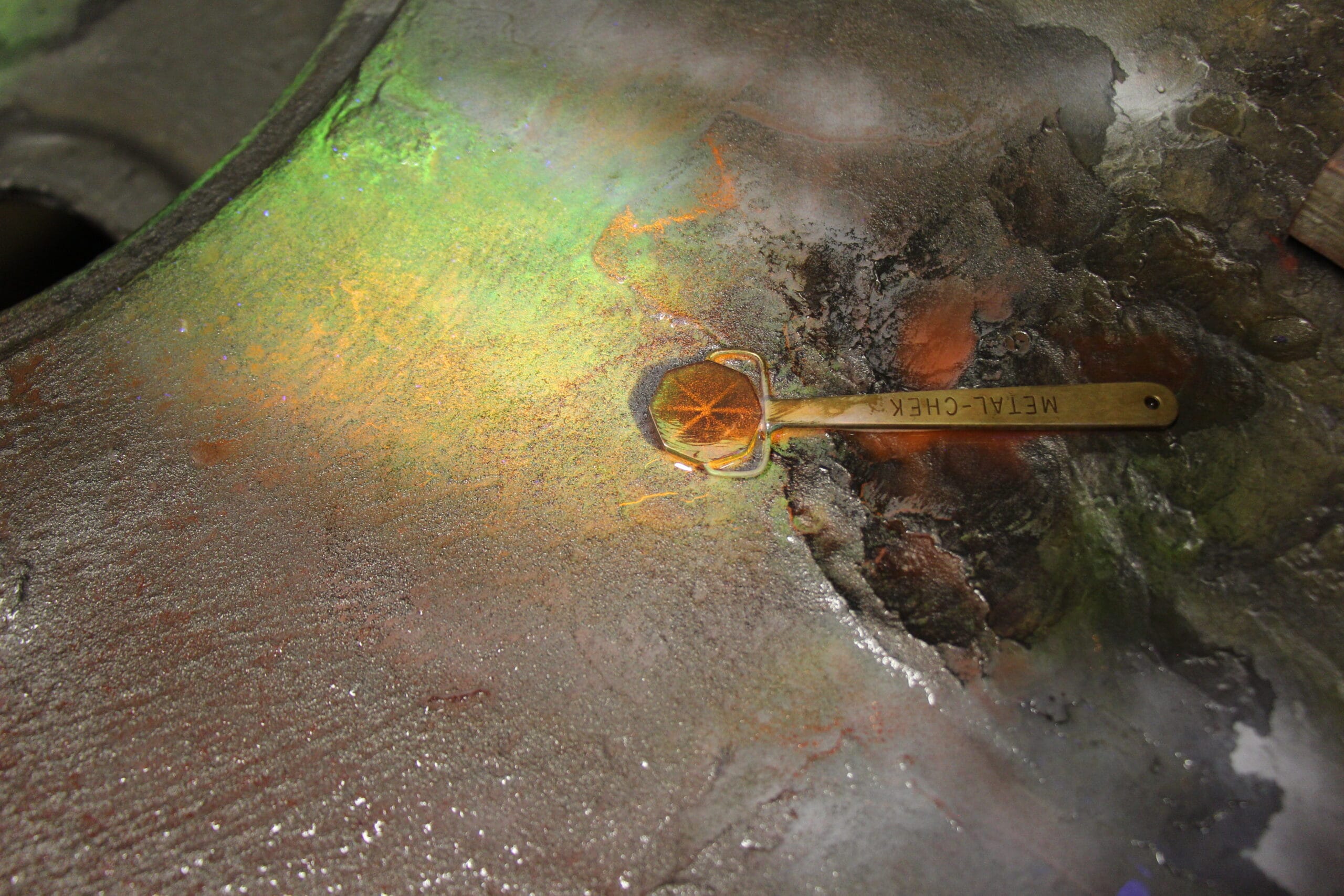
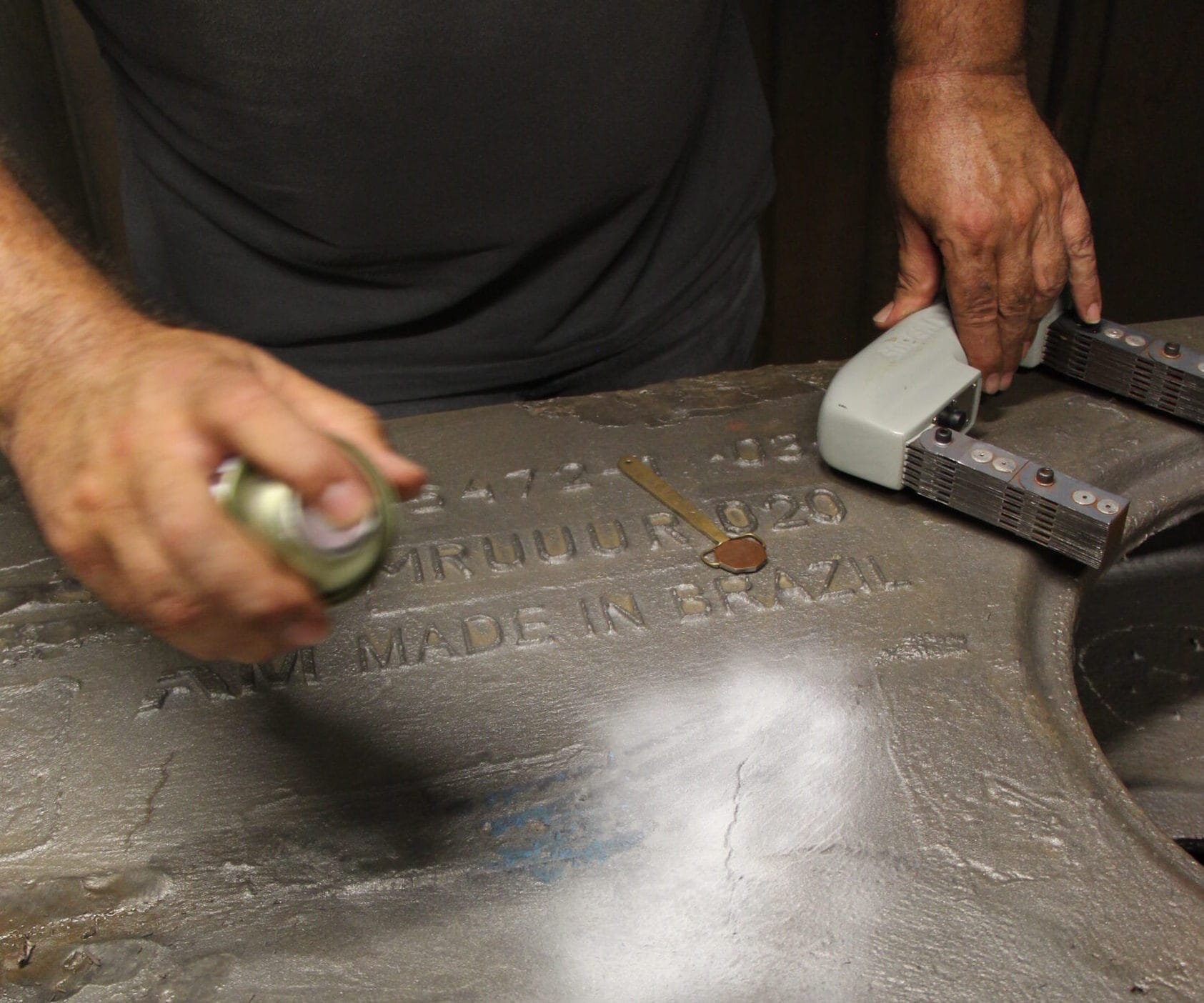
SuperMagna Contrast 104 is a white contrast ink designed for use as a base in magnetic particle testing. Applying this ink to the component surface creates a high-contrast background, facilitating the detection of discontinuities during visible magnetic particle inspection. This process increases sensitivity and the chance of identifying flaws, such as leaks, that might otherwise go unnoticed. Ideal for use in various industries, it contributes to the safety and reliability of inspection processes.

To better illustrate this, we have also included some of its main features and benefits:

  • Improved Contrast and Sensitivity: SuperMagna Contrast 104 creates a high-contrast background, optimizing magnetic particle testing and increasing accuracy in flaw detection.
  • Ready to Use: The product comes ready for application, which speeds up the inspection process and reduces waiting time between test steps.
  • Efficient Application: The ink dries quickly and offers superior visibility during non-destructive testing.
  • Compatibility: Compatible with various types of visible magnetic particles, such as Supermagna BW 333 and RW 222, expanding versatility in testing.
  • Resistant and Durable: Once dry, the paint withstands the wet-dose method used in inspections, ensuring long-lasting and reliable performance.
  • High Adhesion: The ink offers excellent adhesion to surfaces, ensuring that the contrast is maintained uniformly throughout the inspection.

How the SuperMagna 104 Contrast Inspection Process Works

  • Surface Cleaning: Before applying the paint, it is essential to ensure that the surface to be inspected is completely clean, in order to optimize the adhesion of SuperMagna Contrast 104.
  • Paint Application: Shake the can well and apply a thin, even coat. Wait approximately 2 minutes for it to dry before proceeding with the application of the magnetic particles.
  • Inspection: After drying, spray the magnetic particles onto the magnetized inspection area. The contrast provided by the paint facilitates the detection of leaks and other discontinuities.
  • Removal: Removing the paint is simple and can be done with a paint remover, without damaging the surface being analyzed.

But how do you gain an advantage by choosing Metal-Chek?

You might be wondering: “Why choose Metal-Chek, a market leader, for my non-destructive testing needs?” The answer lies in the quality and reliability of our products. SuperMagna Contrast 104 was developed to guarantee exceptional results, with a formulation that offers maximum performance and safety for your inspections. With over 40 years of experience and innovation, Metal-Chek has become synonymous with excellence in products for the non-destructive testing industry.

If you are looking for a product that offers not only efficiency, but also safety and innovation in your non-destructive testing, the SuperMagna Contrast 104 is the right choice. By improving discontinuity detection and ensuring high performance, this Metal-Chek product remains the market leader. The right choice for those who want consistent, high-quality results.

Want to know more? Contact one of our technical consultants and request a demonstration.

Phone: +55 (11) 3515-5287 / E-mail: metalchek@metalchek.com.br

SuperMagna CLY 3000 O MMS BP PM: The Best Solution in Magnetic Particles

Non-destructive testing (END) is fundamental in industry to ensure the integrity and quality of materials and components. Among the methods used, wet magnetic particle testing stands out for its effectiveness in detecting surface and subsurface discontinuities.

What are Wet Magnetic Particle Tests?

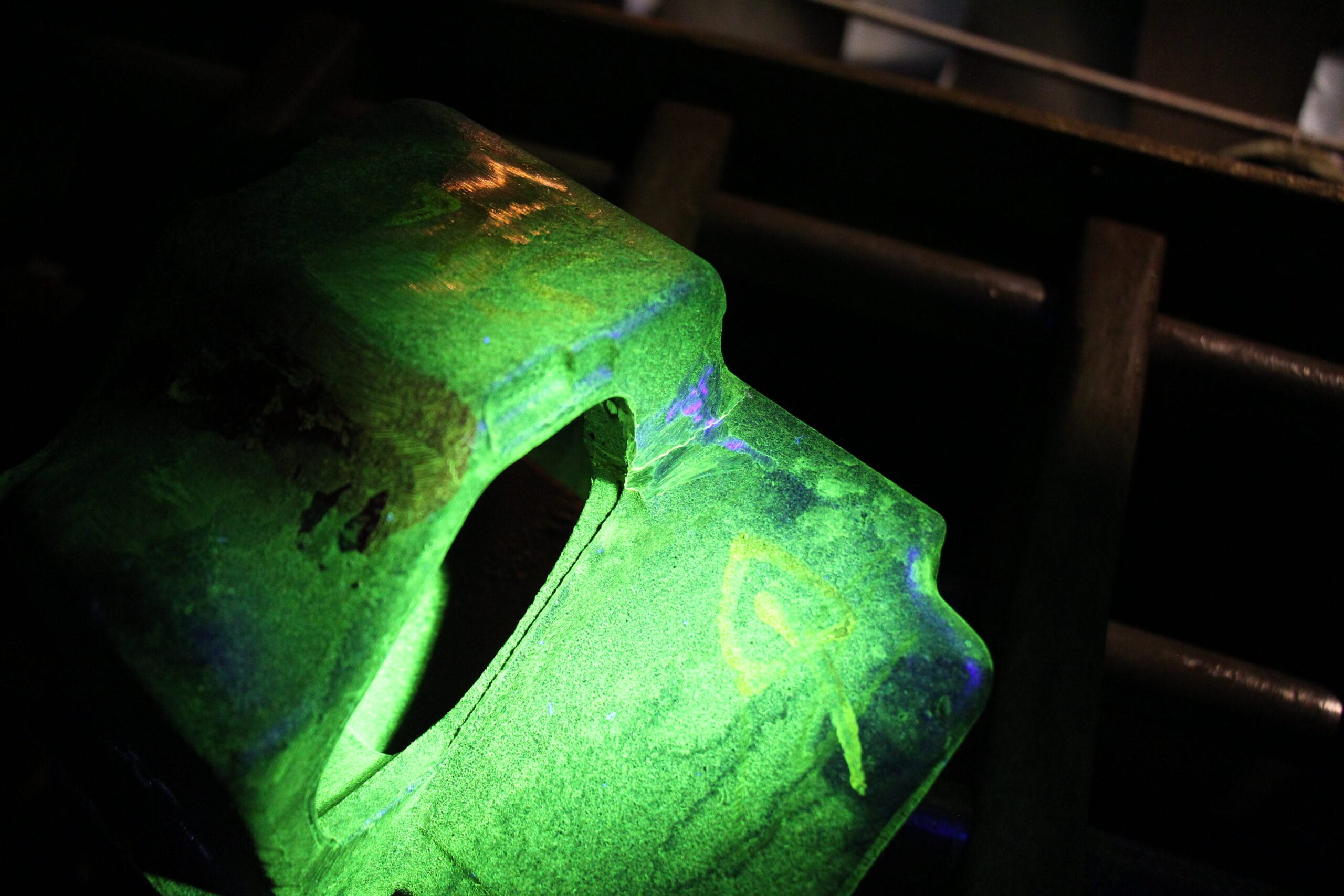
Wet magnetic particle testing is used in non-destructive testing to identify defects in ferromagnetic materials. This method involves applying a magnetic field to the material and then adding magnetic particles suspended in a liquid. The particles accumulate in areas of discontinuity, making the defects visible under ultraviolet light. In this article, we will explore the use of SuperMagna CLY 3000 O MMS Ready Bath Fluorescent Wet Testingan innovative product that facilitates and optimizes this process.

SuperMagna CLY 3000 O MMS BP PM is a ready-to-use, fluorescent Supermagna LY 3000 bath in suspension with the Supermagna OMC 10 MMS oil vehicle, formulated with these magnetic particles suspended in a liquid medium, providing a precise and reliable inspection. Its optimized composition ensures high sensitivity in locating cracks, inclusions, and other irregularities in ferromagnetic components.

This ready-to-use fluorescent wet bath product was developed to offer even greater sensitivity in detecting discontinuities under UV illumination. Its fluorescent magnetic particles provide superior visibility, facilitating the analysis and interpretation of results in non-destructive testing. This product is ideal for applications requiring extreme precision, such as inspections of critical components in the aerospace and automotive industries.

How to use the SuperMagna CLY 3000 MMS BP PM?

  1. Part Preparation: Ensure the material surface is clean and free of contaminants.
  2. Application: Shake the bath to ensure even distribution of the particles and apply to the surface of the part.
  3. Magnetization: Use the appropriate technique (longitudinal, circular, or yoke field) to magnetize the part.
  4. Inspection: Under appropriate UV lighting, check for signs of discontinuities.
  5. Cleaning and Recording: Remove excess product and record the indications according to regulatory criteria.

Benefits of SuperMagna CLY 3000 MMS BP PM

  • Practicality and Efficiency: Being a ready-to-use bath, it eliminates the need for manual formulation, reducing errors and ensuring uniformity in inspections.
  • High Sensitivity : High-quality particles allow for precise detection of discontinuities, meeting stringent industry standards.
  • Compliance with Standards: Meets international standards ASTM E1444, ISO 9934 and AMS 3044.
  • Versatile Applicability: Suitable for inspections in the aeronautical, automotive, petrochemical, and machining industries.
  • Durability and Stability: Maintains its properties for extended periods, ensuring reliability in testing.

We know there are frequent questions about this topic, so we’re getting ahead of the curve by answering them:

1. What is the difference between dry and wet magnetic particle printing?

  • Dry-applied particles are applied directly to the magnetized surface, while wet-applied particles are suspended in a carrier liquid, providing greater mobility and sensitivity.

2. Can the SuperMagna CLY 3000 MMS BP PM be used on parts of any size?

  • Yes, provided that the magnetization is performed correctly to ensure the formation of visible indications, as illustrated in the video above.

3. How to store the product correctly?

  • Ideally, store in a cool, dry place away from heat sources or contamination.

If you have any further questions, please contact our technical consultants directly.

The SuperMagna CLY 3000 MMS BP PM 3000 Ready Bath product is a reliable and efficient solution for wet magnetic particle testing, guaranteeing high precision and compliance with international standards. With it, inspections become faster, more practical, and safer, ensuring the quality and integrity of the inspected components. Choose Metal-Chek and get guaranteed quality and innovation for your inspection processes.

Technology in Focus: Advances in Non-Destructive Testing

Technological evolution has significantly boosted industry, bringing innovations that make processes more efficient and safe. In the field of Non-Destructive Testing (END), the incorporation of new tools, such as drones and ROVs (Remotely Operated Vehicles) , has revolutionized industrial inspections, allowing for greater precision, speed, and safety in detecting structural flaws.

The Role of Technology in Non-Destructive Testing

Non-destructive testing is fundamental to ensuring the integrity of equipment and structures without compromising their functionality. The use of advanced sensors, analysis algorithms, and automation has allowed these techniques to evolve, making them more precise and reliable.

Drones in Industrial Inspection

Drones have become an indispensable tool in Non-Destructive Testing, especially in hard-to-reach environments. Equipped with high-resolution cameras, infrared sensors, and ultrasound systems, these devices allow for detailed visual inspections of structures such as transmission towers, wind turbines, and oil pipelines. Furthermore, their ability to capture data in real time reduces the need for human intervention in hazardous locations, increasing operational safety.

Benefits of drones in inspection:

  • Access to hazardous locations without human exposure.
  • Capturing images and data with high precision.
  • Reduction of operational costs and inspection time.
  • Continuous monitoring and predictive analytics.

ROVs: Underwater and Structural Inspection

Okay, but do you know what ROV means?

ROV stands for Remotely Operated Vehicle. ROVs are submersible vehicles that can be operated from a ship or by a ground-based controller.

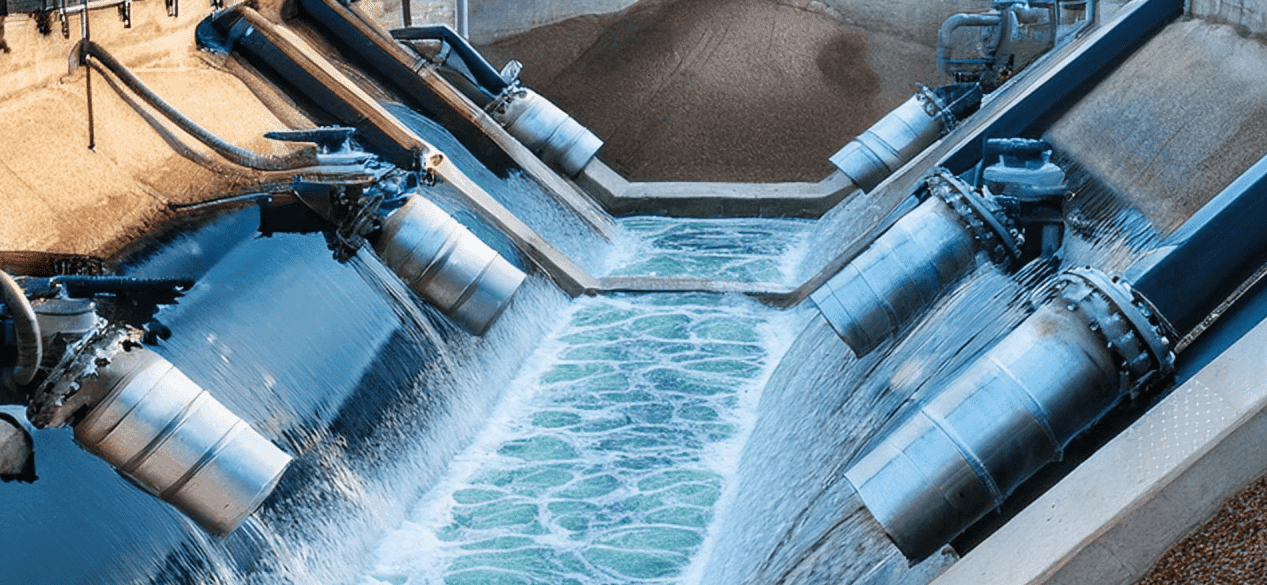
ROVs are remotely operated vehicles that play a crucial role in inspecting submerged structures such as pipelines, oil platforms, and hydroelectric plants. Equipped with high-definition cameras, sonar, and ultrasound sensors, these devices allow for the detection of corrosion, cracks, and other structural damage without the need for divers, reducing risks and costs.

Advantages of ROVs in inspection:

  • Ability to operate at extreme depths.
  • Reducing risks for workers.
  • Real-time remote monitoring.
  • Precision in underwater data collection.

Challenges in Implementing New Technologies

Despite numerous advantages, the implementation of drones, ROVs, and artificial intelligence in Non-Destructive Testing faces significant challenges. Some of the main obstacles include:

  • High initial cost: The investment in advanced equipment and specialized software can be high.
  • Professional training: The adoption of these technologies requires technical qualifications for operation and data interpretation.
  • Adverse environments: Some inspections take place in extreme conditions, such as very high or low temperatures, which can impact the performance of the devices.
  • Technological interference: In certain industrial areas, communication signals may be affected, making remote control of equipment difficult.
  • Regulatory standards: Adapting to legal requirements and international standards can be a challenge for the implementation of new technologies.

The Future of Industrial Inspection

With the constant evolution of technology, the trend is for Non-Destructive Testing to become increasingly automated, efficient, and safe. The combination of drones, ROVs, and Artificial Intelligence is redefining the standards of industrial inspection, ensuring greater precision in fault detection and reducing operational costs.

Metal-Chek closely follows these innovations, offering solutions that meet the most stringent industry demands. Investing in technology is fundamental to ensuring the safety, efficiency, and reliability of industrial processes, consolidating a more innovative and sustainable future for Non-Destructive Testing.

SuperMagna OMC 10 Magnetic Particle Vehicle: The Perfect Solution for Non-Destructive Testing

The OMC 10 is a high-quality magnetic particle vehicle developed for non-destructive testing (END) applications, and stands out for its efficiency and superior performance in the market. Ideal for industries that conduct rigorous testing, the OMC 10 guarantees reliable results and is an indispensable choice for those seeking excellence.

Article content

Composition and Characteristics

OMC 10 is a refined solvent derived from light fractions of petroleum distillates, with a high degree of purity, belonging to the category of special solvents. Its formula is a mixture of normal-chain paraffinic hydrocarbons, with very high purity and chemical stability. This ensures not only effectiveness in the testing process, but also safety in its handling, since the product is not aggressive to the environment.

OMC 10 is colorless, with a Saybolt color of +30, and has no odor when cold. Furthermore, it is free of background fluorescence and has a water content of less than 50 ppm, meeting the most stringent quality standards, such as those required by the FDA (Food and Drug Administration) in specifications 21 CFR 172.878 and 178.3620 (A) for direct and indirect contact with food, and by the USP (United States Pharmacopeia).

Compliance with Quality Standards

OMC 10 meets a series of standards and specifications required to guarantee its purity and quality. The product conforms to the following standards:

  • FDA: Meets the purity and safety requirements for products that come into contact with food and pharmaceutical substances.
  • USP: Complies with the quality standards required by the United States Pharmacopeia, including parameters for neutrality and sulfur compounds.
  • DAB-8: Approved in the German Pharmacopoeia’s luminosity (extinction) test, guaranteeing superior quality.

Advantages and Applications

In addition to its exceptional purity, OMC 10 is highly effective for magnetic particle baths, ensuring that the non-destructive testing process is carried out with precision. The product is widely used in tests that require high quality and safety, such as in the automotive, aeronautical, and materials industries.

Its chemical stability and high purity properties make it a reliable choice for companies that require solvents that meet the highest standards. Furthermore, its environmentally friendly composition and the absence of polynuclear compounds make it an environmentally friendly option.

Precautions and Safety

Although OMC 10 is a high-purity, high-quality product, its handling requires specific care. Because it is composed of low molecular weight hydrocarbons, the product can exhibit high dermal permeability, potentially causing skin irritation. Therefore, the use of Personal Protective Equipment (PPE) is essential, such as:

  • PVC gloves and aprons
  • Protective eyewear
  • Half-face mask against organic vapors

These measures ensure operator safety and integrity during the solvent application process.

The OMC 10 stands out in the market as a high-quality magnetic particle vehicle, with characteristics that guarantee superior performance in non-destructive testing. Its compliance with international safety and quality standards, combined with its high-purity composition, makes it an indispensable choice for industries seeking excellence and reliability. With safety, performance, and environmental responsibility, the OMC 10 is the ideal solution for the most demanding tests. Contact our technical consultants and get a quote.

Standards and Regulations for Wastewater Disposal in Particle Baths

Efficient environmental management is a growing concern in various industrial sectors, and the proper disposal of generated waste is fundamental for preserving the environment and complying with current legislation. When it comes to processes that use particle baths, such as in metal treatment industries, the water used must be disposed of in accordance with specific regulations and standards to avoid negative environmental impacts.

Applicable legislation and regulations

In Brazil, legislation related to the disposal of wastewater and solid waste is quite strict, aiming to minimize environmental impacts and ensure public health safety. Specifically in São Paulo, Decree 8468 of September 8, 1976, and Law 997, regulated by CETESB, are the main instruments guiding the proper disposal of these wastes.

Decree 8468/76 and Law 997

Decree 8468/76 establishes the rules for pollution control and waste management in the state of São Paulo, highlighting the obligations of industrial companies regarding the treatment and final disposal of effluents. The Decree is complemented by CETESB Law 997, which, in article 18 and its sub-articles up to article 19-A, determines how wastewater and solid waste from industrial processes, including particulate baths, should be treated.

CONAMA Resolution No. 20/86

In addition to state regulations, CONAMA Resolution No. 20, of June 18, 1986, is extremely important. Article 21 of this resolution establishes general guidelines for the treatment and disposal of industrial wastewater, focusing on the prevention of pollution of surface and groundwater. Together with other legislation, the CONAMA Resolution provides guidance on the need for efficient treatment processes and on how to obtain the necessary environmental permits for proper disposal.

NBR 10004 and waste classification

Solid waste generated in the particle bath process must be characterized according to NBR 10004, which classifies waste into different categories according to its hazardousness. For magnetic particle waste, the classification is class II, i.e., non-inert waste. This classification is relevant because it determines the method of storage, transport, and final disposal of the waste, according to its potential impact on the environment.

Procedures for the treatment and disposal of waste.

The routine for treating and disposing of effluents in particle baths must follow a well-established procedure, ensuring that all legal requirements are met. Below, we detail the suggested steps for the proper treatment of the residual solution.

Treatment procedure steps:

  1. Solution preparation : For 1000 ml of residual solution from the particle bath, the following reagents should be added: 50 ml of 5% lime solution, 50 ml of 10% aluminum sulfate solution, 15 ml of 0.5% polyelectrolyte solution.
  2. Reaction time : After adding the reagents, it is necessary to wait 30 minutes for flocculation and sedimentation of the contaminant particles to occur.
  3. Filtration and drying : The solution must then be passed through a filter press or drying bed to separate the solids from the wastewater. This process aims to concentrate the solid waste, which will later be disposed of in accordance with regulations.

Disposal and required documentation

To dispose of treated water and solid waste, the company must be aware of the need to obtain an “acceptance letter.” This document is issued by a specialized company, such as a reprocessing plant, landfill, or incinerator that has authorization from the state environmental agency to receive the waste. With the acceptance letter in hand, the company can then request the CADRI (Registration of Waste of Interest), which is an authorization from the environmental agency to dispose of the waste at the authorized location.

This procedure ensures that waste will be treated and disposed of properly, avoiding risks to public health and the environment, and complying with legal requirements. Failure to comply with these regulations may result in severe penalties, including fines and even the closure of the company.

Proper management and adequate disposal of waste generated in particle baths is a critical issue for environmental sustainability. Following current regulations and guidelines is not only a legal obligation, but also a social and environmental responsibility of companies. With proper treatment and disposal of waste, it is possible to minimize environmental impacts and ensure compliance with legislation, as well as promote a safer and healthier environment for all.

Smart Manufacturing: Transforming the Future of Industry

Smart manufacturing is not just a trend — it’s a new paradigm for industries seeking to remain competitive in an increasingly dynamic global market. This approach integrates technologies such as the Internet of Things (IoT), cyber-physical systems (CPS), data analytics, and artificial intelligence (AI), enabling more connected, efficient, and sustainable factories.

Smart Manufacturing is at the heart of the Fourth Industrial Revolution, marking a new era of innovation and efficiency in the industrial sector. According to the Smart Manufacturing Leadership Consortium (SMLC), smart manufacturing is “the ability to solve existing and future problems through an open infrastructure that allows the implementation of solutions at the speed of business, while creating advantageous value.”

It combines data science, artificial intelligence, and cyber-physical systems to create an integrated and efficient operation. This revolutionary model promotes greater sustainability, energy efficiency, and product personalization, as well as transforming how companies operate and adapt to market changes.

Benefits of Smart Manufacturing

1. Cost reduction:

Optimizing production processes and the supply chain allows for more accurate demand forecasting, reducing waste and operational costs.

2. Smarter decisions:

Real-time data helps in making quick and informed decisions, increasing the ability to respond to market demands.

3. High-quality products:

Quickly resolving quality issues enables continuous innovation and reduces the incidence of uncorrected defects.

4. Sustainability and energy efficiency:

Optimizing resources and reducing waste helps achieve environmental goals by promoting energy efficiency.

5. Mass customization:

The flexibility of smart manufacturing allows for the efficient production of highly customized items.

6. Job creation:

This opens up opportunities for qualified professionals in automation, data analysis, and advanced maintenance.

The Impact of Smart Manufacturing on Proactive Maintenance

One of the most impactful advancements is the transition from reactive to predictive maintenance, especially in sectors like fluid energy. IoT sensors and artificial intelligence algorithms detect anomalies and anticipate failures before they occur, reducing downtime and increasing efficiency.

For example, pneumatic systems equipped with predictive analytics have reduced downtime by 30%, as highlighted by Eric Whitley in the Fluid Power Journal. This approach demonstrates how intelligent technology revolutionizes maintenance, making it more efficient and economical.

Metal-Chek’s Role in Industry 4.0

Metal-Chek products, such as fluorescent dyes and leak detection tools, are perfect allies for smart manufacturing. They optimize productivity by facilitating the identification of faults in industrial systems, integrating with predictive maintenance strategies.

How does it work?

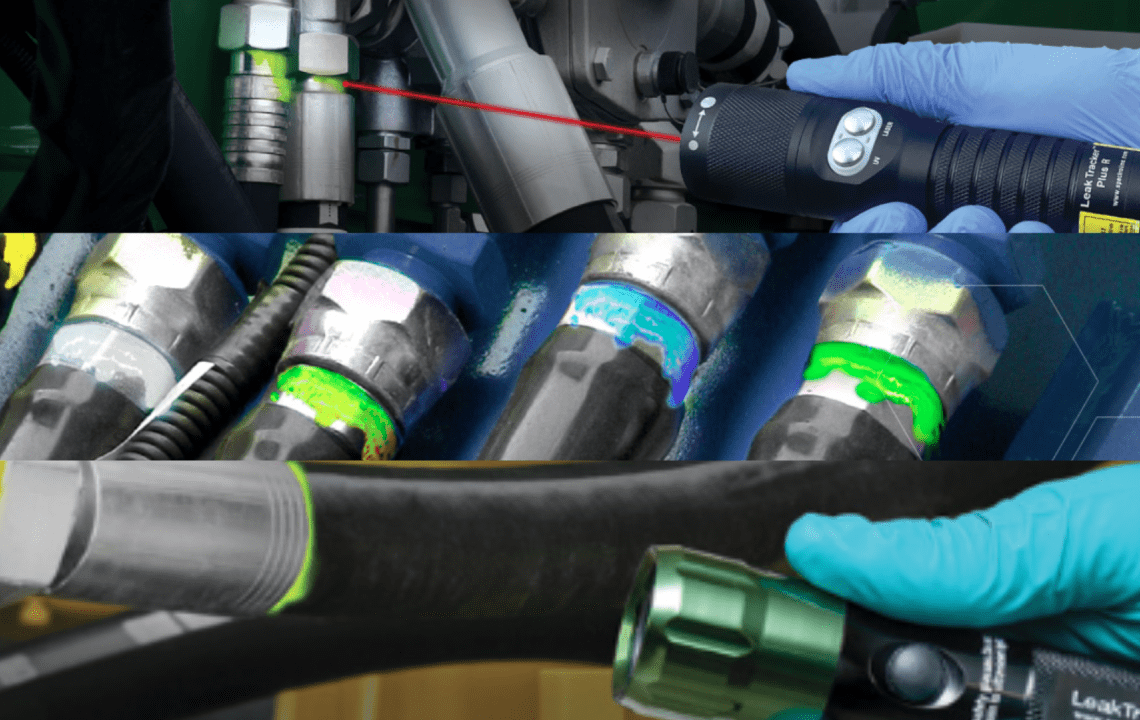
Fluorescent dye is added to the equipment during routine inspections or operations. Leaks are detected quickly with high-performance UV lamps, reducing losses and maximizing operational efficiency.

With Metal-Chek, your factory can take a step forward on the journey towards Industry 4.0, aligning itself with global trends in innovation and competitiveness.

Periodic Equipment Maintenance: Understand Its Importance

Regular maintenance is a crucial element in asset management and the efficient operation of any organization. Whether in industrial, commercial, or service environments, proper equipment maintenance ensures not only the continuity of operations but also the safety of employees and the quality of products and services offered. In this article, we will explore the importance of regular maintenance, its advantages, and the best practices to be adopted.

Before we begin our conversation, do you know what Periodic Maintenance is?

Periodic maintenance refers to a set of scheduled actions for the inspection, repair, and replacement of parts in equipment and machinery, performed at regular intervals. These actions are designed to prevent failures, extend the lifespan of assets, and ensure that equipment operates at peak efficiency.

Regular intervals for periodic equipment maintenance vary depending on the type of equipment, the operating environment, and the manufacturer’s recommendations.

Article content

What types of maintenance are there?

1. Corrective Maintenance

Performed after a failure occurs. The goal is to restore normal equipment operation. Requires planning to minimize downtime.

2. Preventive Maintenance

Scheduled according to a timeline to prevent failures. Involves regular inspections, cleaning, and parts replacements. Helps identify problems before they cause downtime.

3. Predictive Maintenance

It uses monitoring techniques to predict failures before they occur, based on data and analysis. Examples include vibration analysis, thermography, and condition monitoring.

Benefits of Periodic Maintenance

  • Increased Security

One of the main objectives of periodic maintenance is to ensure the safety of operators and other employees. Poorly maintained equipment can malfunction, resulting in serious accidents and endangering the physical integrity of workers. Regular maintenance helps identify and correct problems before they become dangerous.

  • Cost Reduction

Although periodic maintenance involves an initial investment, in the long run it is more economical. Preventive maintenance reduces the likelihood of catastrophic failures, which can result in high repair costs or the need to replace equipment. Furthermore, it avoids operational interruptions, which can lead to significant financial losses.

  • Improving Operational Efficiency

Well-maintained equipment operates more efficiently, which translates into greater productivity. Regular maintenance ensures that equipment is always ready to operate in optimal conditions, preventing unexpected downtime and improving the overall performance of the company.

  • Extending the Useful Life of Equipment

Each asset has a specific lifespan, but proper maintenance can extend it considerably. By performing regular maintenance, companies can maximize the return on investment made in equipment, postponing the need to acquire new assets.

  • Compliance with Standards and Regulations

In many sectors, periodic maintenance is a legal requirement. Safety standards and industry regulations often require companies to keep their equipment in safe operating condition. Non-compliance can result in penalties and sanctions.

Best Practices for Periodic Maintenance

Best practices for periodic maintenance involve a systematic approach aimed at ensuring the efficiency and safety of equipment; that is, they are like an organized set of steps and methods that guarantee that all maintenance activities are planned, executed, and evaluated effectively. This approach involves several fundamental steps:

1. Development of a Maintenance Plan

A well-structured maintenance plan should include the frequency of maintenance, the procedures to be followed, and the necessary documentation. This plan should be reviewed regularly to adapt to changes in operations or equipment conditions.

Article content

2. Staff Training

Employees responsible for maintenance must be properly trained. This ensures that maintenance is carried out efficiently and safely, reducing the risk of errors that could lead to failures or accidents.

3. Use of Technology

Maintenance management tools, such as computer-aided maintenance software (CMMS), can help schedule maintenance, monitor equipment performance, and record activities performed. Technology can optimize the maintenance process and provide valuable data for decision-making.

4. Continuous Monitoring

Implementing monitoring techniques, such as predictive maintenance, allows companies to identify problems before they become critical. This involves using sensors and data analysis to predict failures and schedule maintenance at the right time.

Regular maintenance is an essential investment for any organization that relies on equipment and machinery. Its benefits go far beyond simply preventing failures; they include safety, cost reduction, and increased operational efficiency. By adopting effective maintenance practices, companies ensure business continuity, promote a safe work environment, and maximize the return on their asset investments. Thus, regular maintenance becomes not just a responsibility, but a fundamental strategy for the long-term success of any business.

Understanding GHS: Hazard Communication and Chemical Safety

Do you know what GHS means?

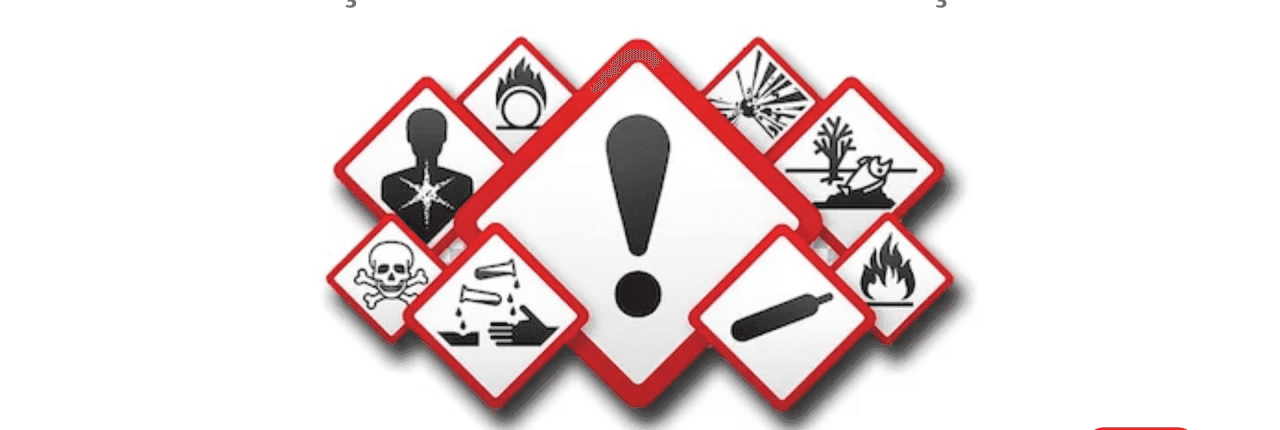
The GHS, or Globally Harmonized System of Classification and Labelling of Chemicals, is an international system for classifying and labelling chemicals in a standardized way. Its objective is to ensure clear communication about the hazards of chemicals, promoting safety at the workplace and during transport.

The GHS establishes harmonized criteria for classifying chemicals according to their physical, health, and environmental hazards. The classification criteria are based on available data on the chemicals and on predefined hazard criteria.

The GHS includes standardized elements for labels and safety data sheets, such as pictograms, signal words, hazard statements, and precautionary statements. The GHS is valid for all chemicals, except those already regulated by their own laws or regulations.

Article content

To ensure chemical safety, it is important that everyone involved, such as manufacturers, suppliers, employers, and workers, are committed.

According to UFPEG, the GHS is not a regulation. The instructions presented provide a mechanism to meet the basic requirement of any hazard communication system, which is to determine whether the manufactured or supplied chemical product is hazardous and to prepare an appropriate label and/or SDS (Safety Data Sheet).

The GHS document, also known as the “Purple Book,” consists of technical requirements for hazard classification and communication, with explanatory information on how to apply the system.

Article content

The GHS document integrates the technical work of three organizations: ILO, OECD, and UNCETDG, with explanatory information. It provides building blocks or deployment modules for regulatory bodies to develop or modify existing national programs that ensure the safe use of chemicals throughout their entire life cycle.

The GHS was introduced in Brazil through the ABNT NBR 14725 series of standards, divided into 4 parts ranging from classification to labeling and preparation of SDSs (Safety Data Sheets) for chemical products. In 2011, with the revision of the NR26 labor regulatory standard, the GHS became the official system for the classification and labeling of chemical products.

For the safe management of chemical products, workers and consumers need to become familiar with the pictograms and hazard statements introduced on labels by ABNT NBR 14725, with the aim of alerting the user to the dangers and thus minimizing the risk of accidents and exposures.

What are the hazard classes in the GHS?

Physical Hazards:

Explosives; Flammable gases; Flammable aerosols; Oxidizing gases; Gases under pressure; Flammable liquids; Flammable solids; Self-reactive substances; Pyrophoric liquids; Pyrophoric solids; Self-heating substances; Substances and mixtures which, in contact with water, emit flammable gases; Oxidizing liquids; Oxidizing solids; Organic peroxides; Corrosive to metals.

Health Hazards:

Acute toxicity; Skin corrosion/irritation; Serious eye damage/irritation; Respiratory or dermal sensitization; Germ cell mutagenicity; Carcinogenicity; Reproductive toxicity; Systemic target organ toxicity – single exposure; Systemic target organ toxicity – multiple exposures; Aspiration hazard.

Environmental hazards:

Potential for bioaccumulation and rapid degradability.

At Metal-Chek, we are committed to the strict application of GHS guidelines. We value safety at every stage of the lifecycle of the chemicals we handle, from manufacturing to transportation. Our mission is to ensure not only regulatory compliance but also the protection of health and the environment. We believe that effective GHS implementation is crucial for developing a safety culture, and we will continue to invest in training and awareness for everyone.

Until next time!

LeakTracker Lighting Fixture – Precision and Versatility During Leak Detection

Keeping you well-informed is a high priority for us, and that’s why our mission in this series of articles about lighting fixtures used in Non-Destructive Testing continues with dedication. In the last article, we presented two Spectroline lighting fixture models, their main characteristics, and what differentiates them.

Today we will continue our conversation, bringing you the most popular and portable models: the LeakTracker Spectroline flashlight and the LeakTracker Plus – UV LED Leak Detection.

Come join us and stay up-to-date with all the news!

Before we introduce you to our models, we ask the question:

Do you know what leak detection lamps or flashlights are?

A leak detection lamp is a tool that emits ultraviolet (UV) light to identify leaks in systems. It is used in conjunction with elements that react to UV light.

Article content

Most leak detection lamps are wireless and should be used in conjunction with fluorescent additives, such as penetrating particles or liquids. By reducing ambient light, a UV lamp is often very effective at detecting the source of the leak. However, we will present the following models:

LeakTracker Spectroline Flashlight

The SPI-LT LeakTracker is a UV LED lamp specifically designed for leak detection, widely used in preventive maintenance and fault detection. This technology is effective in industrial environments, especially in the inspection of systems that use pressurized liquids, such as hydraulic, pneumatic, and refrigeration systems, where early leak detection is essential.

Article content

This flashlight operates with pure UV light for a superior fluorescent dye response. It has an inspection range of 20 feet.

Article content

Main features of this model:

  • Power Source: 3 AAA batteries
  • Lamp Style: Wireless Flashlight
  • UV-absorbing glasses
  • Execution Time : 4 Continuous Hours
  • Belt holster
  • Cord
  • Small carrying case
  • Weight: 0.14 kg

LeakTracker Plus Luminaria – UV Led Leak Detection

The LeakTracker Plus can also be considered a high-performance UV LED lamp. Designed for harsh environments, it is a very useful and portable tool. Its UV LED technology is perfect for illuminating fluids containing fluorescent dyes, making leak detection easier. A key point is its portability ; it’s a compact and lightweight device, making it easy to carry and use in different locations.

Being a durable cordless inspection flashlight, it boasts high quality with advanced features such as adjustable focus, longer runtime, and a laser pointer for extreme precision in locating leaks.

Article content

It has an IP-68 protection rating: offering protection against dust, and it can withstand continuous immersion in water up to 3 meters deep for 30 minutes.

Its efficiency allows for quick and accurate leak detection, saving time and effort during maintenance. It can be used in various applications, such as air conditioning systems, piping, heating, and even vehicles. Its operation is simple and can be performed effectively by qualified professionals.

Main features:

  • 3 “C” batteries (included)
  • Lamp Style: Wireless Flashlight
  • Weight: 0.50kg
  • Anodized aluminum lamp body
  • Robust IP68 rating for dust and water resistance.
  • UV-absorbing glasses
  • Execution time: 9 continuous hours.

This tool is indispensable for your inspection processes, whether using liquid penetrant testing or magnetic particle testing. Still have questions? Contact our technical consultants , request demonstrations, and stay one step ahead of the market.

Don’t miss our updates on our YouTube channel too ! We’ll be bringing you brand new episodes, highlighting important features of each of the available light fixtures. If you haven’t subscribed yet, go ahead and turn on notifications to stay updated! See you next time!

Magnetic Particle Testing: How to Detect Faults Accurately

Magnetic particle testing (MPT) is widely used in industry for the detection of surface and subsurface discontinuities in ferromagnetic materials. This method combines the magnetization of the material with the application of magnetic particles to visually and accurately identify flaws, standing out for its ability to detect flaws with precision and efficiency.

The basic principle of magnetic particle testing is the formation of a magnetic field in the material under inspection. When a discontinuity, such as a crack or non-magnetic inclusion, interrupts this magnetic field, a leakage field is created. This leakage field attracts magnetic particles applied to the surface, forming a visible indication of the defect. This mechanism allows the method to be widely recognized for its efficiency and accuracy in identifying discontinuities.

Inspection Process

  1. Surface Preparation: The material surface must be clean and free of contaminants such as oils, greases, and other residues that may hinder detection.
  2. Magnetization: A magnetic field is applied to the material using one of the following techniques:
  • Direct current (DC or AC).
  • Magnetization by coils or electromagnets
  • Magnetization by contact with magnetic yokes.
Article content

3. Application of Magnetic Particles: The particles can be applied in the form of dry powder or liquid suspension (water- or oil-based). Fluorescent particles, visible under UV light, are ideal for inspections requiring high sensitivity.

4. Observation and Interpretation: The surface is inspected for particle accumulations that indicate the presence of defects. In the case of fluorescent particles, a UV lamp with appropriate intensity is used, such as those meeting ASTM E3022. This step is fundamental to ensure that defects are detected accurately and efficiently.

5. Demagnetization and Cleaning: After testing, the material must be demagnetized to avoid future interference in its use, and cleaned to remove any applied particles.

Advantages and Limitations

The advantages of magnetic particle testing include the detection of both surface and subsurface discontinuities, simplicity and speed of application, high sensitivity, especially with fluorescent particles, and a relatively low cost compared to other non-destructive testing (END) techniques. Limitations of the method include its restriction to ferromagnetic materials, the need for direct access to the surface to be inspected, and the possibility of false positive results due to particle accumulation in complex geometric regions.

With all this in mind, we know that currently, magnetic particle testing is an essential tool for ensuring the integrity and safety of critical components in a wide range of industries. Its proper use, combined with advanced technologies such as high-intensity UV lamps, contributes to the precision and reliability in fault detection. And Metal-Chek strives to ensure that such results are always guaranteed with maximum efficiency.

Translate