Archives October 2024

Understanding GHS: Hazard Communication and Chemical Safety

Do you know what GHS means?

The GHS, or Globally Harmonized System of Classification and Labelling of Chemicals, is an international system for classifying and labelling chemicals in a standardized way . Its objective is to ensure clear communication about the hazards of chemicals, promoting safety at the workplace and during transport.

The GHS establishes harmonized criteria for classifying chemicals according to their physical, health, and environmental hazards. The classification criteria are based on available data on the chemicals and on predefined hazard criteria.

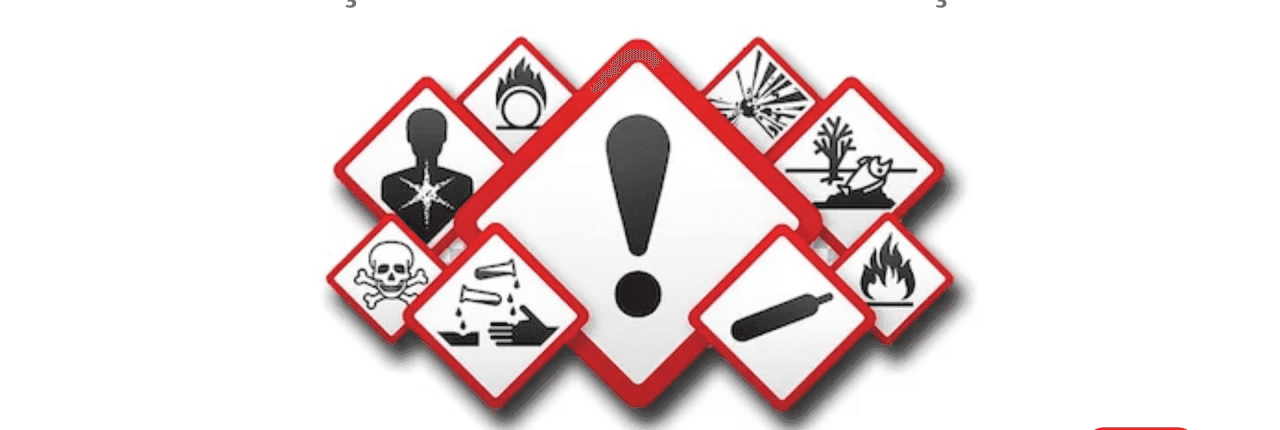
The GHS includes standardized elements for labels and safety data sheets, such as pictograms, signal words, hazard statements, and precautionary statements. The GHS is valid for all chemicals, except those already regulated by their own laws or regulations.

Article content

To ensure chemical safety, it is important that everyone involved, such as manufacturers, suppliers, employers, and workers, are committed.

According to UFPEG, the GHS is not a regulation. The instructions presented provide a mechanism to meet the basic requirement of any hazard communication system, which is to determine whether the manufactured or supplied chemical product is hazardous and to prepare an appropriate label and/or SDS (Safety Data Sheet).

The GHS document, also known as the “Purple Book,” consists of technical requirements for hazard classification and communication, with explanatory information on how to apply the system.

Article content

The GHS document integrates the technical work of three organizations: ILO, OECD, and UNCETDG, with explanatory information. It provides building blocks or deployment modules for regulatory bodies to develop or modify existing national programs that ensure the safe use of chemicals throughout their entire life cycle.

The GHS was introduced in Brazil through the ABNT NBR 14725 series of standards, divided into 4 parts ranging from classification to labeling and preparation of SDSs (Safety Data Sheets) for chemical products. In 2011, with the revision of the NR26 labor regulatory standard, the GHS became the official system for the classification and labeling of chemical products.

For the safe management of chemical products, workers and consumers need to become familiar with the pictograms and hazard statements introduced on labels by ABNT NBR 14725, with the aim of alerting the user to the dangers and thus minimizing the risk of accidents and exposures.

What are the hazard classes in the GHS?

Physical Hazards:

Explosives; Flammable gases; Flammable aerosols; Oxidizing gases; Gases under pressure; Flammable liquids; Flammable solids; Self-reactive substances; Pyrophoric liquids; Pyrophoric solids; Self-heating substances; Substances and mixtures which, in contact with water, emit flammable gases; Oxidizing liquids; Oxidizing solids; Organic peroxides; Corrosive to metals.

Health Hazards:

Acute toxicity; Skin corrosion/irritation; Serious eye damage/irritation; Respiratory or dermal sensitization; Germ cell mutagenicity; Carcinogenicity; Reproductive toxicity; Systemic target organ toxicity – single exposure; Systemic target organ toxicity – multiple exposures; Aspiration hazard.

Environmental hazards:

Potential for bioaccumulation and rapid degradability.

At Metal-Chek, we are committed to the strict application of GHS guidelines. We value safety at every stage of the lifecycle of the chemicals we handle, from manufacturing to transportation. Our mission is to ensure not only regulatory compliance but also the protection of health and the environment. We believe that effective GHS implementation is crucial for developing a safety culture, and we will continue to invest in training and awareness for everyone.

Until next time!
LeakTracker Lighting Fixture – Precision and Versatility During Leak Detection

Keeping you well-informed is a high priority for us, and that’s why our mission in this series of articles about lighting fixtures used in Non-Destructive Testing continues with dedication. In the last article, we presented two Spectroline lighting fixture models, their main characteristics, and what differentiates them.

Today we will continue our conversation, bringing you the most popular and portable models: the LeakTracker Spectroline flashlight and the LeakTracker Plus – UV LED Leak Detection.

Come join us and stay up-to-date with all the news!

Before we introduce you to our models, we ask the question:

Do you know what leak detection lamps or flashlights are ?

A leak detection lamp is a tool that emits ultraviolet (UV) light to identify leaks in systems. It is used in conjunction with elements that react to UV light.

Article content

Most leak detection lamps are wireless and should be used in conjunction with fluorescent additives, such as penetrating particles or liquids. By reducing ambient light, a UV lamp is often very effective at detecting the source of the leak. However, we will present the following models:

LeakTracker Spectroline Flashlight

The SPI-LT LeakTracker is a UV LED lamp specifically designed for leak detection, widely used in preventive maintenance and fault detection. This technology is effective in industrial environments, especially in the inspection of systems that use pressurized liquids, such as hydraulic, pneumatic, and refrigeration systems, where early leak detection is essential.

Article content

This flashlight operates with pure UV light for a superior fluorescent dye response. It has an inspection range of 20 feet.

Article content

Main features of this model:

  • Power Source: 3 AAA batteries
  • Lamp Style: Wireless Flashlight
  • UV-absorbing glasses
  • Execution Time : 4 Continuous Hours
  • Belt holster
  • Cord
  • Small carrying case
  • Weight: 0.14 kg

LeakTracker Plus Luminaria – UV Led Leak Detection

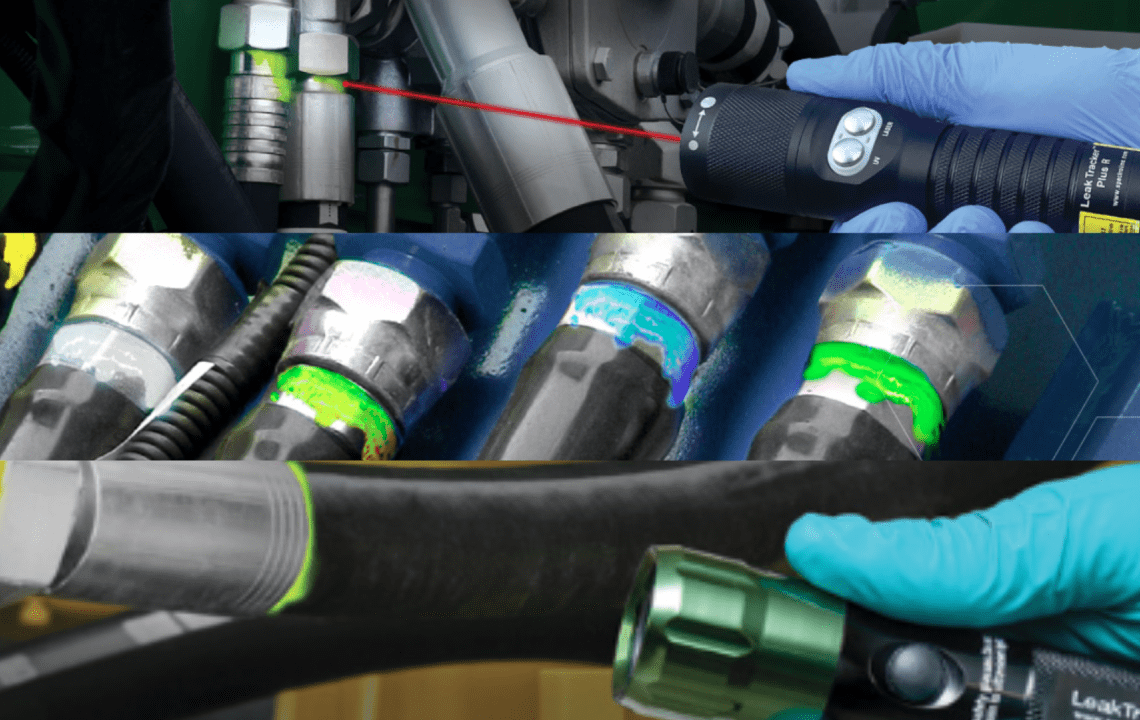
The LeakTracker Plus can also be considered a high-performance UV LED lamp. Designed for harsh environments, it is a very useful and portable tool. Its UV LED technology is perfect for illuminating fluids containing fluorescent dyes, making leak detection easier. A key point is its portability ; it’s a compact and lightweight device, making it easy to carry and use in different locations.

Being a durable cordless inspection flashlight, it boasts high quality with advanced features such as adjustable focus , longer runtime, and a laser pointer for extreme precision in locating leaks.

Article content

It has an IP-68 protection rating: offering protection against dust, and it can withstand continuous immersion in water up to 3 meters deep for 30 minutes.

Its efficiency allows for quick and accurate leak detection, saving time and effort during maintenance. It can be used in various applications, such as air conditioning systems, piping, heating, and even vehicles. Its operation is simple and can be performed effectively by qualified professionals.

Main features:

  • 3 “C” batteries (included)
  • Lamp Style: Wireless Flashlight
  • Weight: 0.50kg
  • Anodized aluminum lamp body
  • Robust IP68 rating for dust and water resistance.
  • UV-absorbing glasses
  • Execution time : 9 continuous hours.

This tool is indispensable for your inspection processes, whether using liquid penetrant testing or magnetic particle testing. Still have questions? Contact our technical consultants , request demonstrations, and stay one step ahead of the market.

Don’t miss our updates on our YouTube channel too ! We’ll be bringing you brand new episodes, highlighting important features of each of the available light fixtures. If you haven’t subscribed yet, go ahead and turn on notifications to stay updated! See you next time!

Magnetic Particle Testing: How to Detect Faults Accurately

Magnetic particle testing (MPT) is widely used in industry for the detection of surface and subsurface discontinuities in ferromagnetic materials. This method combines the magnetization of the material with the application of magnetic particles to visually and accurately identify flaws, standing out for its ability to detect flaws with precision and efficiency.

The basic principle of magnetic particle testing is the formation of a magnetic field in the material under inspection. When a discontinuity, such as a crack or non-magnetic inclusion, interrupts this magnetic field, a leakage field is created. This leakage field attracts magnetic particles applied to the surface, forming a visible indication of the defect. This mechanism allows the method to be widely recognized for its efficiency and accuracy in identifying discontinuities.

Inspection Process

  1. Surface Preparation: The material surface must be clean and free of contaminants such as oils, greases, and other residues that may hinder detection.
  2. Magnetization: A magnetic field is applied to the material using one of the following techniques:
  • Direct current (DC or AC).
  • Magnetization by coils or electromagnets
  • Magnetization by contact with magnetic yokes .
Article content

3. Application of Magnetic Particles: The particles can be applied in the form of dry powder or liquid suspension (water- or oil-based). Fluorescent particles, visible under UV light, are ideal for inspections requiring high sensitivity.

4. Observation and Interpretation: The surface is inspected for particle accumulations that indicate the presence of defects. In the case of fluorescent particles, a UV lamp with appropriate intensity is used, such as those meeting ASTM E3022. This step is fundamental to ensure that defects are detected accurately and efficiently.

5. Demagnetization and Cleaning : After testing, the material must be demagnetized to avoid future interference in its use, and cleaned to remove any applied particles.

Advantages and Limitations

The advantages of magnetic particle testing include the detection of both surface and subsurface discontinuities, simplicity and speed of application, high sensitivity, especially with fluorescent particles, and a relatively low cost compared to other non-destructive testing (END) techniques. Limitations of the method include its restriction to ferromagnetic materials, the need for direct access to the surface to be inspected, and the possibility of false positive results due to particle accumulation in complex geometric regions.

With all this in mind, we know that currently, magnetic particle testing is an essential tool for ensuring the integrity and safety of critical components in a wide range of industries. Its proper use, combined with advanced technologies such as high-intensity UV lamps, contributes to the precision and reliability in fault detection. And Metal-Chek strives to ensure that such results are always guaranteed with maximum efficiency.

Artificial Intelligence in the Context of Inspection 4.0

We know that this topic has generated a great deal of discussion in various areas and has also been used in many fields of activity.

But do you know how Artificial Intelligence (AI) is implemented in the context of Inspection?

AI in the context of Inspection 4.0 refers to the application of advanced algorithms and machine learning techniques to enhance industrial inspection processes. With the rise of the fourth industrial revolution, industries are increasingly integrating digital technologies into their operations, and AI plays a crucial role in this transformation.

In Inspection 4.0, AI is used to analyze large volumes of data collected in real time by connected devices, such as sensors, cameras, and drones.

Article content

This data can include information about product quality, operating conditions, and any process failures. Through pattern recognition and predictive analytics techniques, AI can identify anomalies, predict failures, and offer recommendations for optimization.

One of the main benefits of AI in Inspection 4.0 is its ability to increase the accuracy and efficiency of inspections . While traditional methods can be susceptible to human error and capacity limitations, AI can process information quickly and accurately, providing results that allow for more informed decision-making. Furthermore, real-time analysis enables an immediate response to detected problems, reducing downtime and improving overall product quality.

Another important aspect is the customization of inspection . With AI, companies can adapt their inspection processes according to the specifics of their products and operations, allowing a level of flexibility that was not possible with traditional approaches.

Technology plays a fundamental role in improving industrial processes, bringing a series of benefits that directly impact the efficiency, quality, and competitiveness of companies. In short, technology is an essential engine for the transformation and improvement of industrial processes. Its adoption not only increases efficiency and quality but also strengthens the competitive position of companies in a constantly evolving business environment.

These trends are shaping the future of artificial intelligence, influencing how it is developed, implemented, and integrated across various industries. As these technologies advance, AI is expected to become even more ubiquitous and impact all aspects of society and the economy.

In summary, Artificial Intelligence in the context of Inspection 4.0 not only transforms the way inspections are carried out, but also empowers industries to operate more intelligently, efficiently, and adaptably, aligning with the demands of a constantly evolving market.

Non-Destructive Testing: History, Evolution, and Applications

Non-Destructive Testing (END) methods are widely used inspection methods to assess the integrity and quality of materials and structures without physically altering them. These tests are fundamental in various engineering fields, such as civil construction, aeronautics, petrochemicals, and automotive, ensuring the safety and durability of components.

The Emergence of Non-Destructive Testing

The history of END (Non-Destructive Testing) dates back to the beginning of the 20th century, when engineers began searching for methods that would allow them to assess the quality of materials and components without having to destroy them. Among the first developments, industrial radiography (using X-rays) stands out, which was introduced as an inspection technique in the 1920s. This method revolutionized the way internal flaws in metallic materials were detected, especially in critical components, such as those used in aircraft and the railway industry.

Other techniques, such as ultrasound and eddy currents, began to be developed in the 1940s, mainly during World War II, when there was an urgent demand for fast and efficient methods to ensure the integrity of parts used in military equipment.

Key Dates and Contributions

  1. 1920 – Emergence of Industrial Radiography

Industrial radiography, one of the earliest methods of Non-Destructive Testing, began to be used in the 1920s. During World War I , engineers began to realize the need to inspect critical components, such as the internal parts of engines and aircraft components. The use of X-rays for this purpose was an important milestone.

2. 1930 – First Works in Ultrasound

During the 1930s, researchers began exploring the use of ultrasound to detect flaws in materials. However, it was only in the 1940s that ultrasound became established as an important technique in END (Non-Destructive Testing), especially during World War II , when it was used to test the integrity of metals and other materials in aircraft and submarines.

3. 1940 – The Contribution of Karl D. Langenbeck (USA)

Karl D. Langenbeck , an engineer from the United States, is often credited as one of the pioneers in the development of ultrasound technology applied to Non-Destructive Testing. He was one of the first to use ultrasonic waves to detect flaws in metallic materials.

4. 1940 – Eddy Currents

The eddy current method began to be explored during the 1940s, initially applied to the detection of surface flaws in conductive metals. The physicist William B. Shockley , best known for his contribution to the development of the transistor, also made indirect contributions to the field of eddy currents, based on the theory of electromagnetic induction.

5. 1950 – Commercial Application of Fluorescence in Liquid Penetrant

The liquid penetrant technique , used to detect surface flaws, began to be widely applied in the 1950s. The addition of fluorescence to the dye used (introduced by researchers at General Electric ) made the technique more sensitive, allowing the visualization of finer flaws.

6. 1970 – The International Standard ISO 9712

In the 1970s, the growing importance of END (Non-Destructive Testing) for global industry led to the creation of ISO 9712 , an international standard for the certification of END technicians. This standard established the criteria for different qualification levels, helping to standardize the training of professionals in the field.

7. 1980 – Technological Advances in the Use of X-rays and Gamma Rays

During the 1980s, the application of gamma rays expanded, especially in inspections of large metallic structures, such as oil and gas platforms and civil construction structures. Improvements in cameras and detectors allowed for increased precision and reduced risks associated with the use of radiation.

8. 1990 – Development of Computational Techniques and Image Processing

In the 1990s, with the popularization of computer technology, significant advances emerged in image reconstruction in END (Non-Destructive Testing), mainly in digital radiography and the application of analysis software to interpret test data. These advances enabled more detailed and efficient inspection of complex materials and components.

The evolution of END, from early rudimentary methods to the advanced technologies used today, reflects not only advances in materials science but also the increasing industrial demands for safer, faster, and more precise processes. This article aims to explore the origins of Non-Destructive Testing, its main techniques, and its practical applications, providing an overview.

Main Non-Destructive Testing Techniques

The most common END techniques include:

  • Radiography (X-rays and Gamma Rays): Uses radiation to detect internal defects, such as cracks and voids. It is particularly useful for inspecting welds and dense materials.
  • Ultrasound: This involves sending high-frequency acoustic waves into the material and measuring the time it takes for those waves to return. It allows for the detection of internal flaws and is very accurate for thickness measurements and defect location.
  • Magnetic Particles: A technique indicated for ferromagnetic materials. It consists of applying fine particles to the surface of the material, which will clump together in regions where there are surface or subsurface flaws.
  • Eddy currents: Based on the principle of electromagnetic induction, this technique is mainly used for detecting surface flaws in conductive materials.
  • Dye Penetrant (Liquid Penetrant): This involves applying a dye to non-porous materials. After the dye penetrates the surface flaws, the presence of defects can be visualized by removing the excess dye and applying a developer.

Each technique has its advantages and limitations, and the choice of the appropriate method depends on the type of material, the geometry of the part, the type of defect sought, and the environmental conditions.

Applications in Industry and Importance of END

Non-destructive testing plays a crucial role in various industries. Some examples of its applications include:

  • Aeronautics: Safety in the aviation sector depends on rigorous maintenance and non-destructive testing to detect structural flaws in aircraft fuselages and critical components.
  • Civil Construction: Tests such as ultrasound are used to assess the quality of concrete and to identify cracks in large structures, such as bridges and buildings.
  • Oil and Gas: Inspecting pipes and equipment on oil platforms is essential to prevent failures that could result in leaks or serious accidents.
  • Automotive: END (Non-Destructive Testing) is used to ensure the quality of critical parts, such as axles, engines, and suspension systems, increasing vehicle safety.

These methods not only guarantee the quality of the materials, but also help to increase the lifespan of the equipment, minimizing costs associated with unexpected maintenance and preventing catastrophic failures.

Non-destructive testing (END) is an essential tool in modern engineering, allowing for the safe and uncompromising evaluation of materials and components. Since their emergence in the early 20th century, these techniques have evolved and become indispensable in various industrial sectors. The training of professionals is a key aspect in ensuring the effectiveness of END, making continuous training and education fundamental for maintaining high standards of safety and quality.

The continuous evolution of END technologies offers new possibilities for the future, allowing engineering and related fields to continue to achieve higher levels of precision and reliability in the evaluation of materials and structures.

Translate