Archives January 2025

Elevate Precision: SuperMagna 104 Contrast

Did you know that non-destructive testing (END) is fundamental to ensuring the safety and reliability of industrial components? These tests are essential for detecting flaws without compromising the integrity of the materials. And when the goal is to maximize the efficiency of these tests, SuperMagna Contrast 104 is the ideal choice!

What is SuperMagna Contrast 104 and how does it work?

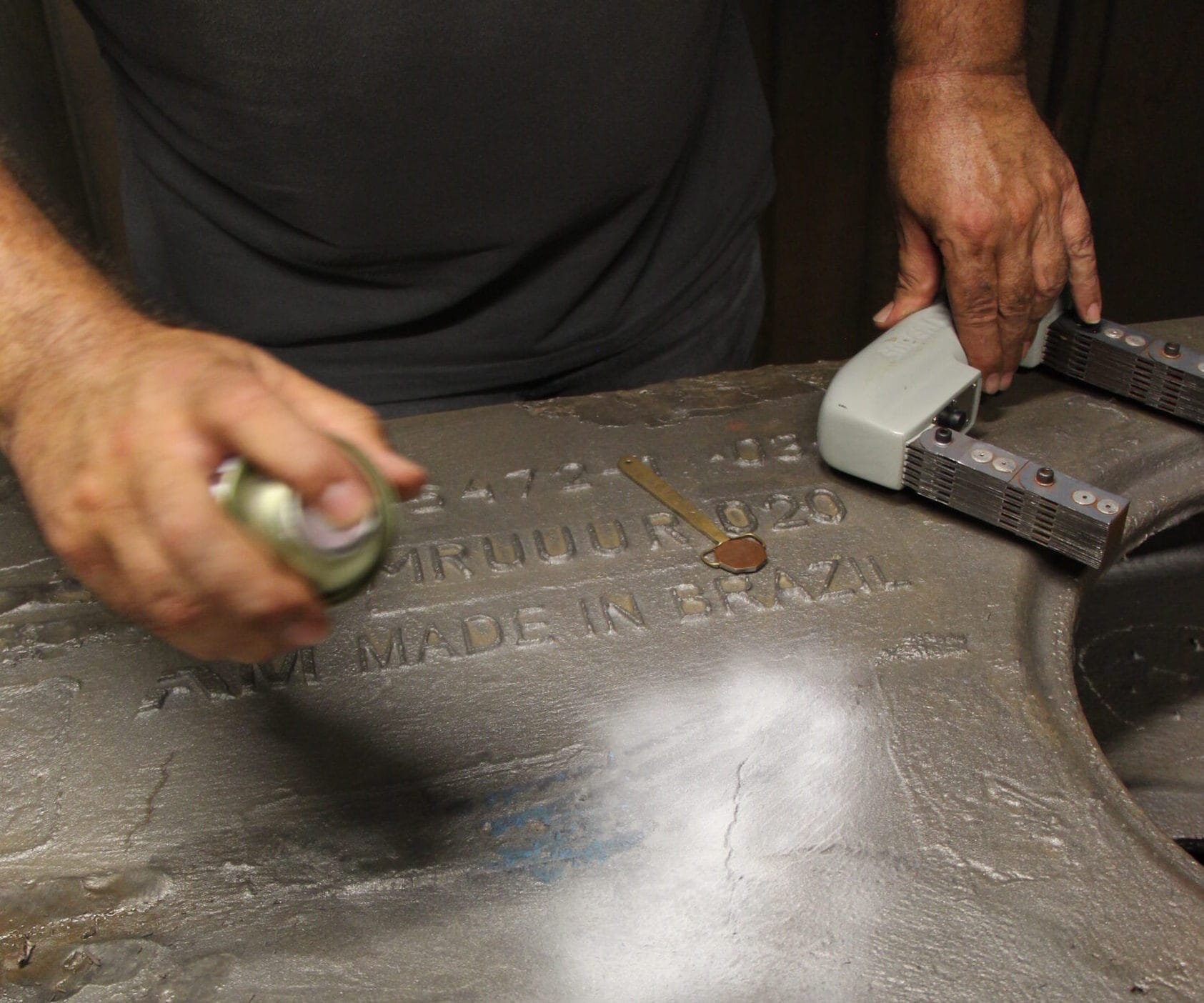
SuperMagna Contrast 104 is a white contrast ink designed for use as a base in magnetic particle testing. Applying this ink to the component surface creates a high-contrast background, facilitating the detection of discontinuities during visible magnetic particle inspection. This process increases sensitivity and the chance of identifying flaws, such as leaks, that might otherwise go unnoticed. Ideal for use in various industries, it contributes to the safety and reliability of inspection processes.

To better illustrate this, we have also included some of its main features and benefits:

  • Improved Contrast and Sensitivity: SuperMagna Contrast 104 creates a high-contrast background, optimizing magnetic particle testing and increasing accuracy in flaw detection.
  • Ready to Use: The product comes ready for application, which speeds up the inspection process and reduces waiting time between test steps.
  • Efficient Application: The ink dries quickly and offers superior visibility during non-destructive testing.
  • Compatibility: Compatible with various types of visible magnetic particles, such as Supermagna BW 333 and RW 222, expanding versatility in testing.
  • Resistant and Durable: Once dry, the paint withstands the wet-dose method used in inspections, ensuring long-lasting and reliable performance.
  • High Adhesion: The ink offers excellent adhesion to surfaces, ensuring that the contrast is maintained uniformly throughout the inspection.

How the SuperMagna 104 Contrast Inspection Process Works

  • Surface Cleaning: Before applying the paint, it is essential to ensure that the surface to be inspected is completely clean, in order to optimize the adhesion of SuperMagna Contrast 104.
  • Paint Application: Shake the can well and apply a thin, even coat. Wait approximately 2 minutes for it to dry before proceeding with the application of the magnetic particles.
  • Inspection: After drying, spray the magnetic particles onto the magnetized inspection area. The contrast provided by the paint facilitates the detection of leaks and other discontinuities.
  • Removal: Removing the paint is simple and can be done with a paint remover, without damaging the surface being analyzed.

But how do you gain an advantage by choosing Metal-Chek?

You might be wondering: “Why choose Metal-Chek, a market leader, for my non-destructive testing needs?” The answer lies in the quality and reliability of our products. SuperMagna Contrast 104 was developed to guarantee exceptional results, with a formulation that offers maximum performance and safety for your inspections. With over 40 years of experience and innovation, Metal-Chek has become synonymous with excellence in products for the non-destructive testing industry.

If you are looking for a product that offers not only efficiency, but also safety and innovation in your non-destructive testing, the SuperMagna Contrast 104 is the right choice. By improving discontinuity detection and ensuring high performance, this Metal-Chek product remains the market leader. The right choice for those who want consistent, high-quality results.

Want to know more? Contact one of our technical consultants and request a demonstration.

Phone: +55 (11) 3515-5287 / E-mail: metalchek@metalchek.com.br

SuperMagna CLY 3000 O MMS BP PM: The Best Solution in Magnetic Particles

Non-destructive testing (END) is fundamental in industry to ensure the integrity and quality of materials and components. Among the methods used, wet magnetic particle testing stands out for its effectiveness in detecting surface and subsurface discontinuities.

What are Wet Magnetic Particle Tests?

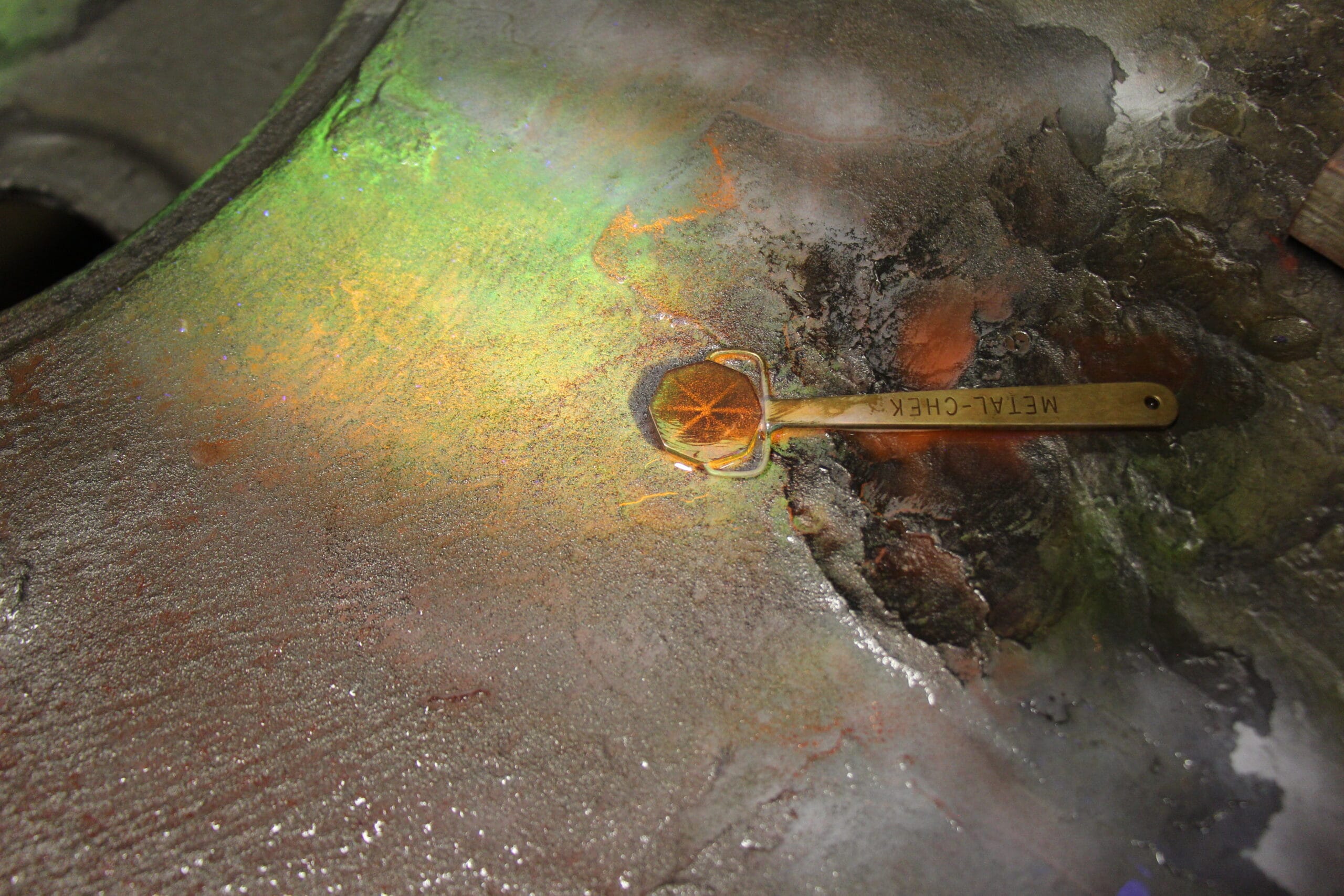
Wet magnetic particle testing is used in non-destructive testing to identify defects in ferromagnetic materials. This method involves applying a magnetic field to the material and then adding magnetic particles suspended in a liquid. The particles accumulate in areas of discontinuity, making the defects visible under ultraviolet light. In this article, we will explore the use of SuperMagna CLY 3000 O MMS Ready Bath Fluorescent Wet Testing , an innovative product that facilitates and optimizes this process.

SuperMagna CLY 3000 O MMS BP PM is a ready-to-use, fluorescent Supermagna LY 3000 bath in suspension with the Supermagna OMC 10 MMS oil vehicle , formulated with these magnetic particles suspended in a liquid medium, providing a precise and reliable inspection. Its optimized composition ensures high sensitivity in locating cracks, inclusions, and other irregularities in ferromagnetic components.

This ready-to-use fluorescent wet bath product was developed to offer even greater sensitivity in detecting discontinuities under UV illumination. Its fluorescent magnetic particles provide superior visibility, facilitating the analysis and interpretation of results in non-destructive testing. This product is ideal for applications requiring extreme precision, such as inspections of critical components in the aerospace and automotive industries.

How to use the SuperMagna CLY 3000 MMS BP PM?

  1. Part Preparation: Ensure the material surface is clean and free of contaminants.
  2. Application: Shake the bath to ensure even distribution of the particles and apply to the surface of the part.
  3. Magnetization: Use the appropriate technique (longitudinal, circular, or yoke field) to magnetize the part.
  4. Inspection: Under appropriate UV lighting, check for signs of discontinuities.
  5. Cleaning and Recording: Remove excess product and record the indications according to regulatory criteria.

Benefits of SuperMagna CLY 3000 MMS BP PM

  • Practicality and Efficiency: Being a ready-to-use bath, it eliminates the need for manual formulation, reducing errors and ensuring uniformity in inspections.
  • High Sensitivity : High-quality particles allow for precise detection of discontinuities, meeting stringent industry standards.
  • Compliance with Standards: Meets international standards ASTM E1444, ISO 9934 and AMS 3044.
  • Versatile Applicability: Suitable for inspections in the aeronautical, automotive, petrochemical, and machining industries.
  • Durability and Stability: Maintains its properties for extended periods, ensuring reliability in testing.

We know there are frequent questions about this topic, so we’re getting ahead of the curve by answering them:

1. What is the difference between dry and wet magnetic particle printing?

  • Dry-applied particles are applied directly to the magnetized surface, while wet-applied particles are suspended in a carrier liquid, providing greater mobility and sensitivity.

2. Can the SuperMagna CLY 3000 MMS BP PM be used on parts of any size?

  • Yes, provided that the magnetization is performed correctly to ensure the formation of visible indications, as illustrated in the video above.

3. How to store the product correctly?

  • Ideally, store in a cool, dry place away from heat sources or contamination.

If you have any further questions, please contact our technical consultants directly.

The SuperMagna CLY 3000 MMS BP PM 3000 Ready Bath product is a reliable and efficient solution for wet magnetic particle testing, guaranteeing high precision and compliance with international standards. With it, inspections become faster, more practical, and safer, ensuring the quality and integrity of the inspected components. Choose Metal-Chek and get guaranteed quality and innovation for your inspection processes.

Technology in Focus: Advances in Non-Destructive Testing

Technological evolution has significantly boosted industry, bringing innovations that make processes more efficient and safe. In the field of Non-Destructive Testing (END), the incorporation of new tools, such as drones and ROVs (Remotely Operated Vehicles) , has revolutionized industrial inspections, allowing for greater precision, speed, and safety in detecting structural flaws.

The Role of Technology in Non-Destructive Testing

Non-destructive testing is fundamental to ensuring the integrity of equipment and structures without compromising their functionality. The use of advanced sensors, analysis algorithms, and automation has allowed these techniques to evolve, making them more precise and reliable.

Drones in Industrial Inspection

Drones have become an indispensable tool in Non-Destructive Testing, especially in hard-to-reach environments. Equipped with high-resolution cameras, infrared sensors, and ultrasound systems, these devices allow for detailed visual inspections of structures such as transmission towers, wind turbines, and oil pipelines. Furthermore, their ability to capture data in real time reduces the need for human intervention in hazardous locations, increasing operational safety.

Benefits of drones in inspection:

  • Access to hazardous locations without human exposure.
  • Capturing images and data with high precision.
  • Reduction of operational costs and inspection time.
  • Continuous monitoring and predictive analytics.

ROVs: Underwater and Structural Inspection

Okay, but do you know what ROV means?

ROV stands for Remotely Operated Vehicle. ROVs are submersible vehicles that can be operated from a ship or by a ground-based controller.

ROVs are remotely operated vehicles that play a crucial role in inspecting submerged structures such as pipelines, oil platforms, and hydroelectric plants. Equipped with high-definition cameras, sonar, and ultrasound sensors, these devices allow for the detection of corrosion, cracks, and other structural damage without the need for divers, reducing risks and costs.

Advantages of ROVs in inspection:

  • Ability to operate at extreme depths.
  • Reducing risks for workers.
  • Real-time remote monitoring.
  • Precision in underwater data collection.

Challenges in Implementing New Technologies

Despite numerous advantages, the implementation of drones, ROVs, and artificial intelligence in Non-Destructive Testing faces significant challenges. Some of the main obstacles include:

  • High initial cost: The investment in advanced equipment and specialized software can be high.
  • Professional training: The adoption of these technologies requires technical qualifications for operation and data interpretation.
  • Adverse environments: Some inspections take place in extreme conditions, such as very high or low temperatures, which can impact the performance of the devices.
  • Technological interference: In certain industrial areas, communication signals may be affected, making remote control of equipment difficult.
  • Regulatory standards: Adapting to legal requirements and international standards can be a challenge for the implementation of new technologies.

The Future of Industrial Inspection

With the constant evolution of technology, the trend is for Non-Destructive Testing to become increasingly automated, efficient, and safe. The combination of drones, ROVs, and Artificial Intelligence is redefining the standards of industrial inspection, ensuring greater precision in fault detection and reducing operational costs.

Metal-Chek closely follows these innovations, offering solutions that meet the most stringent industry demands. Investing in technology is fundamental to ensuring the safety, efficiency, and reliability of industrial processes, consolidating a more innovative and sustainable future for Non-Destructive Testing.

Translate