Tag Technical Standards

Aviation Safety Depends on Non-Destructive Testing

Aviation is one of the most stringent industrial sectors when it comes to operational safety. Aircraft are designed to operate under severe conditions of load, vibration, pressure variations, and continuous cycles of structural fatigue over thousands of flight hours.

To ensure that all components maintain their structural integrity over time, the aeronautical industry relies heavily on Non-Destructive Testing (END) .

More than just a verification step, ENDs (Non-Destructive Tests) are part of aviation safety culture. From the manufacturing of structures and components to maintenance programs throughout the aircraft’s lifespan, thousands of inspections are carried out to identify potential discontinuities before they evolve into critical failures.

Every safe flight depends on a series of technical inspections that ensure the structural reliability of the aircraft.


Non-Destructive Testing in the Aeronautical Industry

Non-destructive testing methods are used to evaluate the integrity of materials and components without compromising their future use.

In the aeronautical industry, different methods are applied as required by the aircraft manufacturer’s manual. Among the methods used are:
ultrasound
, radiography
, eddy currents
, liquid penetrant testing
, and magnetic particles.

Each method has a specific function within the inspection programs applied in the manufacturing and maintenance of aircraft.

Among these methods, fluorescent penetrant testing and fluorescent magnetic particle testing are widely used for the detection of discontinuities.


Technical rigor and materials control in aviation

The aeronautical sector adopts extremely rigorous criteria for the products used in inspection processes.

For example, the penetrating materials used in these processes must be qualified in the QPL — Qualified Products List .

Only listed materials may be used in certain aircraft inspection processes, ensuring standardization, traceability, and reliability in the results obtained .


Fluorescent penetrant liquid in aircraft inspection

Fluorescent liquid penetrant testing is widely used in the aeronautical industry to identify extremely fine surface discontinuities.

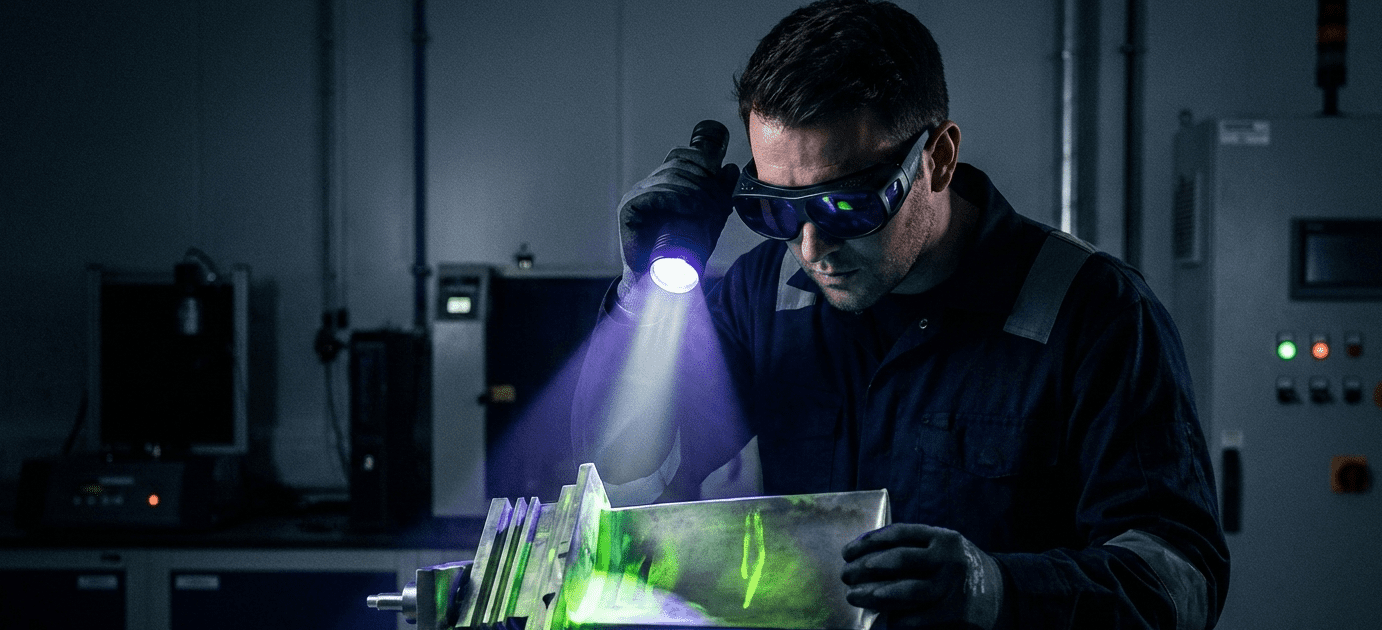
The method is based on the phenomenon of capillarity , allowing the penetrant to penetrate cracks or discontinuities open to the surface. After removing the excess and applying the developer, the retained penetrant returns to the surface, forming indications observed under ultraviolet illumination.

For aeronautical applications, the penetrants, removers, emulsifiers, and developers used must be properly qualified according to the applicable QPL list .

Metal-Chek offers the Sherwin Dubl-Chek line in Brazil , consisting of penetrant testing systems developed to meet the technical requirements of the aeronautical sector.


Fluorescent magnetic particles in ferromagnetic components

Magnetic particle testing is used to inspect components made from ferromagnetic materials.

The method involves magnetizing the component. When there is a surface discontinuity or a discontinuity near the surface, a distortion occurs in the magnetic field, forming a leakage field that attracts the magnetic particles applied to the part.

In the aeronautical industry, the test is typically performed using fluorescent magnetic particles in an oil-based liquid suspension , which provides greater sensitivity in the formation of indications.

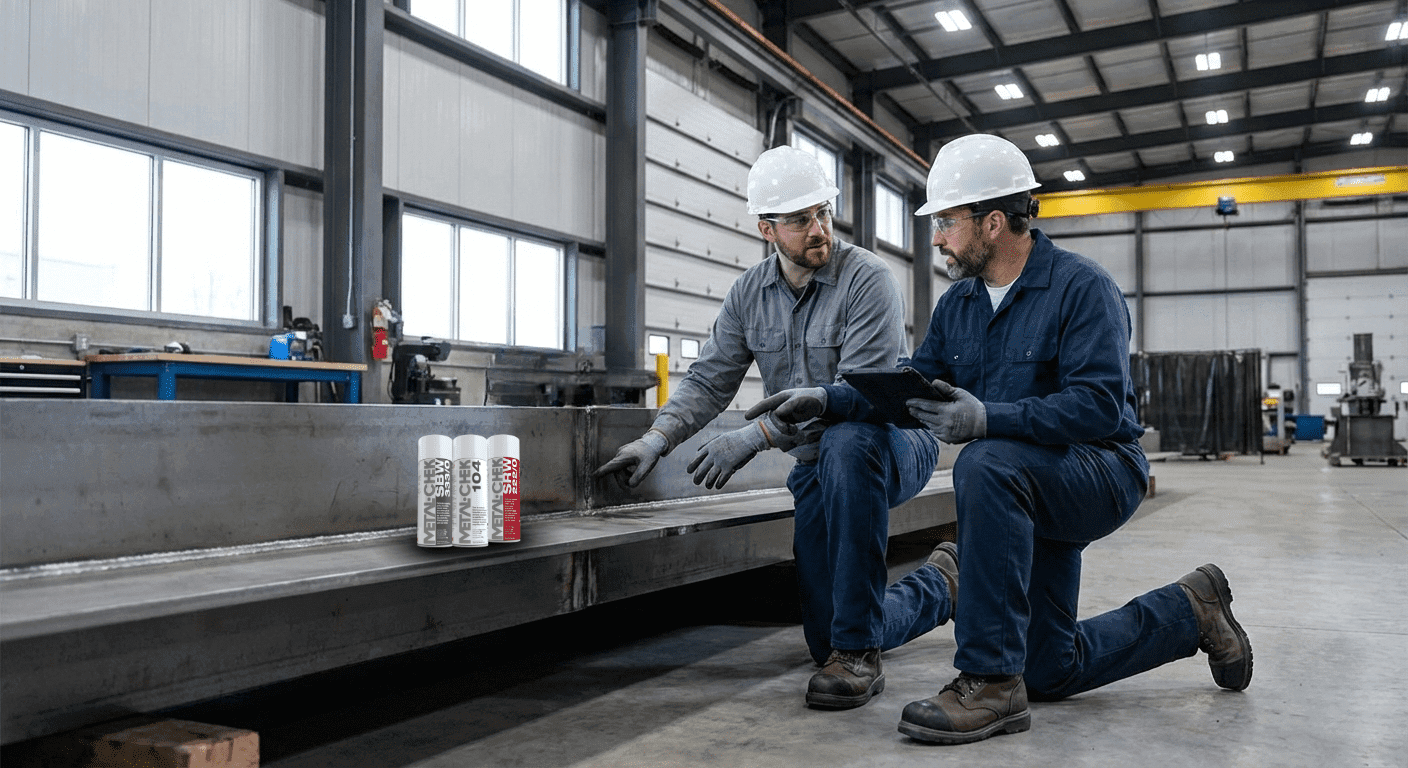
In the context of the Metal-Chek line, fluorescent magnetic particles can be used in the aeronautical sector when applied in oil-based suspension , using the Supermagna OMC 10 MMS vehicle .

This combination allows for the proper formation of the suspension for application of the method, in accordance with the technical requirements adopted in aeronautical inspections.


Inspections throughout the aircraft’s lifespan

Non-destructive testing inspections are not limited to aircraft manufacturing.
These methods are part of ongoing maintenance and structural monitoring programs. Throughout the aircraft’s lifespan, components are periodically inspected to identify potential discontinuities caused by:
• structural fatigue
• repetitive load cycles
• vibration
• thermal variations
• severe operating conditions

This continuous monitoring allows for the identification of potentially critical conditions before they evolve into structural failures.


Air safety built into every inspection

Modern aviation safety is the result of a combination of advanced engineering, rigorous procedures, and reliable inspections .

Non-destructive testing is an essential part of this system, allowing the structural integrity of components to be evaluated without compromising their use.

Each inspection performed represents another level of assurance in the integrity of the aircraft, directly contributing to the safety of passengers, crews, and air operations worldwide.


Excellence in products for those seeking reliable results

Metal-Chek provides complete solutions for Non-Destructive Testing , with products developed according to the main ASTM, ISO, ASME, NM and PETROBRAS standards .

Among its solutions are systems for liquid penetrant testing , magnetic particles , and various consumables used in industrial inspections, contributing to consistent results, operational safety, and technical reliability.

Speak with our  technical consultants  and find the ideal solution for your process.

Visit our  blog  and check out other technical content.

Discover our  complete product line .

Follow Metal-Chek on  Instagram ,  Facebook  , and  LinkedIn.

Operation and END: a strategic partnership in Quality Control

In an industrial setting, Quality Control is responsible for ensuring that products and processes meet established technical, regulatory, and contractual requirements.

Non-Destructive Testing (END) is an integral part of this Quality Control system. It consists of technical tools used to verify the integrity of materials and components without compromising their future use.

However, in many industrial environments, there is a disconnect between operations and the Quality or END departments.

On one side, those who execute.
On the other, those who inspect.

When this relationship is misunderstood, the perception arises that inspection exists only to point out flaws or interrupt the process. This view generates internal noise and weakens the quality culture.

Operation and END are not competitors. They operate at different stages of the same objective: ensuring the technical conformity and reliability of the final product .


The role of the operation in process integrity

Execution is the foundation of any industrial result.

It is the operational team that applies procedures, controls parameters, performs welding, assembly, and adjustments that determine the component’s performance.

Quality begins in the production process. When execution is consistent and aligned with technical requirements, inspection tends to confirm this conformity.

The operation, therefore, is not merely an executor; it is an active part of the quality control system.

The role of END in technical verification

Non-destructive testing serves to verify whether a product meets integrity criteria.

END does not create discontinuities.
It evaluates what is already present in the material or what is inherent to the manufacturing process.

When a relevant indication is identified, the objective is technical: to prevent an unsuitable condition from progressing in the process or reaching the customer.

Internal inspection reduces major risks, avoids external impacts, and preserves the integrity of the production system.

When conflict arises

Disagreements between operation and quality often arise when inspection is perceived as an obstacle to the pace of production.

However, a nonconformity identified internally represents an opportunity for controlled correction. Conversely, a failure detected externally can compromise contracts, schedules, reputation, and operational safety.

END acts as a validation step within the production flow, not as a barrier, but as a mechanism for technical verification.

When operations and END work as partners

Mature industrial environments exhibit clear characteristics:

  • The operational team understands the acceptance criteria applicable to the process;
  • The inspector understands the variables and limitations of the production process;
  • There is objective technical communication;
  • Adjustments are treated as process improvements, not as personal conflicts.

When integration exists:

✔ Rework decreases
✔ Process predictability increases
✔ Approval rate improves
✔ Trust between departments is strengthened

Inspection is now recognized as part of the quality workflow, and not as an impediment.

Quality culture: shared responsibility

Quality is not exclusive to the END sector.

It involves planning, execution, verification, and continuous improvement. When everyone understands their role within the system, the environment becomes more collaborative and technically consistent.

A strong quality culture reduces costs and improves performance indicators in a sustainable way.

Procedures and products as elements of stability

The partnership between operations and END also depends on a solid technical foundation:

  • clear and well-defined procedures;
  • objective acceptance criteria;
  • Standardization of inspection methods;
  • Reliable and consistent inspection products.

When parameters are clearly defined and the products used deliver consistent, specification-compliant performance, the process becomes more stable and technically reliable. Consistency in results strengthens trust between departments.


Operation and Non-Destructive Testing operate at different stages of the process, but share the same purpose: to ensure that the delivered product conforms to integrity requirements.

Overcoming the idea that the quality sector is merely a “pointer of errors” is essential to consolidating more mature, cooperative, and efficient industrial environments.

When execution and verification work in an integrated way, the result is a more stable, safe, and reliable production system.


Excellence in products for those seeking reliable results.

Metal-Chek provides complete solutions for Non-Destructive Testing, with products developed according to the main ASTM, ISO, ASME, NM and PETROBRAS standards, contributing to consistent and technically reliable inspections.

– Read more technical content about END on our blog
– Follow Metal-Chek on Instagram: @metalchek and on LinkedIn

The Importance of Non-Destructive Testing in Industry

Non-Destructive Testing (END) plays a fundamental role in industry. Far beyond a technical inspection step, END is a strategic tool that directly contributes to product quality , operational safety , cost reduction , and the preservation of life .

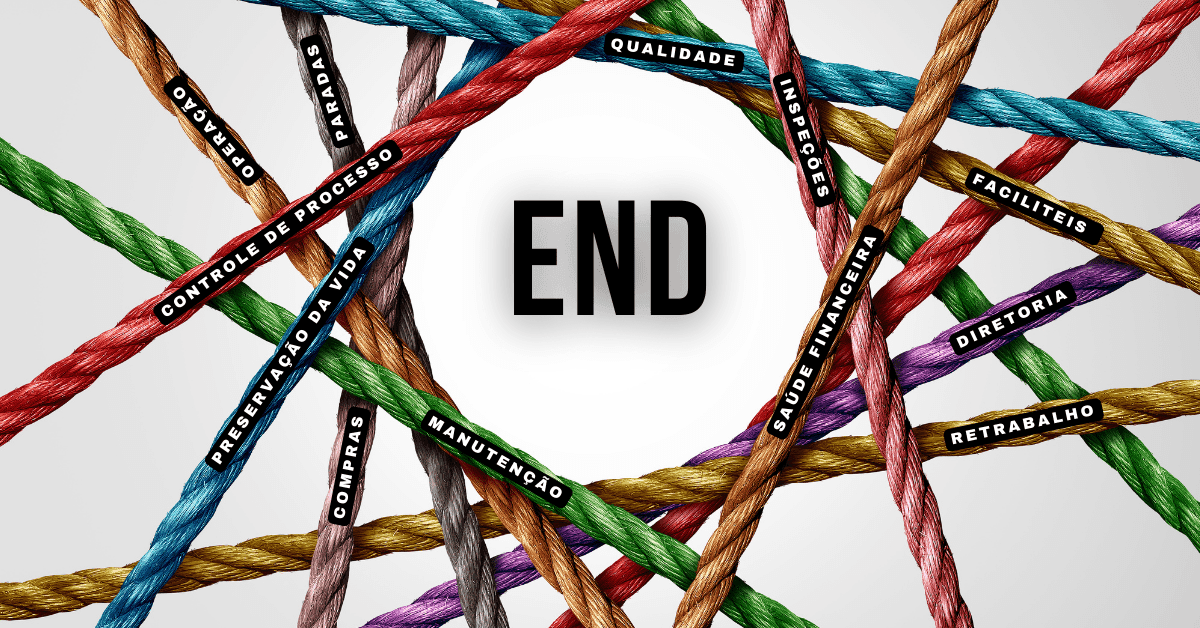
In an increasingly demanding industrial environment, where failures can result in accidents, unscheduled downtime, and significant financial losses, END (Non-Destructive Testing) acts preventively, allowing the identification of discontinuities before they evolve into critical failures. This control impacts the entire organization, from the purchasing department to senior management, strengthening the industry as a whole.


Non-Destructive Testing: More than inspection, an industrial strategy

Non-destructive testing comprises a set of inspection methods used to assess the integrity of materials, components, and structures without compromising their future use .

Methods such as Liquid Penetrant Testing (LP) , Magnetic Particle Testing (MP) , and Leak Detection are widely applied in manufacturing, maintenance, and operational inspections. They allow for the early identification of discontinuities, defects, or inadequate conditions, ensuring greater reliability in industrial processes. When correctly specified and executed, END ceases to be merely a regulatory requirement and becomes an instrument for quality and risk management .

Strengthening industry and preserving life

One of the main pillars of Non-Destructive Testing is safety . The integrity of equipment, structures, and components is directly related to the protection of people, the environment, and industrial assets.

Undetected defects can result in serious accidents, leaks, structural collapses, and operational interruptions. END (Non-Destructive Testing) acts preventively, significantly reducing these risks by identifying discontinuities in their early stages.

By investing in reliable inspections and appropriate END products, industry strengthens its operations, increases the reliability of its assets, and plays an essential role in preserving life .

Cost reduction and impact on the company’s financial health

Although often viewed merely as an operational cost, Non-Destructive Testing, in practice, represents an investment with a measurable return .

Early fault detection prevents:

  • unscheduled stops;
  • rework and scrapping;
  • catastrophic failures;
  • Accidents with human, environmental, and financial impact.

When compared to the cost of an operational failure, the investment in END (Non-Destructive Testing) and quality products becomes small. Companies that adopt routine inspections and structured END programs show greater cost predictability and better financial health over time.

END as a quality inspection and routine tool

Non-destructive testing is widely used as a quality control tool , both in production processes and in maintenance programs.

They act at different times:

  • Raw material inspection;
  • welding process control;
  • verification of manufactured components;
  • periodic maintenance inspections.

Routine END inspection demonstrates industrial maturity, enabling traceability, standardization, and compliance with technical standards and contractual requirements. In this way, END directly contributes to the final quality of the product delivered to the customer.

How a quality product in END impacts the entire company

Choosing the right products for Non-Destructive Testing goes far beyond the technical aspects. A low-quality END product can generate hidden costs and compromise the entire inspection system.

The impact is reflected in various sectors of the company:

Purchases and acquisitions

Reliable products reduce rework, internal complaints, and performance variations, facilitating standardization and supplier management.

Maintenance

Consistent results allow for more accurate diagnoses, avoiding unnecessary interventions or recurring errors.

Quality

Reliable testing reduces nonconformities, unwarranted rejections, and increases the credibility of inspection results.

Facilities and operation

The reliability of END (Non-Destructive Testing) ensures operational continuity, safety, and a longer lifespan for assets.

Board of Directors and Management

Risk reduction, cost predictability, and preserving the company’s image directly impact strategic decisions.

Financial health: Fewer failures, fewer accidents, and fewer stoppages result in greater operational efficiency and business sustainability.

Non-Destructive Testing Solutions as a Reliability Factor

For END (Non-Destructive Testing) to fulfill its strategic role, the correct combination of the following is fundamental:

  • appropriate test method;
  • qualified and approved technical procedure;
  • qualified professionals;
  • Products developed in accordance with applicable technical standards.

Reliable END solutions contribute to consistent results, operational safety, and regulatory compliance, strengthening the entire industrial chain.

Final considerations

Non-destructive testing is an invisible pillar of modern industry. It protects people, ensures the integrity of assets, reduces costs, and sustains the quality of products and processes.

Companies that view END (Non-Destructive Testing) merely as an obligation miss the opportunity to use it as a strategic tool for management, safety, and sustainability . Conversely, those that invest in reliable inspections, quality products, and technical expertise strengthen their operations and build a legacy of industrial excellence.


Excellence in products for those seeking reliable results

Metal-Chek provides complete solutions for Non-Destructive Testing , with products developed according to the main ASTM, ISO, ASME, NM and PETROBRAS standards , contributing to the quality, safety and reliability of industrial inspections.

👉 Access our blog and check out various technical content about END
👉 Follow Metal-Chek on Instagram: @metalchek and on LinkedIn

Removal of Excess Penetrant Liquid

In Liquid Penetrant (LP) testing, each step directly influences the effectiveness of the test. After proper surface preparation and adherence to the correct penetration time, the removal of excess penetrant liquid plays a critical role in the inspection process.

Improper removal can mask relevant discontinuities, generate false indications, or hinder the correct interpretation of results. Therefore, this step must be performed with the same technical rigor as the other phases of the test, always in accordance with the qualified and approved technical procedure.

This article discusses the importance of removing excess penetrant fluid, the main errors associated with this step, and its direct impact on the reliability of the liquid penetrant test.


The role of excess removal in the LP assay

The principle of the Liquid Penetrant test is based on capillarity , which allows the penetrant to penetrate discontinuities open to the surface.

After the penetration time, the excess liquid present on the surface must be removed, leaving only the penetrant retained within the discontinuities. This condition is essential for the developer to act correctly, promoting the reverse capillary effect of the penetrant and the formation of visible or fluorescent indications.

Improper removal compromises this balance and directly affects the formation and clarity of the indications.


What characterizes proper removal of excess?

Proper removal of excess penetrant fluid must meet the following criteria:

  • to remove the penetrant from the surface without removing it from inside the discontinuities;
  • to preserve the sensitivity of the method;
  • to enable reliable visual interpretation.

These criteria are not universal and depend on factors such as:

applicable technical procedure.

type of penetrant (visible or fluorescent);

specified removal method;

surface condition;


Methods for removing excess penetrant fluid

Methods for removing excess penetrant may vary depending on the type of penetrant and the application.

Among the most commonly used methods are:

  • removal with solvent  (remover);
  • removal with water (spray jet);

The choice of method should take into account its compatibility with the penetrant used.


Main mistakes in removing excess penetrant

Excess removal is one of the steps where the most frequent errors occur in the liquid penetrant testing method. Among the main errors are:

Excessive removal

Excessive application of solvent or mechanical action from an intense water jet can remove the penetrant retained in the discontinuities, resulting in:

  • loss of relevant indicators;
  • reduction in assay sensitivity;

Insufficient removal

Incomplete removal of excess residue leaves it on the surface, promoting:

  • difficulty of interpretation;
  • emergence of false or irrelevant indications.

Impact of improper removal on the interpretation of indications

The visual interpretation of the indications depends directly on the quality of the excess removal.

When this step is not performed correctly, the following may occur:

  • blurred or fuzzy indications;
  • difficulty in distinguishing relevant from irrelevant indications;
  • Increased risk of improper rejections or undetected failures.

These effects directly impact the reliability of the inspection and technical decision-making.


Metal-Chek solutions for removing excess penetrant

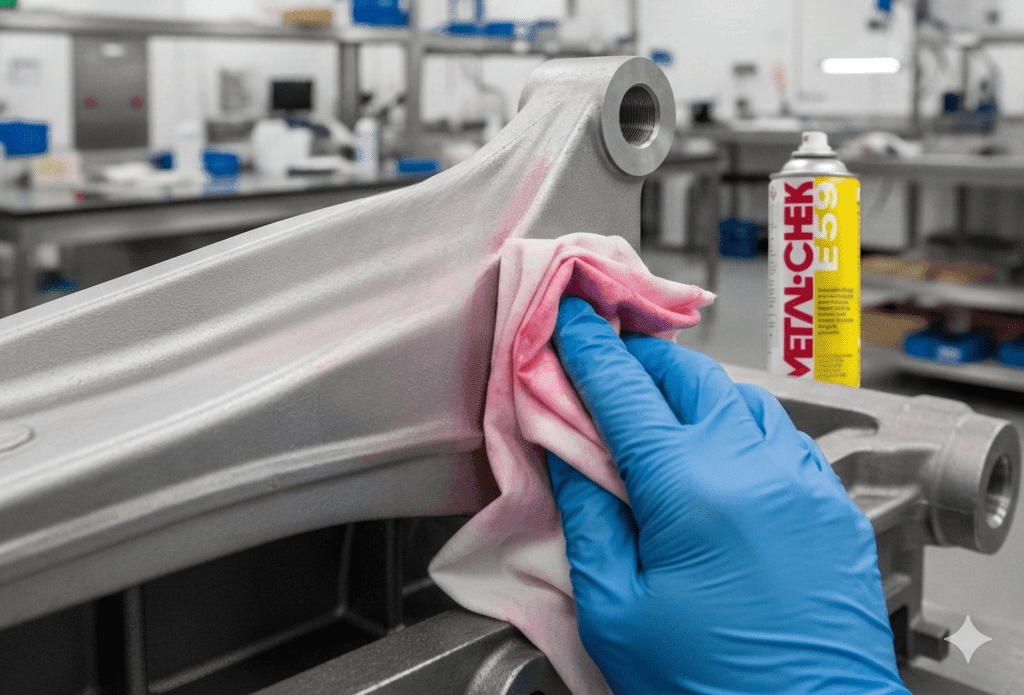
Metal-Chek offers a complete line of removers developed specifically for Penetrant Testing , ensuring efficient and controlled removal of excess product.

These solutions are designed for:

  • to preserve the penetrant retained in the discontinuities;
  • Avoid blotchy or fluorescent backgrounds;
  • ensure compatibility with different LP methods;
  • to meet the requirements of the main applicable technical standards.

The choice of the appropriate remover should always take into account the technical procedure and inspection conditions.


Final considerations

Removing excess penetrant fluid is not a secondary step in the test—it is a determining factor in its effectiveness .

When performed correctly, according to a qualified and approved technical procedure, this step ensures:

  • proper training of the indications;
  • reliable visual interpretation;
  • Reducing errors and rework;
  • Greater safety during inspection.

In liquid penetrant testing, precision and control at each stage are fundamental to ensuring consistent and technically reliable results.


Excellence in products for those seeking reliable results

Metal -Chek provides complete solutions for Non-Destructive Testing: penetrant liquids, removers, developers and accessories, developed according to the main ASTM, ISO, ASME, NM and PETROBRAS standards , guaranteeing quality, safety and technical compliance in every inspection.

  • Read more technical content on our blog.
  • Follow Metal-Chek on Instagram: @metalchek
  • Speak with the  Metal-Chek team  and learn about our solutions for non-destructive testing.

Translate