The Importance of Non-Destructive Testing in the Monitoring and Maintenance of Bridges and Viaducts
Transportation infrastructure in Brazil is fundamental to the country’s economy and the safety of its population. Among the most essential infrastructures are bridges and viaducts, structures that, in addition to allowing the circulation of vehicles and pedestrians, play a vital role in connectivity between regions and in supporting commercial and logistical activities. However, these structures are constantly subject to factors that can compromise their integrity, such as weathering, heavy traffic, heavy loads, temperature variations, and environmental damage.
In this context, Non-Destructive Testing (END) stands out as an essential tool for monitoring the structural health of these infrastructures. It allows for the detection of flaws invisible to the naked eye, without causing damage or interruptions to the structure’s operations. As a leader in the Non-Destructive Testing sector in Brazil, Metal-Chek has made a decisive contribution to infrastructure safety, applying the best performance in its products to ensure that structures remain safe and functional for longer.
What are Non-Destructive Tests (END)?
Non-destructive testing (END) is a technique for inspecting and analyzing materials, components, and structures without causing any damage to them . The goal of END is to assess the integrity and quality of a part or structure without compromising its use or functionality.
They are essential in various industries, including civil construction, automotive, aerospace, energy, petrochemical, among others, because they enable the early detection of faults without the need for disassembly or destruction of parts.
Among the most commonly used END methods for infrastructure monitoring, the following stand out:
- Ultrasound: This technique uses high-frequency sound waves to detect internal flaws, such as cracks, discontinuities, and corrosion zones in metallic and concrete materials. In bridges and viaducts, ultrasound can be used to examine steel or concrete beams and pillars, assessing their integrity without the need for disassembly or drilling.
- Radiography: Uses X-ray or gamma radiation to obtain internal images of materials, allowing the detection of hidden flaws such as cracks, porosity, or inclusions in metallic components. This method is widely used in inspections of welds and metallic structures, being ideal for evaluating the strength and reliability of bridge joints and articulations.
- Eddy Current Testing: This method is based on the principle of electromagnetic induction. Eddy currents are generated in conductive materials, and their alteration can indicate the presence of surface or subsurface defects, such as cracks or corrosion. This method is effective for metallic materials and is widely used for monitoring critical areas in viaducts and bridges.
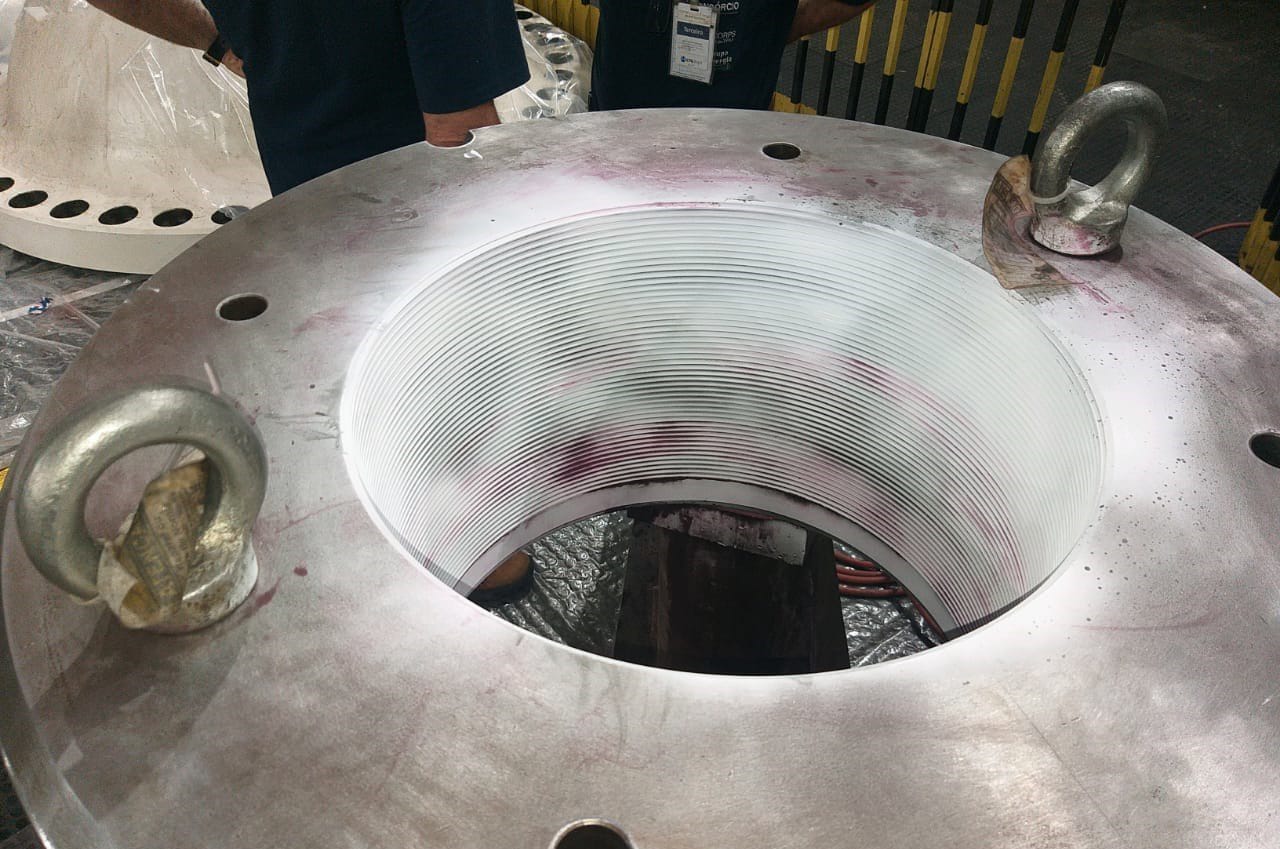
- Magnetic particles: Magnetic particles are applied to the surface of ferromagnetic materials, and defects such as cracks or discontinuities cause disturbances in the magnetic field, which become visible through these particles. This is an effective method for inspecting metallic components subjected to stress and fatigue.
- Thermography: Thermography is a monitoring technique based on detecting temperature variations on the surface of structures. This variation can indicate problems such as thermal insulation failures, water infiltration, or areas of internal corrosion. Used in conjunction with infrared cameras, this technology is especially useful for monitoring the surface of bridges and viaducts without the need for direct access to the internal parts.
These techniques not only help detect faults early, but also prevent the need for major repairs or replacements, resulting in savings of time and resources.
The Importance of END in Monitoring Bridges and Viaducts
Bridges and viaducts face a number of challenges that affect their integrity over time. Among the main factors that contribute to the deterioration of these structures are:
- Corrosion : The passage of time and climatic variations, especially in urban and coastal environments, can accelerate the corrosion process in metal and concrete structures. Internal corrosion, for example, may be invisible until the structure becomes critically compromised.
- Heavy Loads and Vibration : Heavy vehicle traffic, especially in areas with high truck and large vehicle traffic, can generate stress and fatigue in structural materials. The impact of these loads can result in cracks or failures in welds and joints, which are not easily detected without the use of END (Non-Destructive Testing).
- Environmental Factors : Constant exposure to rain, strong winds, temperature changes, and pollution can also affect the longevity of structures, creating ideal conditions for the appearance of cracks, fissures, and deterioration of concrete or metal.
Metal-Chek and its Contribution to the Security of Brazilian Infrastructure
Metal-Chek do Brasil is recognized for its expertise in Non-Destructive Testing, offering high-precision solutions for companies and public agencies that require constant monitoring of the integrity of their infrastructure. With highly qualified and certified products, Metal-Chek has stood out in the market for over 40 years, ensuring that bridges, viaducts, and other critical structures throughout Brazil can be monitored efficiently and effectively.
Our commitment is to quality and safety. Through our services, we offer detailed inspections that detect everything from micro-cracks to deeper problems, allowing for corrective actions before irreversible damage occurs. We act with speed and precision, minimizing interruptions and costs, while ensuring that infrastructures continue to function with maximum safety. Furthermore, at Metal-Chek, innovation is one of the pillars of our work. We are always at the forefront of new technological trends.
