Tag Solvent

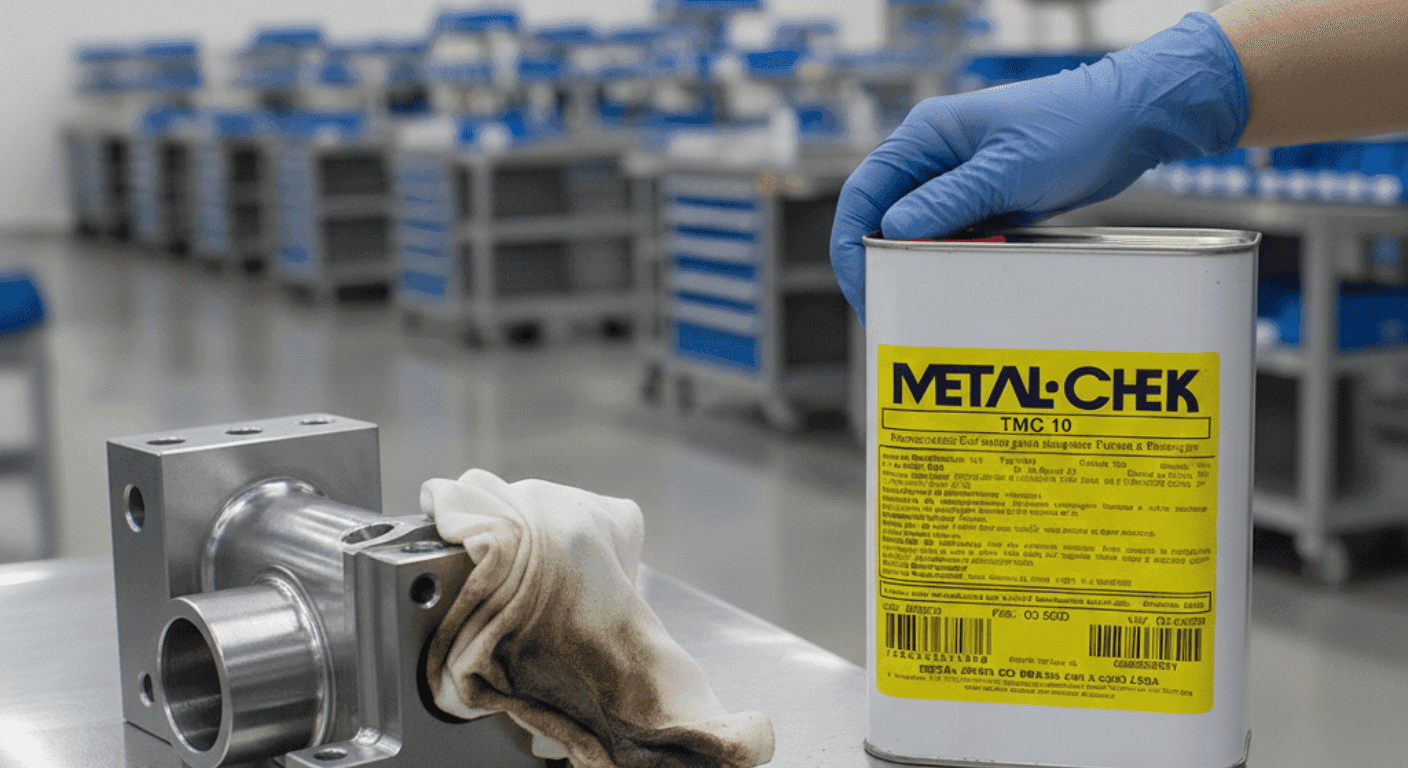
TMC 10 Metal-Chek: technical versatility for END and professional cleaning

In any industrial process, proper surface cleaning is not a detail, it is essential for a reliable result.

In Liquid Penetrant Testing (LP), a poorly prepared surface compromises the sensitivity of the method and can directly impact the interpretation of the readings. Outside of END, residues such as paints, varnishes, oils, and other contaminants also interfere with the quality of assemblies, finishes, and maintenance.

It is in this context that the TMC 10 Metal-Chek stands out: a technical remover developed for inspection, with sufficient versatility to meet industrial cleaning demands that require a high standard of performance.


What is TMC 10?

TMC 10 is a ready-to-use, non-halogenated, solvent-based remover formulated to offer:

  • • fast action;
  • • efficient removal of contaminants;
  • • Evaporation without leaving residue;
  • • Compatible with ferrous and non-ferrous metals, stainless steel, titanium, nickel alloys, non-porous ceramics, glass, and plastics.

Its control of contaminants (chlorides, fluorides and sulfur) meets the technical requirements applicable to Non-Destructive Testing, ensuring safety and compliance when used according to approved procedures.


Technical application in Non-Destructive Testing

In the context of END, TMC 10 can be used for:

  • • Pre-cleaning of the surface before applying the penetrant;
  • • Controlled removal of excess penetrant;
  • • Removal of developers and contrast inks;
  • • Final cleaning after inspection.

The application must always respect the qualified technical procedure, especially with solvent-removable penetrants, where controlled removal is essential to preserve the product retained in the discontinuities.

Its quick drying time and lack of residue help maintain the sensitivity of the method and the clarity of the instructions.


Far beyond END: industrial versatility

Although developed for technical inspection applications, the TMC 10 also meets other professional cleaning needs.

Its formulation allows for the efficient removal of:

  • • paints and varnishes;
  • • oils and greases;
  • • Various industrial waste;
  • • Contaminants on metal and plastic surfaces.

This versatility makes it suitable for:

Metallurgical industry

Cleaning metal parts, tools, and equipment before subsequent processes.

Painting workshops

Removal of paints and varnishes, preparing surfaces for a new finish.

Industrial maintenance

Cleaning machinery and components, contributing to the proper functioning and preservation of equipment. Always respecting applicable technical and safety recommendations.


Efficiency that impacts different sectors

A technical product with versatile applications generates positive effects throughout the company.

Production

Properly cleaned surfaces promote better adhesion, finish, and process stability.

Maintenance

Effective cleaning helps preserve and prepare components for technical interventions.

Quality

In END applications, the correct removal of contaminants is crucial for the reliability of the inspection.

Purchasing and management

The possibility of technical and industrial use contributes to inventory rationalization and standardization of inputs.


Why choose TMC 10?

The TMC 10 brings together features that make a difference in practice:

  • ✔ Effective cleaning power
  • ✔ Fast action
  • ✔ Versatile application
  • ✔ Residue-free drying
  • ✔ Compatible with various materials
  • ✔ Compliance with applicable technical standards

More than just a thinner or solvent, this is a solution developed to meet the needs of industrial environments that demand precision, efficiency, and reliability.


Technical cleaning is not a secondary step — it is an essential part of the industrial process.

Whether in Non-Destructive Testing or in maintenance and finishing applications, proper contaminant control directly influences the quality of the final result.

The Metal-Chek TMC 10 combines technical performance and industrial versatility, offering a reliable solution for those seeking efficiency and compliance in their operations.


Excellence in products for those seeking reliable results.

Metal-Chek provides complete solutions for Non-Destructive Testing, with products developed according to the main ASTM, ISO, ASME, NM and PETROBRAS standards, guaranteeing quality, safety and technical compliance in every inspection.

Speak with our technical consultants and find the ideal solution for your process.

Visit our blog and check out other technical content.

Discover our complete product line.
Follow Metal-Chek on InstagramFacebook, and LinkedIn.

Surface Preparation in Penetrant Testing

In Liquid Penetrant (LP) testing, the reliability of the result does not begin with the application of the penetrant, but rather with the preparation of the surface.

Even when appropriate products are used and all test steps are correctly performed, a poorly prepared surface compromises the sensitivity of the method, hinders the interpretation of the readings, and can lead to unreliable results. For this reason, surface preparation is considered one of the most critical steps in liquid penetrant testing.

This article addresses, in a technical and objective manner, the importance of surface preparation in Liquid Penetrant testing, its direct impacts on inspection, and the necessary precautions to ensure consistent results, always in accordance with the qualified and approved procedure.


The importance of surface preparation in liquid penetrant testing

The Liquid Penetrant test is based on the phenomenon of capillarity, which allows the penetrant to penetrate discontinuities open to the surface.

For this phenomenon to occur efficiently, it is essential that the surface is:
• clean;
• free of contaminants and dirt;
• in a suitable condition to allow direct contact of the penetrant with the discontinuities.

The presence of contaminants or surface residues increases surface tension, interfering with the action of the penetrant.


What characterizes a suitable surface for the test?

In general, the surface should:

• be free of oils, greases, moisture and chemical contaminants;
• not have loose scale, adherent oxidation or residues from previous processes;
• not have coatings or paints;
• not have spatter or welding residue;

These contaminants can prevent the penetrant from working properly and make it difficult to remove excess product.


Surface cleaning and preparation methods

Surface preparation methods must be defined according to the applicable technical procedure and vary depending on the material, the geometry of the part, and the stage of the industrial process.
Among the methods employed, the following stand out:
• solvent cleaning;
• chemical cleaning, applied in specific situations;
• ultrasonic cleaning
; • mechanical cleaning (brushing, sanding, grinding, tumbling);
• degreasing vapor.

The choice of method should consider not only the efficiency of the cleaning, but also the preservation of the surface integrity.


Care related to surface preparation

Even when cleaning is performed properly, surface preparation must consider factors that directly impact the reliability of the Penetrant Testing method.

Among the main precautions are:

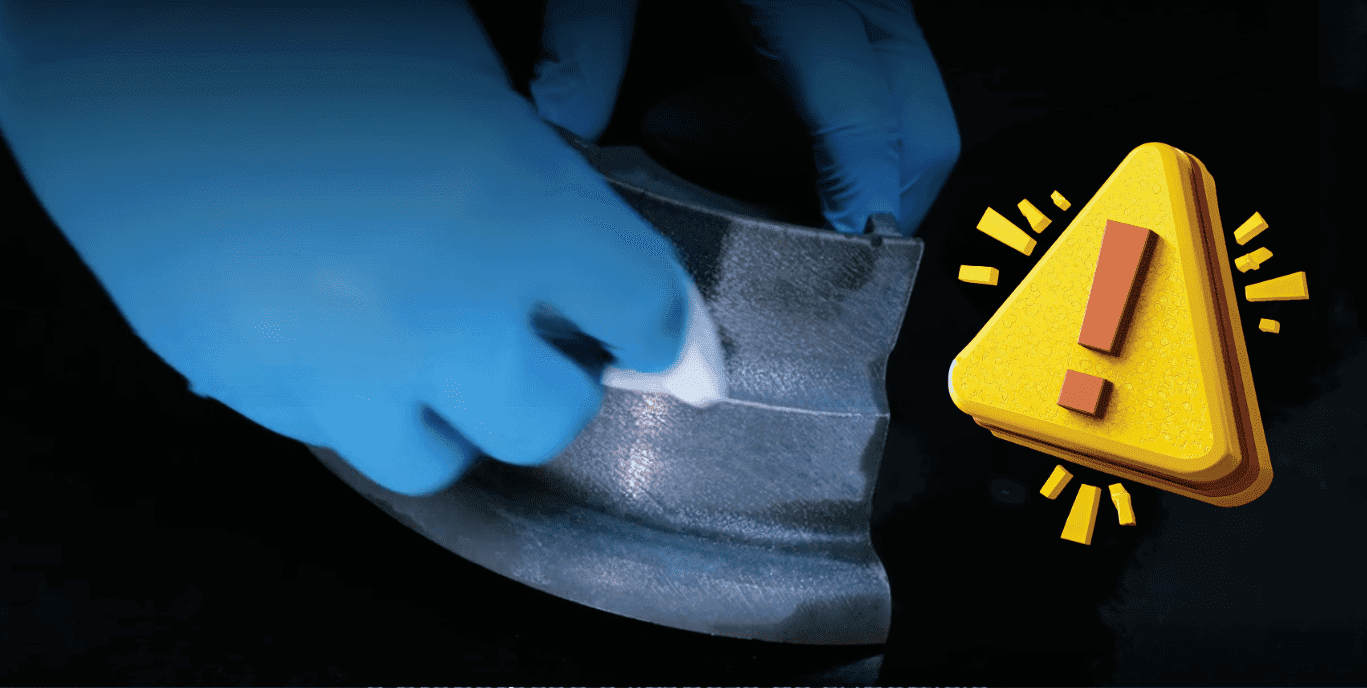
• Ensure the surface is completely dry after pre-cleaning;
• Avoid solvent or cleaning product residue;
• Ensure the preparation method does not obstruct, deform the surface, or mask open surface discontinuities;


Metal-Chek solutions for surface preparation in LP

Metal-Chek provides complete solutions for surface cleaning and preparation in Liquid Penetrant Testing, including removers developed specifically for LP applications, compatible with different materials, test conditions and regulatory requirements.

These solutions contribute to:

• Efficient removal of contaminants;
• Compatibility with liquid penetrant testing methods;
• Operational safety;
• Greater reliability in inspection results.


Final considerations

Surface preparation is a determining factor for the success of the Penetrant Testing method. When performed correctly, according to a qualified and approved technical procedure, it ensures greater sensitivity of the method, reliable interpretation of the readings, and reduced rework.
More than a simple step, surface preparation should be treated as a fundamental part of the test, directly contributing to obtaining satisfactory results.


Excellence in products for those seeking reliable results

Metal-Chek provides complete solutions for Non-Destructive Testing: penetrant liquids, removers, developers and accessories, developed according to the main ASTM, ISO, ASME, NM and PETROBRAS standards, guaranteeing quality, safety and technical compliance in every inspection.

Read more technical content on our blog.
Follow Metal-Chek on Instagram: @metalchek.
Contact our technical consultants.

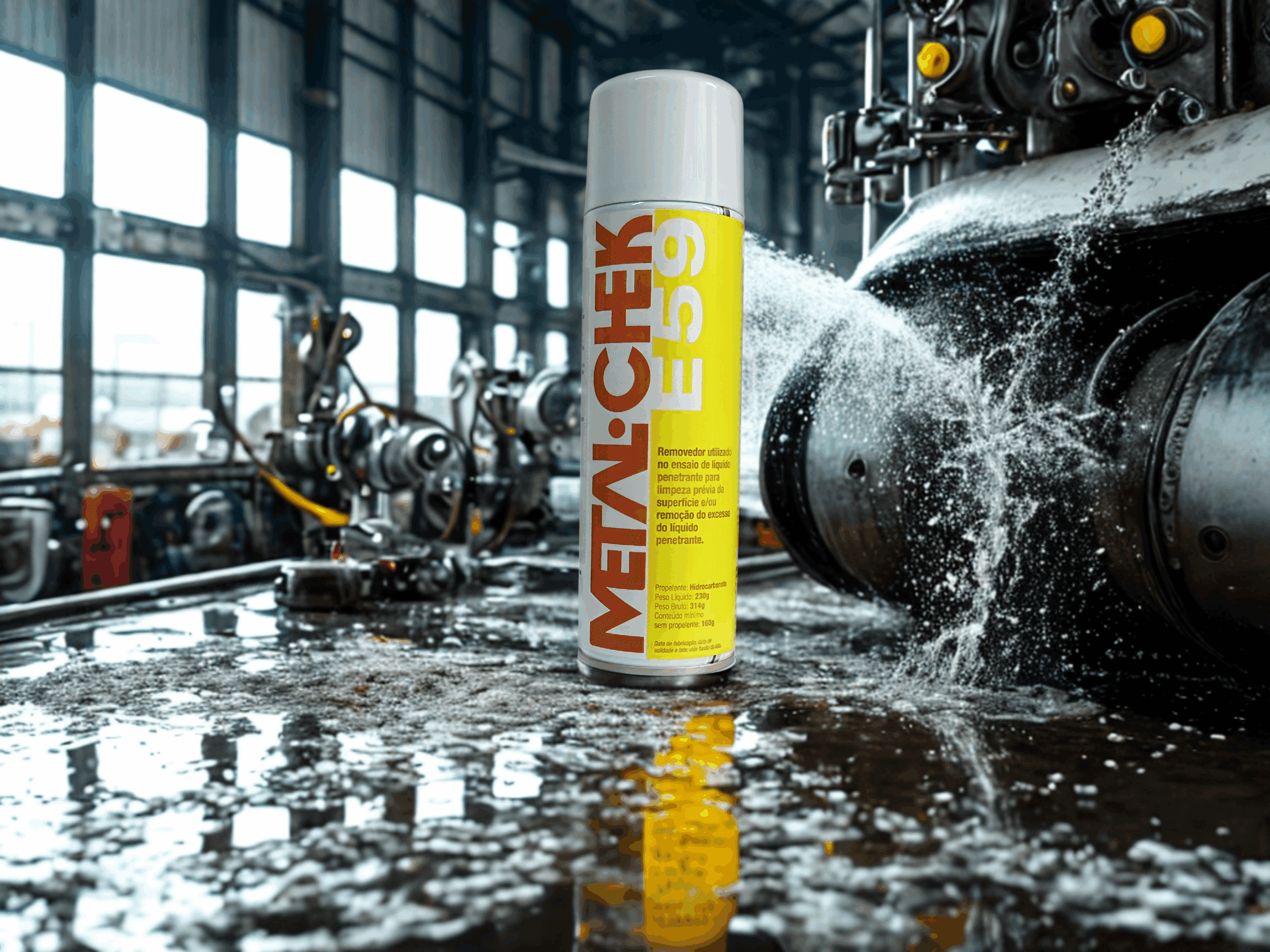
E-59: Aliphatic Solvent for Non-Destructive Testing and Heavy Industrial Cleaning

In industrial maintenance, the efficiency of a solvent goes far beyond cleaning. E-59 is a clear example: developed as an aliphatic solvent, it plays a strategic role in both non-destructive testing (END) and heavy-duty cleaning of industrial components, especially in environments where lubricating oil is a constant challenge.


E-59 in Non-Destructive Testing

In inspection and quality control processes, choosing the correct solvent directly impacts the effectiveness of the tests. E-59 is widely used as part of the surface preparation steps in liquid penetrant testing, ensuring that parts and components are properly cleaned and free of contaminants before the method is applied. This results in greater accuracy in detecting discontinuities.


Applications in Oil Cleaning and Lubrication

Beyond its use in inspection applications, the E-59 is recognized for its high efficiency in removing lubricating oil from engine blocks, mechanical parts, and impregnated surfaces. This versatility makes the product an ally in sectors that deal with high levels of oil contamination, such as engine rebuilding shops, heavy maintenance, and railway industries.


Use in Grinding Shops and the Railway Sector

Engine rebuilding companies use E-59 for the precise cleaning of engines and components, ensuring that the reassembly process occurs under ideal conditions. In the railway sector, especially in locomotive manufacturing companies, the product stands out for its ability to remove oil residue from large and complex parts, where cleanliness is critical for the reliability and durability of the equipment.


Advantages of the E-59

  • High performance aliphatic solvent.
  • Ideal for surface preparation in non-destructive testing.
  • Excellent removal of lubricating oil and grease.
  • Widely used in engine rebuilding shops and locomotive companies.
  • Versatility: suitable for industrial maintenance, inspection, and heavy-duty cleaning.

E-59 is not just a solvent. It represents a practical and reliable solution for sectors that demand deep cleaning and precision in non-destructive testing. Whether in engines, industrial parts, or large railway systems, its application guarantees efficiency, safety, and reliability in day-to-day maintenance.

Want to learn more about the E-59 and its applications? Talk to our team !

Read also: High-Quality Industrial Inspections Begin with a Clean Surface

Follow us on Instagram: @metalchek

Translate