Magnetic Particle Inspection: Concepts, Applications and Technical Standards
You probably already know that magnetic particle inspection (MPI) is a widely used technique in the Non-Destructive Testing (END) sector to detect surface and subsurface discontinuities in ferromagnetic materials. But in this article we will explore further, discussing the fundamental principles of the technique, its industrial applications, and the regulatory requirements that guarantee and guide the effectiveness and reliability of the method.
Fundamental Principles of Magnetic Particle Inspection
The PM technique is based on the magnetization of the material to be inspected. When there is a discontinuity on or near the surface, an interruption of the magnetic field occurs, forming magnetic poles in the region of the defect. By applying finely divided ferromagnetic particles to this area, they accumulate at the poles, making the presence of the discontinuity visible.
2. Principles of the Technique
Magnetic particle inspection is based on the creation of a magnetic field in the test specimen. When there is a discontinuity on or near the surface, an interruption occurs in the magnetic flux lines, resulting in a leakage field. The application of ferromagnetic particles, dry or suspended in liquid, allows these particles to accumulate in the region of the discontinuity, making it visible under white light or ultraviolet light (when fluorescent).
The main elements of the essay include:
- Magnetization source : direct current, alternating current or pulsed current, depending on the desired inspection depth;
- Types of magnetic particles : 1. visible: dry or wet or 2. fluorescent: used with UV-A light;
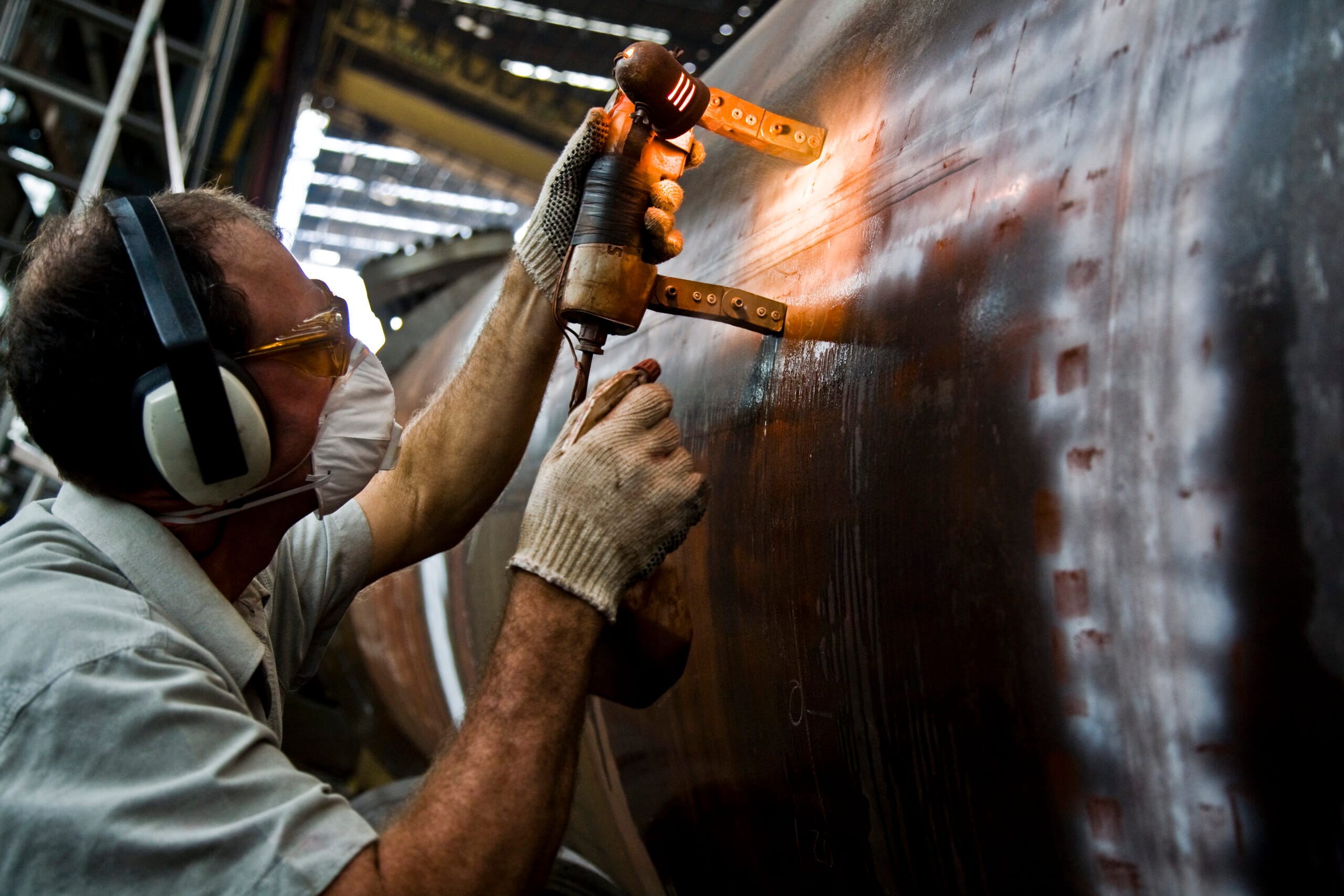
- Magnetization techniques : direct contact, inductive, magnetic yoke (electromagnetic or permanent), among others;
- Direction of the magnetic field : longitudinal, transverse, or multidirectional to maximize detection.
3. Industrial Applications
Magnetic particle technology is widely used in sectors where the structural integrity of metallic components is critical.
- Aeronautics and Aerospace : inspection of landing gear, turbines and support structures;
- Petrochemicals : pressure vessels, piping, flanges and welding;
- Iron and Steel Industry and Metallurgy : bars, sheets, forgings and castings;
- Automotive and Railway : axles, gears, wheels, rails and braking systems;
- Power generation : hydraulic turbines, components for thermal and nuclear power plants.
4. Applicable Technical Standards
The execution of the magnetic particle test must follow the requirements established by nationally and internationally recognized technical standards:
4.1 Brazilian Standards (ABNT)
- ABNT NBR NM 335 – Non-destructive testing: Liquid penetrant and magnetic particles (Terms and definitions);
- ABNT NBR 9934-1 – Non-destructive testing: Magnetic particle testing (Part 1: General principles);
- ABNT NBR 9934-2 – Part 2: Equipment;
- ABNT NBR 9934-3 – Part 3: Technical details.
4.2 International Standards
- ISO 9934 (Parts 1 to 3) – Non-destructive testing: Magnetic particle testing;
- ASTM E709 – Standard Guide for Magnetic Particle Testing;
- ASTM E1444/E1444M – Standard Practice for Magnetic Particle Testing;
- ASME BPVC Section V, Article 7 – Requirements for testing boiler and pressure vessel components.
5. Advantages and Limitations
Advantages:
- High sensitivity to detecting surface cracks;
- Applicable to parts with complex geometry;
- Immediate result;
- Relatively low cost.
Limitations:
- Applicable only to ferromagnetic materials;
- Need for prior and subsequent cleaning;
- Dependence of the magnetic field orientation on the discontinuity;
- Subjective results when interpretation is visual.
Magnetic particle inspection remains an indispensable technique in quality assurance and structural integrity control programs across various industrial sectors. Its correct application, in accordance with regulatory requirements, is essential for reliable results. Mastery of technical parameters, inspector training, and proper equipment maintenance are critical factors in ensuring the effectiveness of the test.
