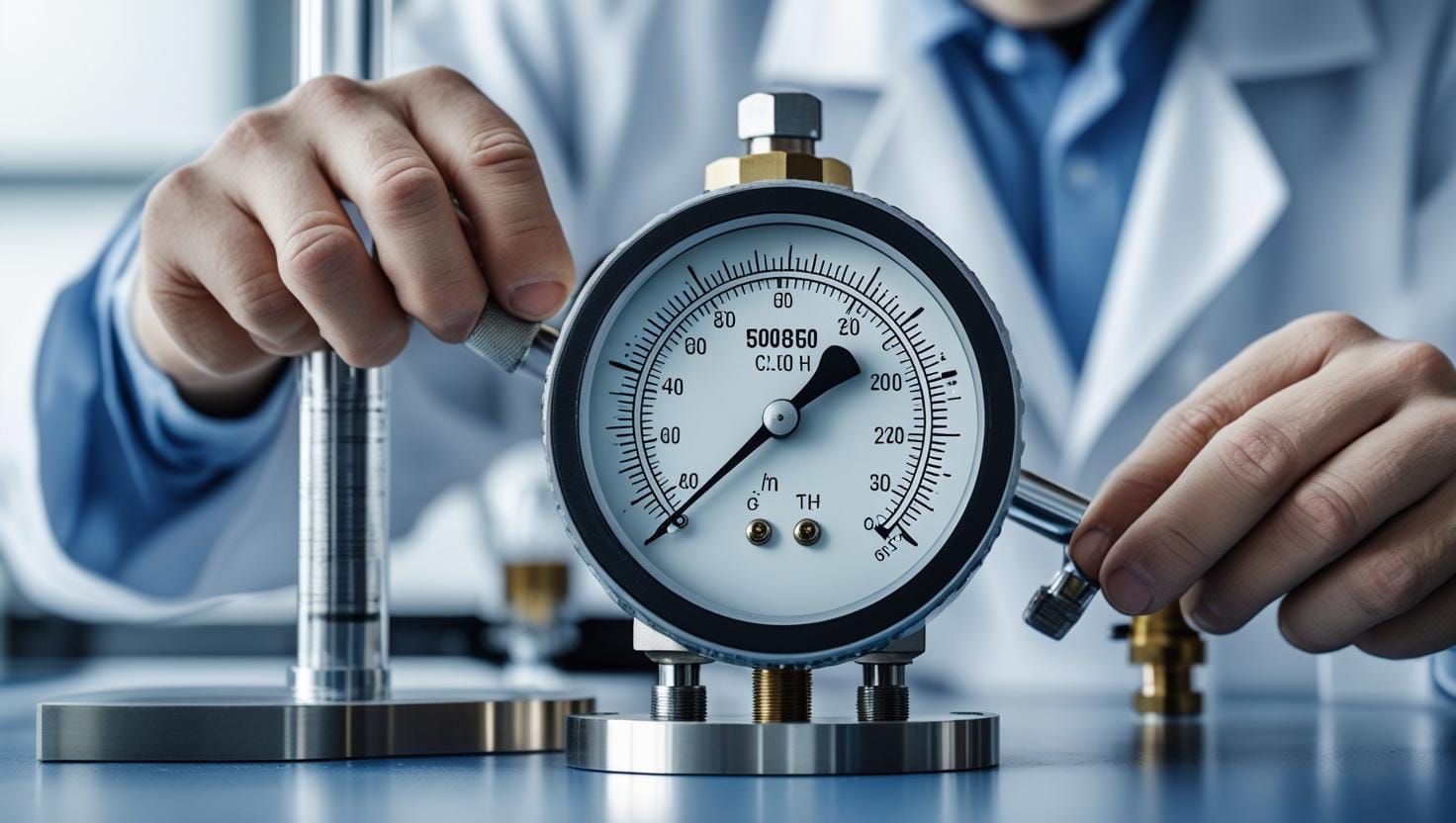
The Importance of Calibration in END Equipment for Reliable Results
If you want to guarantee accuracy, compliance, and operational safety in your Non-Destructive Testing (END), equipment calibration is not an optional step—it’s indispensable.
Companies that neglect this practice face serious risks:
❌ Inaccurate reports
❌ Undetected failures
❌ Non-conformities in audits
❌ Operational and reputational damage
➡️ When equipment is out of calibration, reliability disappears — along with operational safety.
What is Calibration and why is it Vital in END?
Calibration is a process of comparing two instruments (the measurand and the measured). This comparison involves calculating error and uncertainty, and these results are presented in a document called a calibration certificate.
- ✅ Relationship between measurement values and uncertainties;
- ✅ Technical standards are being met;
Standards such as ASME Section V, ASTM E1417, ASTM E1444, ASTM E3024, and ASTM E709 require that your equipment be calibrated for the results to have technical and legal validity.
Why is calibration a key differentiator?
1. Ensures Technical Precision
- False positives → good parts are discarded unnecessarily.
- False negatives → errors go unnoticed.
Both put security at risk, increase costs, and compromise the company’s reputation.
2. Avoid Penalties in Audits
Industries such as oil and gas, aeronautics, rail, and automotive are inflexible regarding non-compliant equipment.
Golden tip: Always demand certificates traceable to the RBC (Brazilian Calibration Network) or recognized international standards.
3. Reduces costs associated with rework.
Investing in calibration is cheaper than correcting errors caused by miscalibrated equipment.
Which equipment needs to be calibrated?
Penetrant Testing (PT)
- Radiometers/Photometers
- Thermometers
- Water pressure gauges
- Compressed air pressure gauges
Magnetic Particle (MP)
- Gaussmeters (Residual)
- Magnetic Field Meters
- Ammeters
- Timers
- Magnetizing equipment (Stationary Machines)
- Settling tubes
When should the equipment be calibrated?
The ideal calibration frequency is determined according to applicable standards.
How to Guarantee Traceability?
Compliance isn’t something you improvise. Follow these practices:
- ✔ Hire laboratories accredited by Inmetro (ABNT NBR ISO/IEC 17025);
- ✔ Archive and update calibration certificates;
- ✔ Use digital checklists with automatic due date alerts;
[PRACTICAL CHECKLIST] How to Organize Your Calibration Routine
| Step | Action |
| Planning | Map all equipment that requires calibration. |
| Hiring | Choosing an accredited laboratory |
| Follow-up | Create due date alerts |
| Documentation | Archive calibration certificates and evidence. |
| Internal Verification | Use reference standards for control. |
Calibration means Safety, Reliability, and Quality.
In the world of Non-Destructive Testing, calibration is an act of technical responsibility and a commitment to safety.
Metal-Chek offers the best consumables and accessories to ensure your penetrant testing, magnetic particle testing, and leak detection are accurate, traceable, and reliable.
You may have the best partner laboratory — but if your products are not of high quality, the results will be compromised.
Ready to increase the reliability of your tests?
→ Contact our technical team right now.
We’ll help you select the best Metal-Chek products to make your tests safer and more effective.
Follow us on Instagram: @metalchek
Contact us at: (11) 3515-5287
