Tag Ultrasound

Industrial Ultrasound: Going Beyond the Hospital

When ultrasound is mentioned, the immediate association is usually with the medical field.
In industry, however, ultrasound testing (UT) is one of the most strategic methods for controlling structural integrity.

In critical welds, pressure vessels, piping, aeronautical components, and thickness measurements, relevant operational decisions are made based on the ultrasonic response.

And there is a variable that is often underestimated in this process:
the quality of the coupling.


Physics is non-negotiable: acoustic impedance and transmission

Industrial ultrasound relies on the efficient transmission of sonic energy from the transducer to the material.

Air, due to its extremely low acoustic impedance compared to metals and composites, acts as an almost total barrier to sound transmission. The couplant exists to reduce this impedance difference between the media and allow acoustic propagation.

Without proper coupling, there is no reliability. Therefore, the coupling agent must be treated as an integral part of the system, not as a secondary item.


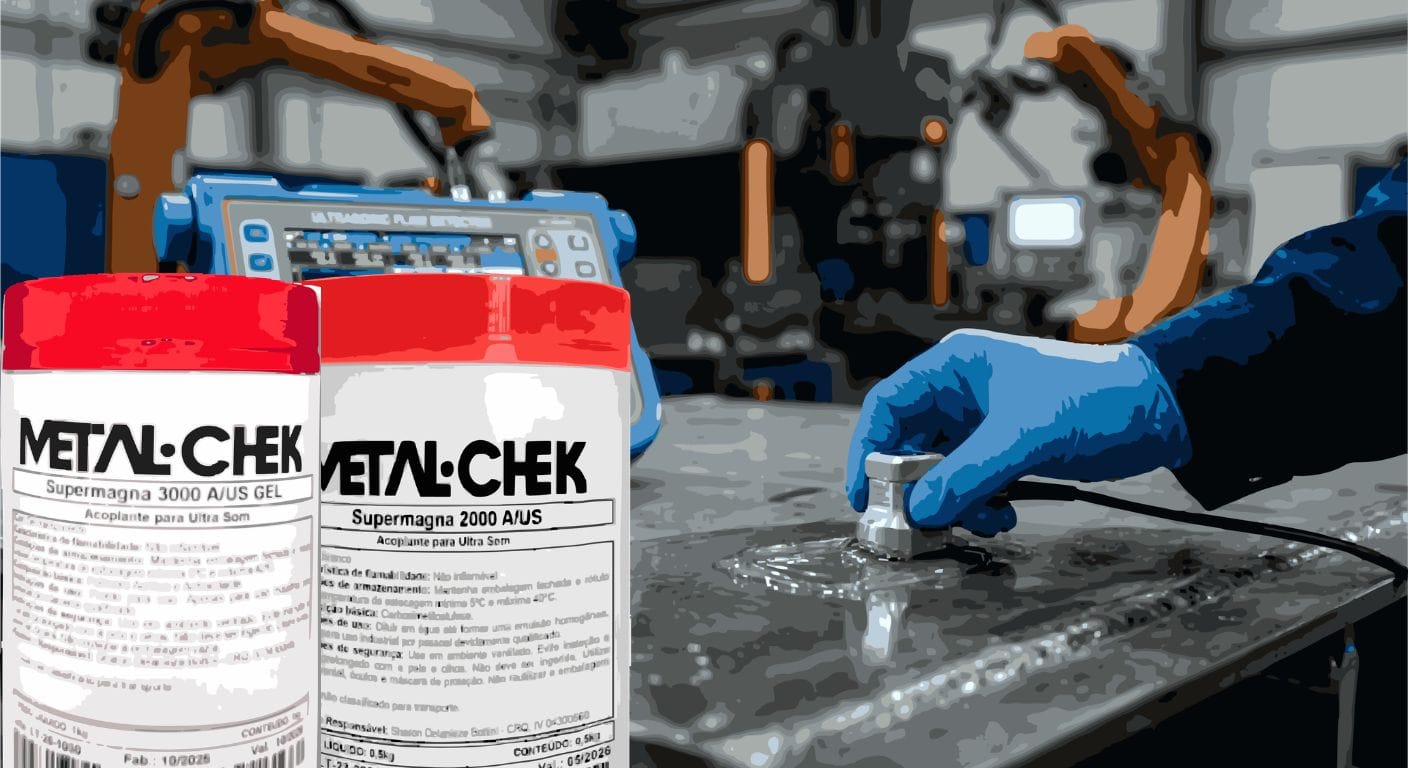
A/US 2000 – Rheological control and operational adaptability

OA/US 2000 is a powdered couplant that allows for controlled dilution. This feature offers an important technical advantage: viscosity adjustment according to the application.

This is relevant when:

  • There are variations in position (horizontal, vertical);
  • The surface has irregularities;
  • The rehearsal is prolonged;
  • The procedure requires specific controls.

The possibility of adjustment allows adapting the behavior of the couplant to the dynamics of the inspection.

Furthermore:

  • It is removable with water;
  • It operates between 5 °C and 60 °C;
  • It meets the main industrial specifications applicable to the method.

For operations that value control and flexibility, this profile offers an operational advantage.


A/US 3000 – Standardization and immediate stability

OA/US 3000 is supplied in ready-to-use gel form.
Its main feature is the reduction of operational variables.

On the field, this means:

  • direct application;
  • stabilized viscosity;
  • less need for preparation;
  • Greater standardization among teams.

Its low volatility allows for extended inspections, while good adhesion contributes to layer uniformity and signal stability.

For routine inspections, thickness measurements, and field applications, standardization reduces the risk of operational variation.


It’s not about “which is better,” it’s about process variables

The choice between the A/US 2000 and A/US 3000 should not be based on personal preference.

She should consider:

  • nature of the inspection;
  • surface condition;
  • work environment;
  • application time;
  • requirements of the qualified technical procedure.

Both fulfill the essential function of eliminating the air interface and allowing efficient transmission of ultrasonic energy.

The difference lies in the operational behavior and how each one integrates into the process.


Industrial strategy: reduce variables, increase reliability

Mature companies understand that reliability doesn’t depend solely on state-of-the-art equipment.

It depends on the sum of:

  • parameters correctly defined;
  • Proper calibration;
  • Control of operational variables;
  • Standardization of inputs.

The couplant is one of those variables.

When the interface is stable, the signal is stable.
When the signal is stable, the interpretation is more reliable.
And when the interpretation is reliable, the technical decision gains consistency.


In industrial ultrasound, the quality of information begins at the interface between the transducer and the material

The coupling agent is not a detail.
It’s part of the system.

Whether in powder form (A/US 2000) or ready-to-use gel (A/US 3000), the choice should be aligned with the established technical procedure and the actual inspection conditions.

Industrial ultrasound goes far beyond the hospital setting.
It protects assets, preserves structural integrity, and supports critical technical decisions.

And it all starts with the interface.


Excellence in products for those seeking reliable results

Metal-Chek provides complete solutions for Non-Destructive Testing, with products developed according to the main ASTM, ISO, ASME, NM and PETROBRAS standards, guaranteeing quality, safety and technical compliance in every inspection.

Speak with our technical consultants and find the ideal solution for your process.

Visit our blog and check out other technical content.

Discover our complete product line.
👉 Follow Metal-Chek on InstagramFacebook, and LinkedIn.

The Main Methods of Industrial Inspection and How to Choose the Ideal One

Industrial inspection plays a fundamental role in ensuring product quality, operational safety, and the efficiency of production processes. Choosing the ideal inspection method for your process can significantly impact the reduction of defects and cost optimization. Among the available methods, Non-Destructive Testing (END) stands out for allowing precise evaluations without compromising the integrity of materials and structures.

Non-Destructive Testing: Characteristics and Applications

Non-destructive testing offers a comprehensive analysis of materials, components, and industrial systems, using physical and chemical principles to detect discontinuities and defects. Among the main methods, we can highlight:

Penetrant Liquids

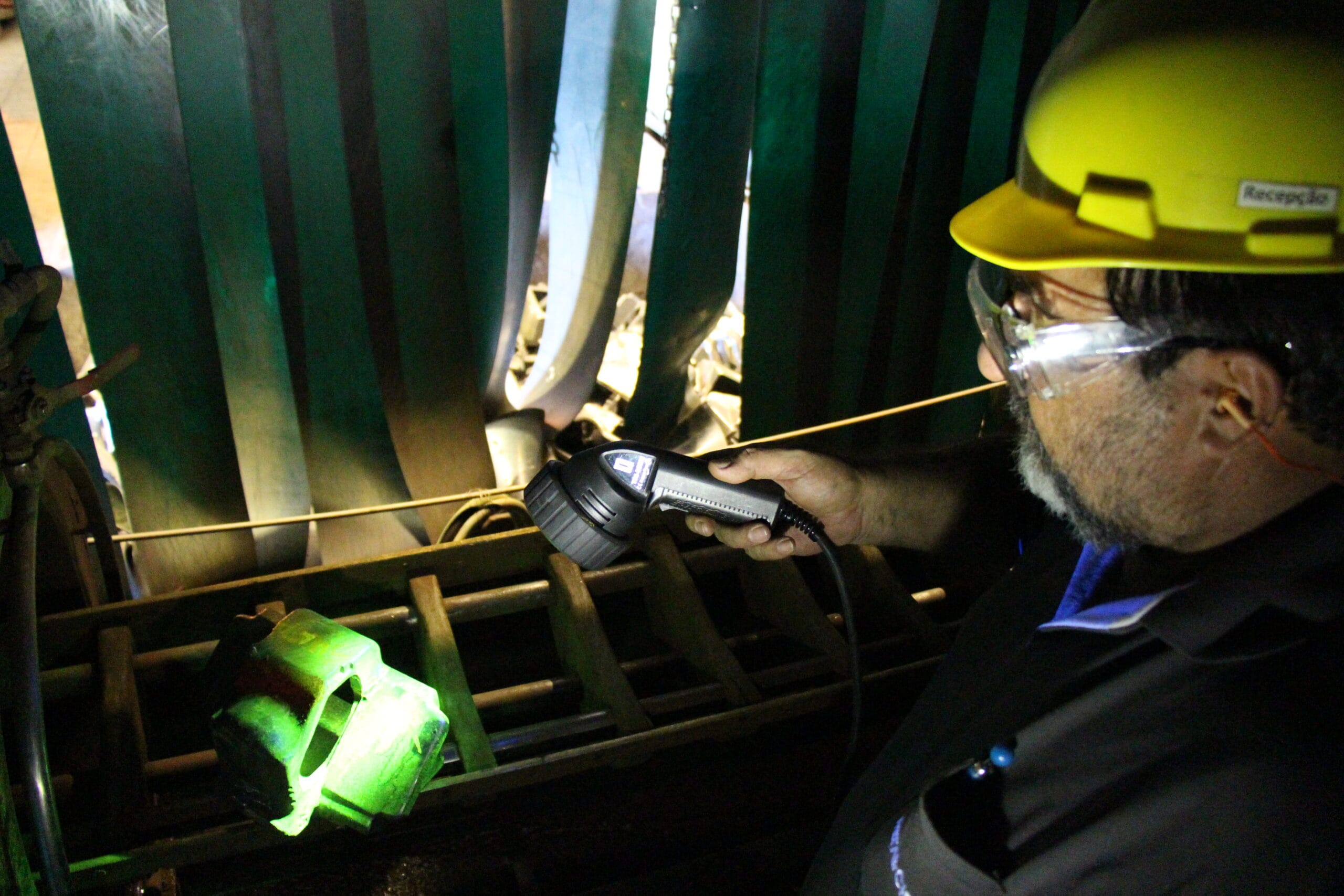
Liquid penetrant testing is widely used for detecting cracks and surface discontinuities in metallic and ceramic materials. The process involves applying a highly capillary liquid to the material’s surface, followed by the removal of excess liquid and the application of a developer, which makes existing flaws visible. It is an easy and low-cost method, particularly suitable for inspecting cast, welded, and machined parts.

Ultrasound

Ultrasonic inspection  uses high-frequency sound waves to assess the structural integrity of materials. The waves are emitted by a transducer and propagate through the material, being reflected by possible internal discontinuities. Analysis of the generated echoes allows the identification of flaws such as cracks, inclusions, and delaminations. This method is widely used in the petrochemical, aeronautical, and infrastructure industries, ensuring accurate and reliable diagnoses.

Magnetic Particles

This method is suitable for ferromagnetic materials and consists of applying a magnetic field to the part, along with fine particles of iron oxide. If discontinuities exist, the magnetic flux will be interrupted, concentrating the particles at the site of the defect and allowing its visualization. This type of inspection is common in the automotive and metallurgical industries, being efficient in identifying surface and subsurface cracks and discontinuities.

Industrial Radiography

Industrial radiography is based on the differential absorption of X-rays or gamma rays as they pass through the inspected material. Areas with defects, such as cracks or inclusions, show variations in absorption, which are captured on a film or digital detector, allowing for detailed analysis of the component’s internal structure. This method is widely used in the inspection of welds, piping, and pressure equipment, where structural integrity and safety are crucial.

Acoustic Emission

Acoustic emission inspection detects structural flaws based on sound waves generated by the material under mechanical stress. Small internal displacements cause acoustic emissions captured by sensors, allowing the identification of degradation processes before they become critical. This method is used in the energy, infrastructure, and oil industries, enabling continuous and predictive monitoring.

Applications in Different Industrial Sectors

The choice of the appropriate inspection method varies according to the specific needs of the industrial sector; we will mention the sectors below.

  • Aerospace –  Verification of surface cracks in fuselages and wings. Inspection of composites and critical parts. Monitoring of structural fatigue in ground tests.
  • Automotive –  Quality control of cast and forged parts. Verification of cracks in structural components and engines. Inspection of welds on car bodies and chassis.
  • Oil and Gas –  Inspection of welds on pipelines and pressure vessels. Verification of cracks and corrosion in transport lines. Continuous monitoring of offshore structures.
  • Civil Construction –  Verification of weld integrity in metal structures. Evaluation of internal corrosion in concrete reinforcement. Thickness and wear control in metal components.
  • Shipbuilding Industry –  Inspection of welds on hulls and tanks. Detection of cracks in metal structures. Evaluation of plate thickness and corrosion.

Benefits of Inspection in Reducing Failures and Costs

Implementing an efficient inspection system brings numerous benefits to companies, including:

  • Failure prevention : Early identification of defects prevents accidents, reduces costs associated with emergency repairs, and increases operational reliability.
  • Cost optimization : Periodic inspection enables strategic planning of preventive maintenance, reducing expenses related to unexpected downtime.
  • Quality improvement : Ensures compliance with technical standards, reinforcing the company’s safety and competitiveness.

Industrial inspection plays a strategic role in maintaining the quality and safety of production processes. Choosing the right method depends on the material characteristics, the application, and the specific needs of the company. Investing in technology and professional training in non-destructive testing is essential to ensure efficiency, reduce costs, and optimize industrial operations. Count on Metal-Chek to achieve maximum safety and effectiveness in your inspection processes.

Translate
