Archives April 2025

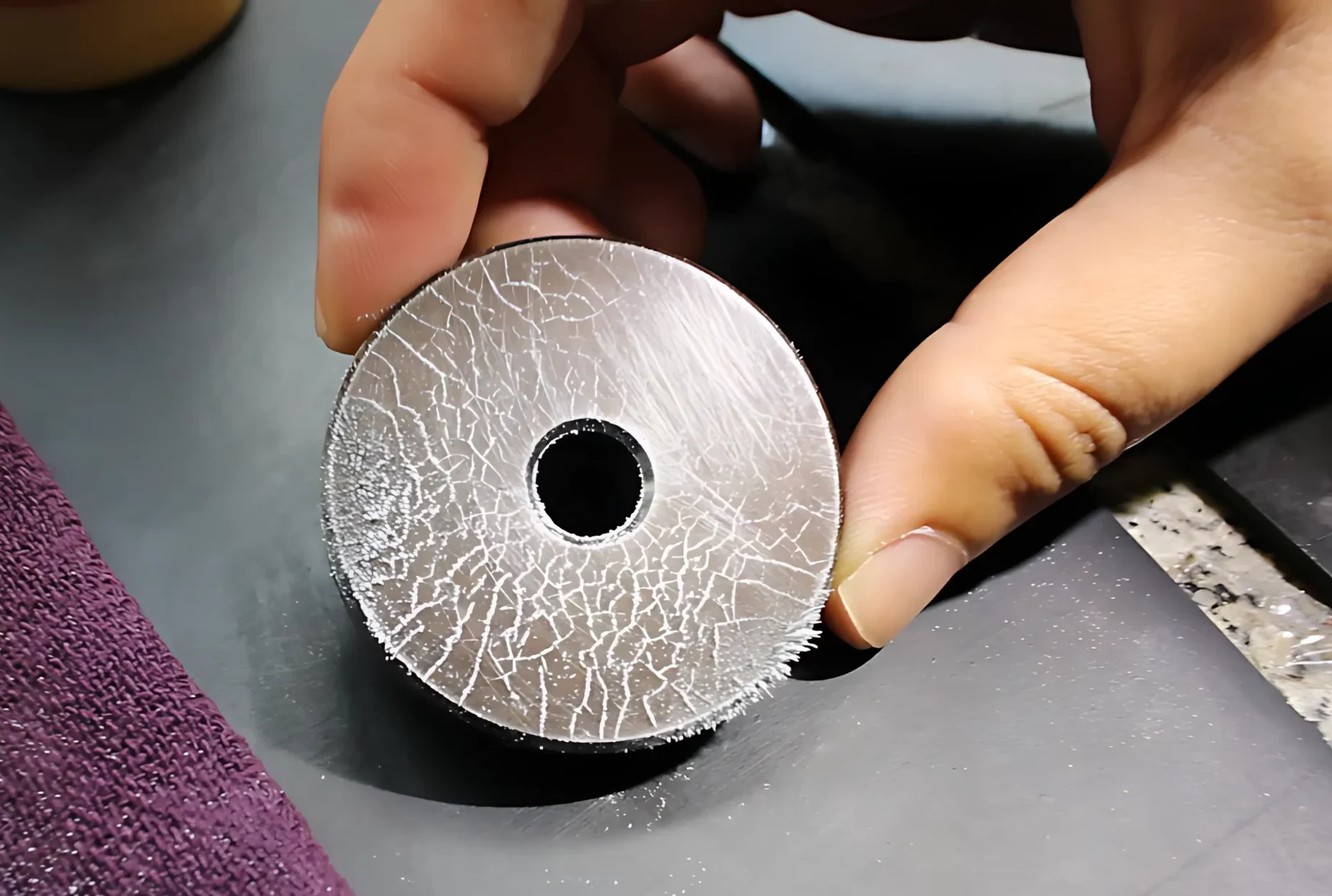
Supermagna WD 55: The Best in High-Temperature Magnetic Particle Inspection

Magnetic particle inspection is one of the most effective techniques for detecting discontinuities in ferromagnetic materials, playing an essential role in sectors where structural integrity is crucial. However, a  common limitation  in the market is the sensitivity of traditional products to  high temperatures . Many of the available colored particles, such as yellow, red, or gray, undergo color change and performance degradation when exposed to temperatures above 180 °C, restricting their use in harsh industrial environments such as foundries, refineries, and thermal power plants.

To overcome this challenge, Metal-Chek developed  Supermagna WD 55,  a white dry-process magnetic particle , originally designed to meet the demands of the nuclear sector and expand the limits of inspection in extreme conditions. The result was a unique product on the market: a white magnetic powder with high thermal stability, ready for use under visible light and  capable of withstanding temperatures up to 400 °C without loss of performance .

High Sensitivity and Stability for Precise Inspections

Supermagna WD 55 has particles with an average size of 80 µm, guaranteeing optimal dimensional stability and excellent magnetic accumulation. Its high sensitivity allows it to achieve at least 8 lines on the SAE AS5282 ring, ensuring that the tests are accurate and reliable. Furthermore, being non-flammable, it provides greater safety in inspections carried out in hazardous environments.

The choice of white was strategic: among all options, white offers the best contrast under visible light, allowing the magnetic markings to be clearly defined even on surfaces darkened by thermal processes or oxidation. This difference is crucial in demanding industrial applications, where the visibility of the markings can determine the quality of the inspection.

Applications in High Temperature Environments

While Supermagna YD 404, a widely used dry-type yellow particle, is recommended for temperatures up to 180 °C, WD 55 was developed specifically for inspections requiring superior thermal resistance. This makes it the ideal choice for testing in environments where cooling the part is not feasible or desired.

Among the main applications of WD 55, the following stand out:

  • Foundry and steel industries, where inspection takes place immediately after rolling or forging processes.
  • Refineries and petrochemical plants, which perform inspections during shutdowns, require reliable solutions within short time windows.
  • Factories producing railway components and industrial axles, where parts are evaluated while still hot.
  • Turbines and boilers in thermal power plants and combined cycle plants, where hot inspection prevents lengthy and costly shutdowns.

Compliance with Technical Standards and Technological Advancement

The introduction of WD 55 to the national market represents a genuinely Brazilian innovation, aligned with the most demanding technical standards, such as  ASTM E3024, ASME SE-709, AMS 3040 and PETROBRAS N-1598 . Its arrival not only expands the field of application of the magnetic particle testing technique, but also offers greater safety and reliability in critical inspection conditions.

With exceptional thermal resistance, high sensitivity, and superior visual contrast, the Supermagna WD 55 revolutionizes magnetic particle inspection, allowing Non-Destructive Testing (END) professionals to perform tests with maximum defect definition and excellent repeatability, even under extreme temperatures.

Metal-Chek do Brasil is available to provide detailed technical information, practical usage guidelines, and product samples to engineers, inspectors, and specialists seeking the best solution for high-temperature magnetic inspection.

Request a sample and discover the future of industrial inspection!
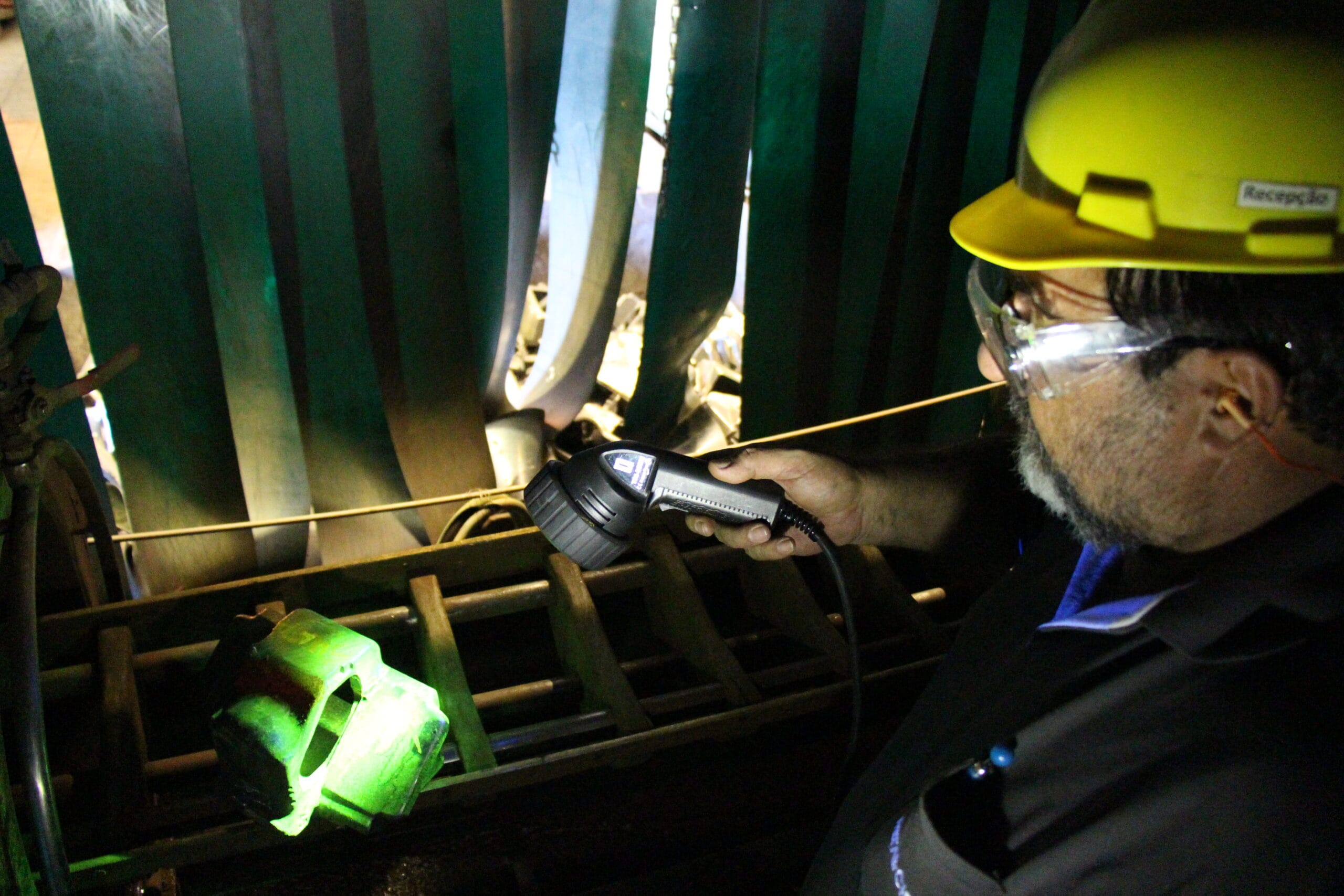
The Main Methods of Industrial Inspection and How to Choose the Ideal One

Industrial inspection plays a fundamental role in ensuring product quality, operational safety, and the efficiency of production processes. Choosing the ideal inspection method for your process can significantly impact the reduction of defects and cost optimization. Among the available methods, Non-Destructive Testing (END) stands out for allowing precise evaluations without compromising the integrity of materials and structures.

Non-Destructive Testing: Characteristics and Applications

Non-destructive testing offers a comprehensive analysis of materials, components, and industrial systems, using physical and chemical principles to detect discontinuities and defects. Among the main methods, we can highlight:

Penetrant Liquids

Liquid penetrant testing is widely used for detecting cracks and surface discontinuities in metallic and ceramic materials. The process involves applying a highly capillary liquid to the material’s surface, followed by the removal of excess liquid and the application of a developer, which makes existing flaws visible. It is an easy and low-cost method, particularly suitable for inspecting cast, welded, and machined parts.

Ultrasound

Ultrasonic inspection   uses high-frequency sound waves to assess the structural integrity of materials. The waves are emitted by a transducer and propagate through the material, being reflected by possible internal discontinuities. Analysis of the generated echoes allows the identification of flaws such as cracks, inclusions, and delaminations. This method is widely used in the petrochemical, aeronautical, and infrastructure industries, ensuring accurate and reliable diagnoses.

Magnetic Particles

This method is suitable for ferromagnetic materials and consists of applying a magnetic field to the part, along with fine particles of iron oxide. If discontinuities exist, the magnetic flux will be interrupted, concentrating the particles at the site of the defect and allowing its visualization. This type of inspection is common in the automotive and metallurgical industries, being efficient in identifying surface and subsurface cracks and discontinuities.

Industrial Radiography

Industrial radiography is based on the differential absorption of X-rays or gamma rays as they pass through the inspected material. Areas with defects, such as cracks or inclusions, show variations in absorption, which are captured on a film or digital detector, allowing for detailed analysis of the component’s internal structure. This method is widely used in the inspection of welds, piping, and pressure equipment, where structural integrity and safety are crucial.

Acoustic Emission

Acoustic emission inspection detects structural flaws based on sound waves generated by the material under mechanical stress. Small internal displacements cause acoustic emissions captured by sensors, allowing the identification of degradation processes before they become critical. This method is used in the energy, infrastructure, and oil industries, enabling continuous and predictive monitoring.

Applications in Different Industrial Sectors

The choice of the appropriate inspection method varies according to the specific needs of the industrial sector; we will mention the sectors below.

  • Aerospace –  Verification of surface cracks in fuselages and wings. Inspection of composites and critical parts. Monitoring of structural fatigue in ground tests.
  • Automotive –  Quality control of cast and forged parts. Verification of cracks in structural components and engines. Inspection of welds on car bodies and chassis.
  • Oil and Gas –  Inspection of welds on pipelines and pressure vessels. Verification of cracks and corrosion in transport lines. Continuous monitoring of offshore structures.
  • Civil Construction –  Verification of weld integrity in metal structures. Evaluation of internal corrosion in concrete reinforcement. Thickness and wear control in metal components.
  • Shipbuilding Industry –  Inspection of welds on hulls and tanks. Detection of cracks in metal structures. Evaluation of plate thickness and corrosion.

Benefits of Inspection in Reducing Failures and Costs

Implementing an efficient inspection system brings numerous benefits to companies, including:

  • Failure prevention : Early identification of defects prevents accidents, reduces costs associated with emergency repairs, and increases operational reliability.
  • Cost optimization : Periodic inspection enables strategic planning of preventive maintenance, reducing expenses related to unexpected downtime.
  • Quality improvement : Ensures compliance with technical standards, reinforcing the company’s safety and competitiveness.

Industrial inspection plays a strategic role in maintaining the quality and safety of production processes. Choosing the right method depends on the material characteristics, the application, and the specific needs of the company. Investing in technology and professional training in non-destructive testing is essential to ensure efficiency, reduce costs, and optimize industrial operations. Count on Metal-Chek to achieve maximum safety and effectiveness in your inspection processes.

Translate
