Removal of Excess Penetrant Liquid
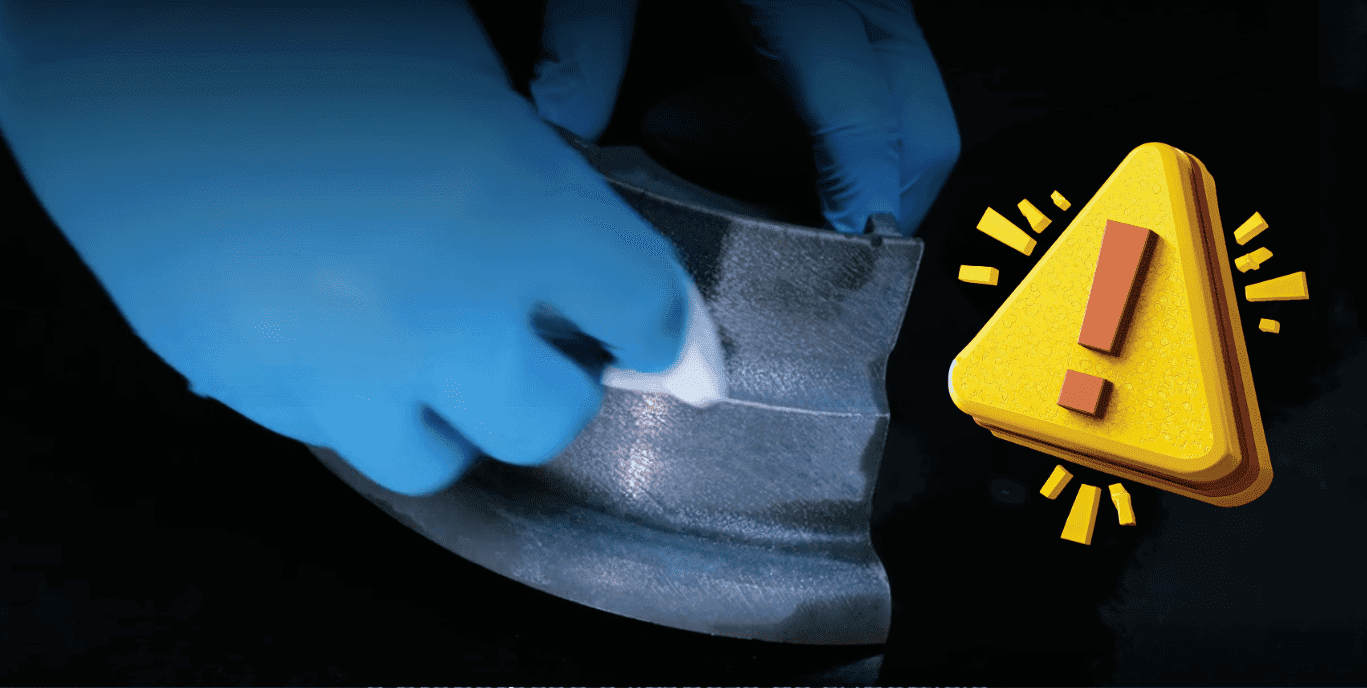
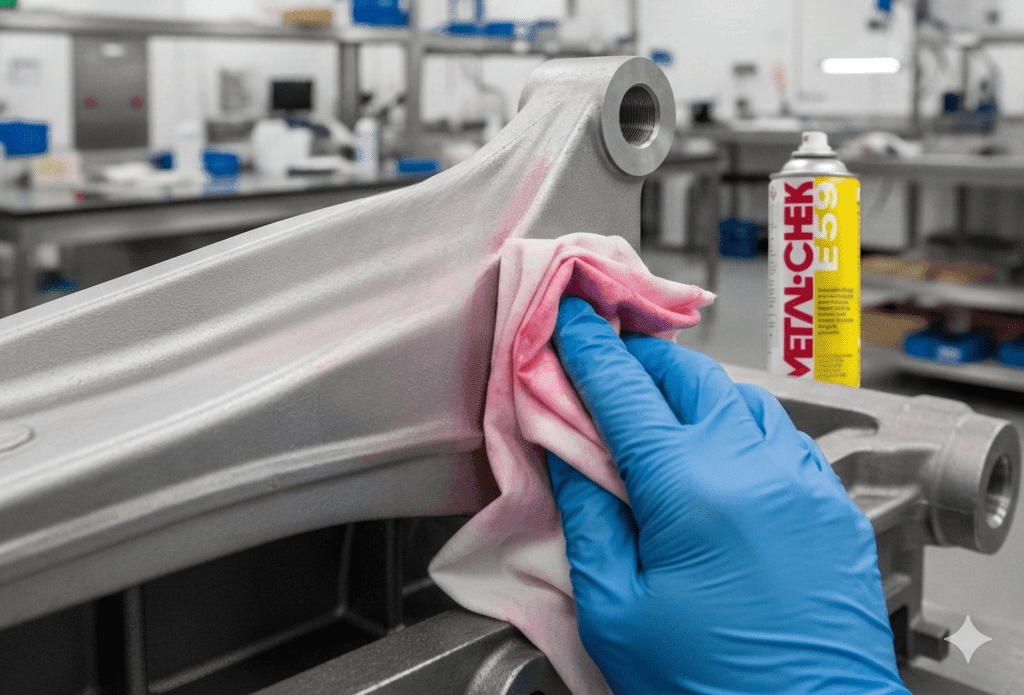
In Liquid Penetrant (LP) testing, each step directly influences the effectiveness of the test. After proper surface preparation and adherence to the correct penetration time, the removal of excess penetrant liquid plays a critical role in the inspection process.
Improper removal can mask relevant discontinuities, generate false indications, or hinder the correct interpretation of results. Therefore, this step must be performed with the same technical rigor as the other phases of the test, always in accordance with the qualified and approved technical procedure.
This article discusses the importance of removing excess penetrant fluid, the main errors associated with this step, and its direct impact on the reliability of the liquid penetrant test.
The role of excess removal in the LP assay
The principle of the Liquid Penetrant test is based on capillarity, which allows the penetrant to penetrate discontinuities open to the surface.
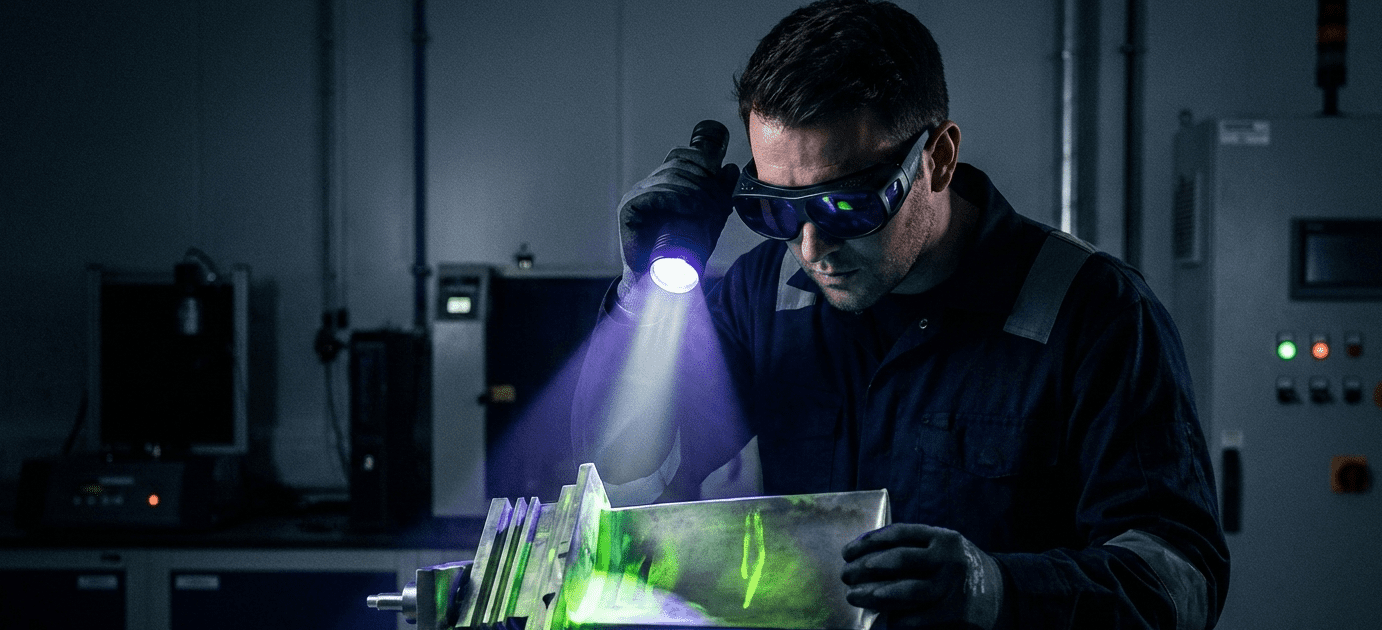
After the penetration time, the excess liquid present on the surface must be removed, leaving only the penetrant retained within the discontinuities. This condition is essential for the developer to act correctly, promoting the reverse capillary effect of the penetrant and the formation of visible or fluorescent indications.
Improper removal compromises this balance and directly affects the formation and clarity of the indications.
What characterizes proper removal of excess?
Proper removal of excess penetrant fluid must meet the following criteria:
- to remove the penetrant from the surface without removing it from inside the discontinuities;
- to preserve the sensitivity of the method;
- to enable reliable visual interpretation.
These criteria are not universal and depend on factors such as:
applicable technical procedure.
type of penetrant (visible or fluorescent);
specified removal method;
surface condition;
Methods for removing excess penetrant fluid
Methods for removing excess penetrant may vary depending on the type of penetrant and the application.
Among the most commonly used methods are:
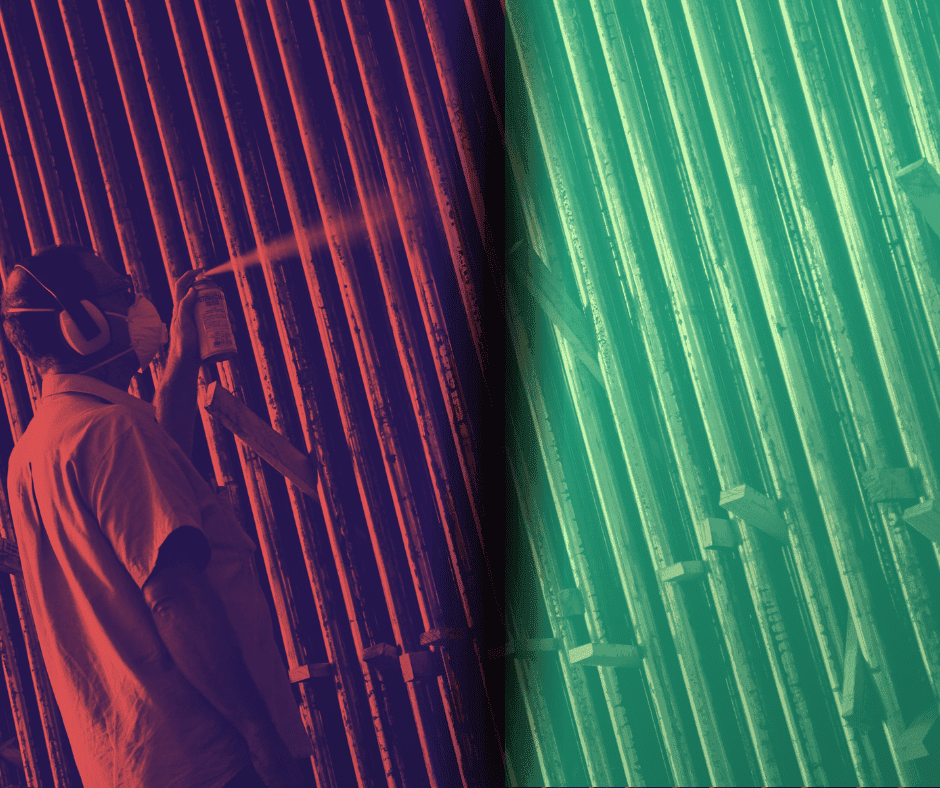
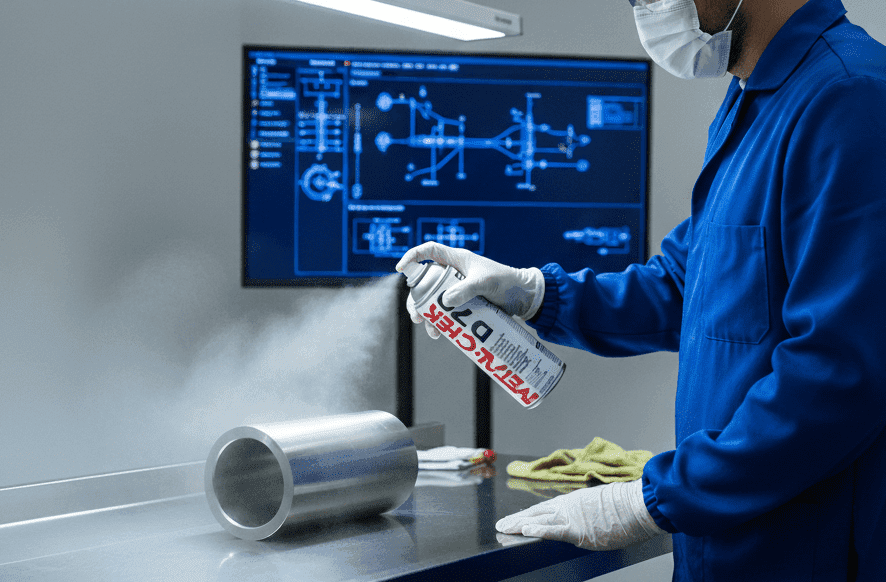
- removal with solvent (remover);
- removal with water (spray jet);
The choice of method should take into account its compatibility with the penetrant used.
Main mistakes in removing excess penetrant
Excess removal is one of the steps where the most frequent errors occur in the liquid penetrant testing method. Among the main errors are:
Excessive removal
Excessive application of solvent or mechanical action from an intense water jet can remove the penetrant retained in the discontinuities, resulting in:
- loss of relevant indicators;
- reduction in assay sensitivity;
Insufficient removal
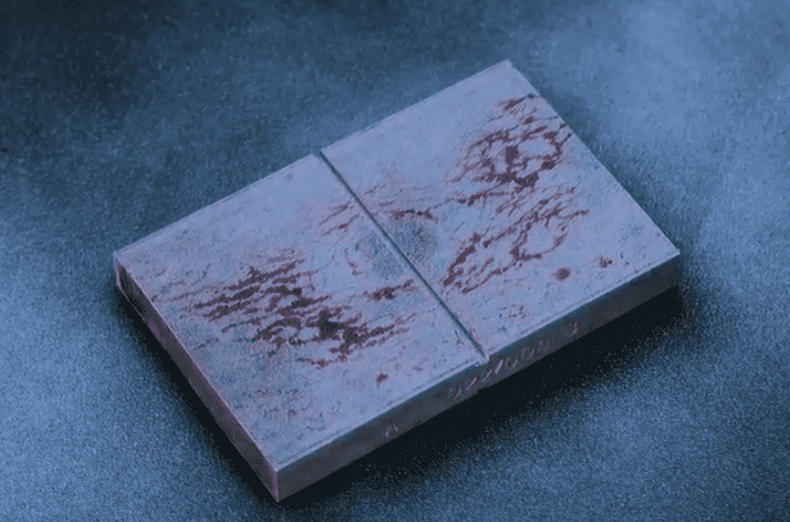
Incomplete removal of excess residue leaves it on the surface, promoting:
- difficulty of interpretation;
- emergence of false or irrelevant indications.
Impact of improper removal on the interpretation of indications
The visual interpretation of the indications depends directly on the quality of the excess removal.
When this step is not performed correctly, the following may occur:
- blurred or fuzzy indications;
- difficulty in distinguishing relevant from irrelevant indications;
- Increased risk of improper rejections or undetected failures.
These effects directly impact the reliability of the inspection and technical decision-making.
Metal-Chek solutions for removing excess penetrant
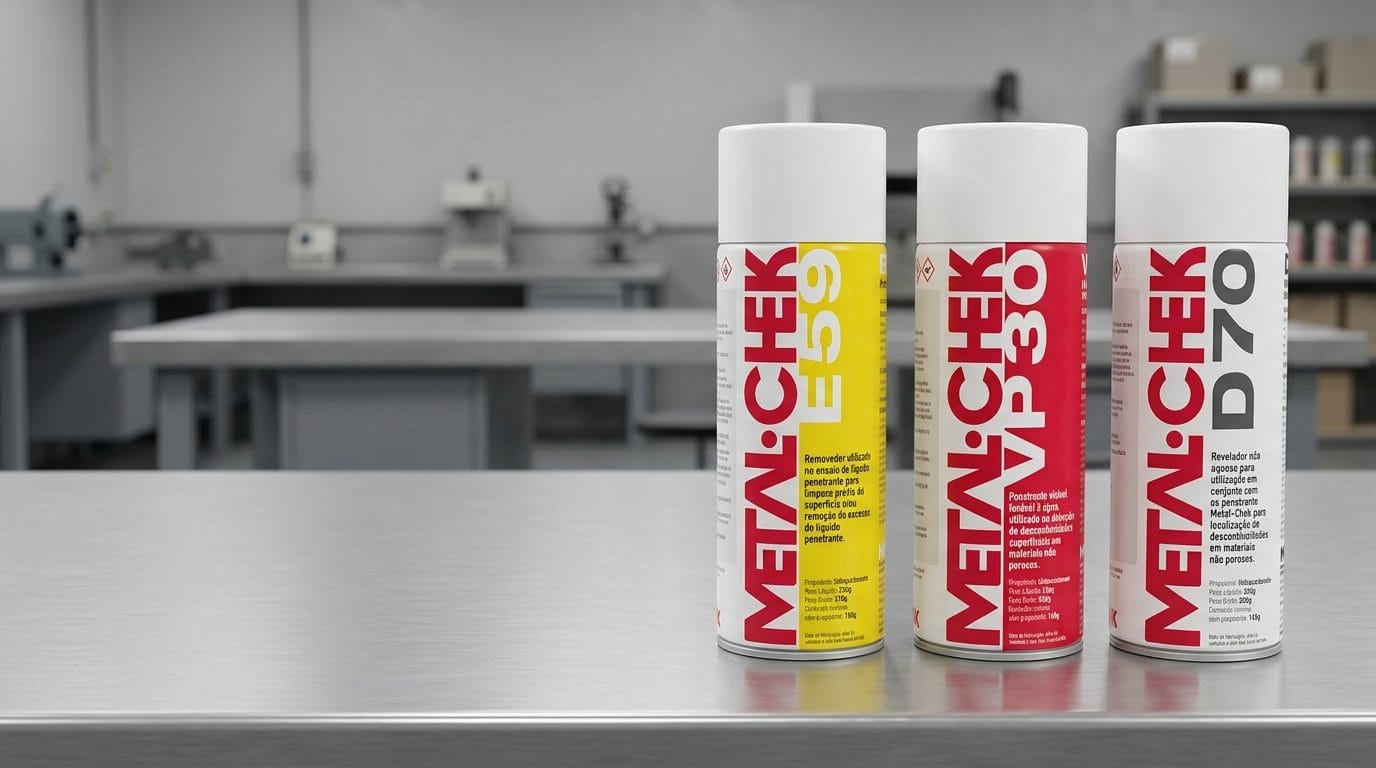
Metal-Chek offers a complete line of removers developed specifically for Penetrant Testing, ensuring efficient and controlled removal of excess product.
These solutions are designed for:
- to preserve the penetrant retained in the discontinuities;
- Avoid blotchy or fluorescent backgrounds;
- ensure compatibility with different LP methods;
- to meet the requirements of the main applicable technical standards.
The choice of the appropriate remover should always take into account the technical procedure and inspection conditions.
Final considerations
Removing excess penetrant fluid is not a secondary step in the test—it is a determining factor in its effectiveness.
When performed correctly, according to a qualified and approved technical procedure, this step ensures:
- proper training of the indications;
- reliable visual interpretation;
- Reducing errors and rework;
- Greater safety during inspection.
In liquid penetrant testing, precision and control at each stage are fundamental to ensuring consistent and technically reliable results.
Excellence in products for those seeking reliable results
Metal-Chek provides complete solutions for Non-Destructive Testing: penetrant liquids, removers, developers and accessories, developed according to the main ASTM, ISO, ASME, NM and PETROBRAS standards, guaranteeing quality, safety and technical compliance in every inspection.
- Read more technical content on our blog.
- Follow Metal-Chek on Instagram: @metalchek
- Speak with the Metal-Chek team and learn about our solutions for non-destructive testing.