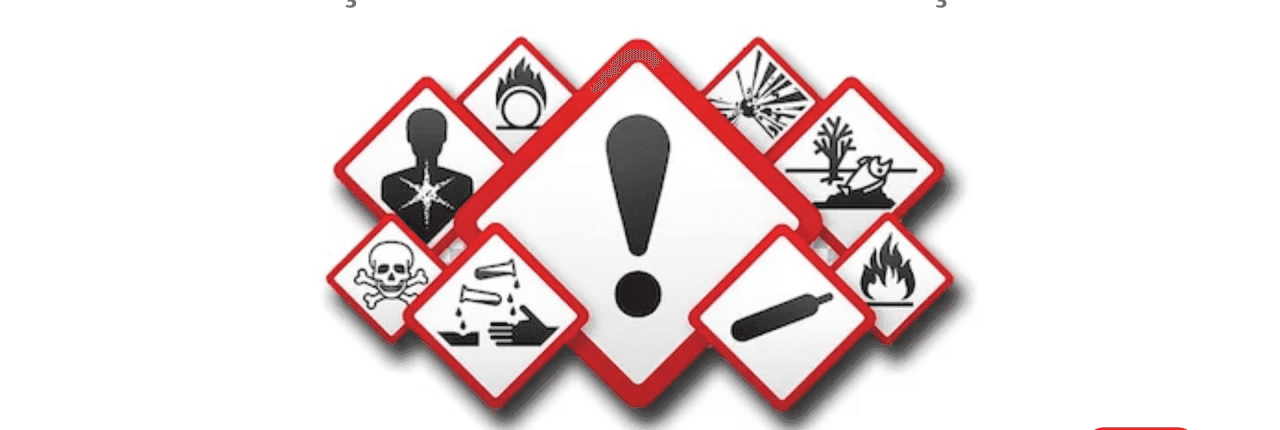
Understanding GHS: Hazard Communication and Chemical Safety
Do you know what GHS means?
The GHS, or Globally Harmonized System of Classification and Labelling of Chemicals, is an international system for classifying and labelling chemicals in a standardized way. Its objective is to ensure clear communication about the hazards of chemicals, promoting safety at the workplace and during transport.
The GHS establishes harmonized criteria for classifying chemicals according to their physical, health, and environmental hazards. The classification criteria are based on available data on the chemicals and on predefined hazard criteria.
The GHS includes standardized elements for labels and safety data sheets, such as pictograms, signal words, hazard statements, and precautionary statements. The GHS is valid for all chemicals, except those already regulated by their own laws or regulations.

To ensure chemical safety, it is important that everyone involved, such as manufacturers, suppliers, employers, and workers, are committed.
According to UFPEG, the GHS is not a regulation. The instructions presented provide a mechanism to meet the basic requirement of any hazard communication system, which is to determine whether the manufactured or supplied chemical product is hazardous and to prepare an appropriate label and/or SDS (Safety Data Sheet).
The GHS document, also known as the “Purple Book,” consists of technical requirements for hazard classification and communication, with explanatory information on how to apply the system.

The GHS document integrates the technical work of three organizations: ILO, OECD, and UNCETDG, with explanatory information. It provides building blocks or deployment modules for regulatory bodies to develop or modify existing national programs that ensure the safe use of chemicals throughout their entire life cycle.
The GHS was introduced in Brazil through the ABNT NBR 14725 series of standards, divided into 4 parts ranging from classification to labeling and preparation of SDSs (Safety Data Sheets) for chemical products. In 2011, with the revision of the NR26 labor regulatory standard, the GHS became the official system for the classification and labeling of chemical products.
For the safe management of chemical products, workers and consumers need to become familiar with the pictograms and hazard statements introduced on labels by ABNT NBR 14725, with the aim of alerting the user to the dangers and thus minimizing the risk of accidents and exposures.
What are the hazard classes in the GHS?
Physical Hazards:
Explosives; Flammable gases; Flammable aerosols; Oxidizing gases; Gases under pressure; Flammable liquids; Flammable solids; Self-reactive substances; Pyrophoric liquids; Pyrophoric solids; Self-heating substances; Substances and mixtures which, in contact with water, emit flammable gases; Oxidizing liquids; Oxidizing solids; Organic peroxides; Corrosive to metals.
Health Hazards:
Acute toxicity; Skin corrosion/irritation; Serious eye damage/irritation; Respiratory or dermal sensitization; Germ cell mutagenicity; Carcinogenicity; Reproductive toxicity; Systemic target organ toxicity – single exposure; Systemic target organ toxicity – multiple exposures; Aspiration hazard.
Environmental hazards:
Potential for bioaccumulation and rapid degradability.
At Metal-Chek, we are committed to the strict application of GHS guidelines. We value safety at every stage of the lifecycle of the chemicals we handle, from manufacturing to transportation. Our mission is to ensure not only regulatory compliance but also the protection of health and the environment. We believe that effective GHS implementation is crucial for developing a safety culture, and we will continue to invest in training and awareness for everyone.
Until next time!
