The Importance of Non-Destructive Testing in Industry
Non-Destructive Testing (END) plays a fundamental role in industry. Far beyond a technical inspection step, END is a strategic tool that directly contributes to product quality , operational safety , cost reduction , and the preservation of life .
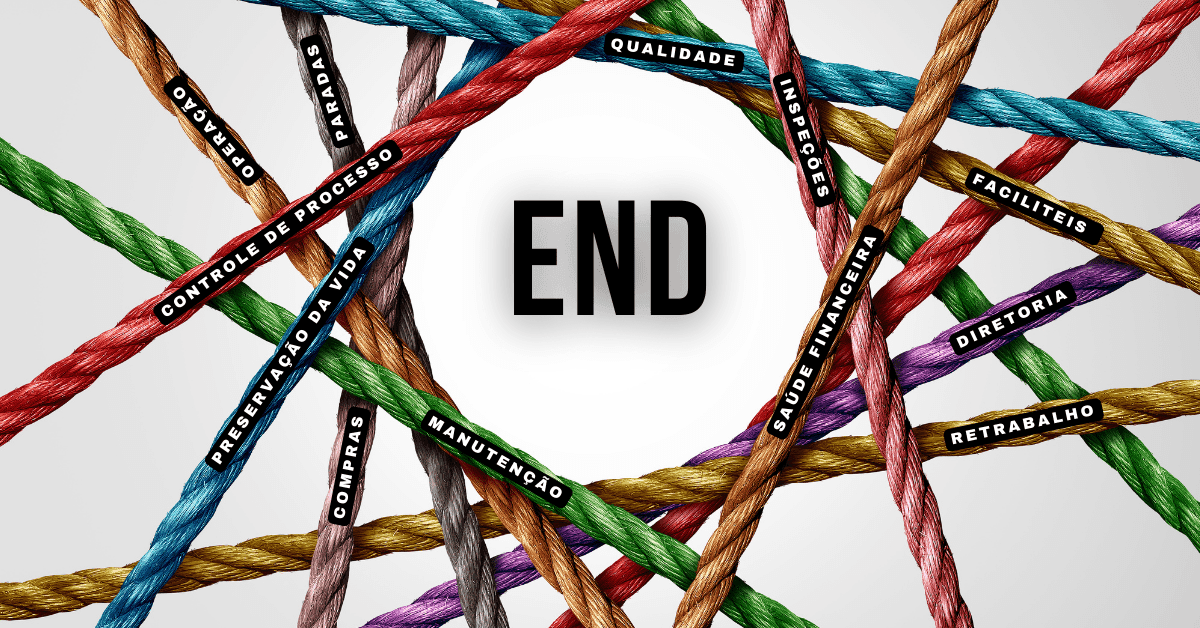
In an increasingly demanding industrial environment, where failures can result in accidents, unscheduled downtime, and significant financial losses, END (Non-Destructive Testing) acts preventively, allowing the identification of discontinuities before they evolve into critical failures. This control impacts the entire organization, from the purchasing department to senior management, strengthening the industry as a whole.
Non-Destructive Testing: More than inspection, an industrial strategy
Non-destructive testing comprises a set of inspection methods used to assess the integrity of materials, components, and structures without compromising their future use.
Methods such as Liquid Penetrant Testing (LP) , Magnetic Particle Testing (MP) , and Leak Detection are widely applied in manufacturing, maintenance, and operational inspections. They allow for the early identification of discontinuities, defects, or inadequate conditions, ensuring greater reliability in industrial processes. When correctly specified and executed, END ceases to be merely a regulatory requirement and becomes an instrument for quality and risk management .
Strengthening industry and preserving life
One of the main pillars of Non-Destructive Testing is safety. The integrity of equipment, structures, and components is directly related to the protection of people, the environment, and industrial assets.
Undetected defects can result in serious accidents, leaks, structural collapses, and operational interruptions. END (Non-Destructive Testing) acts preventively, significantly reducing these risks by identifying discontinuities in their early stages.
By investing in reliable inspections and appropriate END products, industry strengthens its operations, increases the reliability of its assets, and plays an essential role in preserving life .
Cost reduction and impact on the company’s financial health
Although often viewed merely as an operational cost, Non-Destructive Testing, in practice, represents an investment with a measurable return.
Early fault detection prevents:
- unscheduled stops;
- rework and scrapping;
- catastrophic failures;
- Accidents with human, environmental, and financial impact.
When compared to the cost of an operational failure, the investment in END (Non-Destructive Testing) and quality products becomes small. Companies that adopt routine inspections and structured END programs show greater cost predictability and better financial health over time.
END as a quality inspection and routine tool
Non-destructive testing is widely used as a quality control tool, both in production processes and in maintenance programs.
They act at different times:
- Raw material inspection;
- welding process control;
- verification of manufactured components;
- periodic maintenance inspections.
Routine END inspection demonstrates industrial maturity, enabling traceability, standardization, and compliance with technical standards and contractual requirements. In this way, END directly contributes to the final quality of the product delivered to the customer.
How a quality product in END impacts the entire company
Choosing the right products for Non-Destructive Testing goes far beyond the technical aspects. A low-quality END product can generate hidden costs and compromise the entire inspection system.
The impact is reflected in various sectors of the company:
Purchases and acquisitions
Reliable products reduce rework, internal complaints, and performance variations, facilitating standardization and supplier management.
Maintenance
Consistent results allow for more accurate diagnoses, avoiding unnecessary interventions or recurring errors.
Quality
Reliable testing reduces nonconformities, unwarranted rejections, and increases the credibility of inspection results.
Facilities and operation
The reliability of END (Non-Destructive Testing) ensures operational continuity, safety, and a longer lifespan for assets.
Board of Directors and Management
Risk reduction, cost predictability, and preserving the company’s image directly impact strategic decisions.
Financial health: Fewer failures, fewer accidents, and fewer stoppages result in greater operational efficiency and business sustainability.
Non-Destructive Testing Solutions as a Reliability Factor
For END (Non-Destructive Testing) to fulfill its strategic role, the correct combination of the following is fundamental:
- appropriate test method;
- qualified and approved technical procedure;
- qualified professionals;
- Products developed in accordance with applicable technical standards.
Reliable END solutions contribute to consistent results, operational safety, and regulatory compliance, strengthening the entire industrial chain.
Final considerations
Non-destructive testing is an invisible pillar of modern industry. It protects people, ensures the integrity of assets, reduces costs, and sustains the quality of products and processes.
Companies that view END (Non-Destructive Testing) merely as an obligation miss the opportunity to use it as a strategic tool for management, safety, and sustainability . Conversely, those that invest in reliable inspections, quality products, and technical expertise strengthen their operations and build a legacy of industrial excellence.
Excellence in products for those seeking reliable results
Metal-Chek provides complete solutions for Non-Destructive Testing , with products developed according to the main ASTM, ISO, ASME, NM and PETROBRAS standards, contributing to the quality, safety and reliability of industrial inspections.
👉 Access our blog and check out various technical content about END
👉 Follow Metal-Chek on Instagram: @metalchek and on LinkedIn
