
Tag Inspection

Operation and END: a strategic partnership in Quality Control

In an industrial setting, Quality Control is responsible for ensuring that products and processes meet established technical, regulatory, and contractual requirements.

Non-Destructive Testing (END) is an integral part of this Quality Control system. It consists of technical tools used to verify the integrity of materials and components without compromising their future use.

However, in many industrial environments, there is a disconnect between operations and the Quality or END departments.

On one side, those who execute.
On the other, those who inspect.

When this relationship is misunderstood, the perception arises that inspection exists only to point out flaws or interrupt the process. This view generates internal noise and weakens the quality culture.

Operation and END are not competitors. They operate at different stages of the same objective: ensuring the technical conformity and reliability of the final product .


The role of the operation in process integrity

Execution is the foundation of any industrial result.

It is the operational team that applies procedures, controls parameters, performs welding, assembly, and adjustments that determine the component’s performance.

Quality begins in the production process. When execution is consistent and aligned with technical requirements, inspection tends to confirm this conformity.

The operation, therefore, is not merely an executor; it is an active part of the quality control system.

The role of END in technical verification

Non-destructive testing serves to verify whether a product meets integrity criteria.

END does not create discontinuities.
It evaluates what is already present in the material or what is inherent to the manufacturing process.

When a relevant indication is identified, the objective is technical: to prevent an unsuitable condition from progressing in the process or reaching the customer.

Internal inspection reduces major risks, avoids external impacts, and preserves the integrity of the production system.

When conflict arises

Disagreements between operation and quality often arise when inspection is perceived as an obstacle to the pace of production.

However, a nonconformity identified internally represents an opportunity for controlled correction. Conversely, a failure detected externally can compromise contracts, schedules, reputation, and operational safety.

END acts as a validation step within the production flow, not as a barrier, but as a mechanism for technical verification.

When operations and END work as partners

Mature industrial environments exhibit clear characteristics:

  • The operational team understands the acceptance criteria applicable to the process;
  • The inspector understands the variables and limitations of the production process;
  • There is objective technical communication;
  • Adjustments are treated as process improvements, not as personal conflicts.

When integration exists:

✔ Rework decreases
✔ Process predictability increases
✔ Approval rate improves
✔ Trust between departments is strengthened

Inspection is now recognized as part of the quality workflow, and not as an impediment.

Quality culture: shared responsibility

Quality is not exclusive to the END sector.

It involves planning, execution, verification, and continuous improvement. When everyone understands their role within the system, the environment becomes more collaborative and technically consistent.

A strong quality culture reduces costs and improves performance indicators in a sustainable way.

Procedures and products as elements of stability

The partnership between operations and END also depends on a solid technical foundation:

  • clear and well-defined procedures;
  • objective acceptance criteria;
  • Standardization of inspection methods;
  • Reliable and consistent inspection products.

When parameters are clearly defined and the products used deliver consistent, specification-compliant performance, the process becomes more stable and technically reliable. Consistency in results strengthens trust between departments.


Operation and Non-Destructive Testing operate at different stages of the process, but share the same purpose: to ensure that the delivered product conforms to integrity requirements.

Overcoming the idea that the quality sector is merely a “pointer of errors” is essential to consolidating more mature, cooperative, and efficient industrial environments.

When execution and verification work in an integrated way, the result is a more stable, safe, and reliable production system.


Excellence in products for those seeking reliable results.

Metal-Chek provides complete solutions for Non-Destructive Testing, with products developed according to the main ASTM, ISO, ASME, NM and PETROBRAS standards, contributing to consistent and technically reliable inspections.

– Read more technical content about END on our blog
– Follow Metal-Chek on Instagram: @metalchek and on LinkedIn
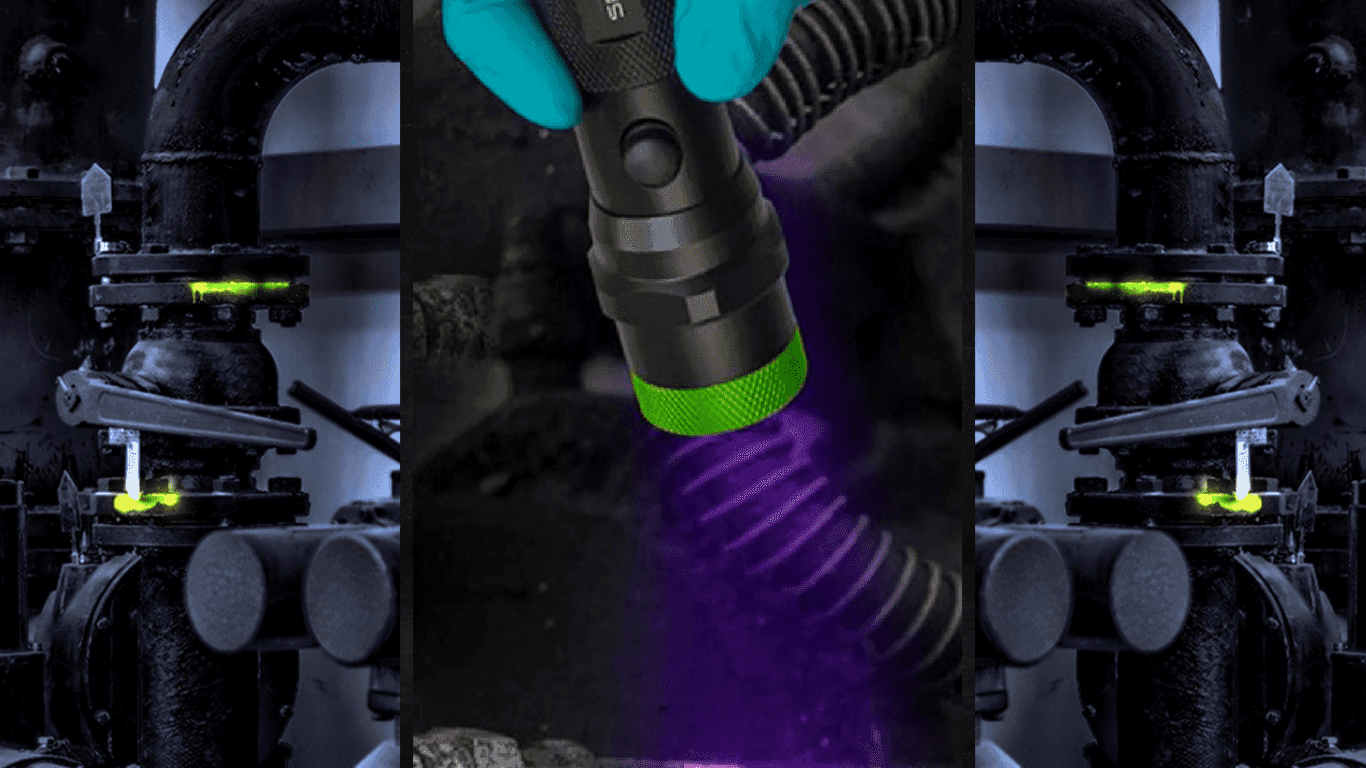
Industrial Leak Detection with Fluorescent Additives and UV Light: A Non-Destructive and Efficient Method

Industrial leaks are not just an operational headache. They can compromise a plant’s safety, productivity, and environmental compliance. Therefore, early leak detection is an essential practice for any modern industry, especially in contexts like Industry 4.0, where continuous monitoring and predictive maintenance are key to efficiency.

In this article, we will explore one of the main methods for detecting industrial leaks, focusing on non-destructive techniques based on the use of fluorescent additives and UV flashlights. The goal is to provide a comprehensive, technical, and accessible overview for professionals working in industrial maintenanceinspection, and sectors where operational reliability is non-negotiable.

Why is accurate leak detection vital?

Before we delve into the method, it’s worth reiterating: leaks can cause significant damage. We’re talking about:

  • Loss of industrial fluids (oil, gas, water, compressed air, refrigerant, among others);
  • Increased operating costs;
  • Risks of fire or contamination;
  • Damage to equipment and structures;
  • Production interruptions;
  • Legal and environmental non-conformities.

In a scenario where predictive maintenance is increasingly integrated into industrial strategies, the use of non-destructive testing (END) to identify and correct leaks has become a competitive differentiator.

The technology of fluorescent additives

Detection with fluorescent dyes is one of the safest, simplest, and most effective techniques for identifying leaks. The fluorescent additive works effectively in any closed circulatory system where liquids are used for lubrication, hydraulics, cooling control, and fuel systems.

The method involves adding a fluorescent additive — usually a colored liquid miscible with the system fluid (such as oil, water, fuel, or coolant) — which concentrates at the leak points. When exposed to ultraviolet (UV) light, this additive emits intense fluorescence, making even the smallest leaks visible.

How the method works:

  1. Fluorescent dye is added to the system to be inspected (pipes, tanks, heat exchangers, radiators, hydraulic systems, etc.).
  2. After a period of operation, the system is inspected with a UV flashlight .
  3. Leaks are visually identified as bright spots, usually in shades of green or yellow.

Advantages:

  • Non-destructive method;
  • Affordable cost;
  • Quick and visual detection;
  • Excellent for small leaks;
  • Compatible with various types of fluids.

Typical applications:

  • Industrial and automotive refrigeration systems;
  • Oil pipelines;
  • Plumbing installations;
  • Reservoirs;
  • Air conditioning equipment (HVAC/R).
  • Fuel lines;

The role of UV flashlights

UV flashlights are indispensable tools in this process. Their main function is to emit ultraviolet radiation, in the 365nm range, to excite the fluorescent molecules of the additive, making the leak visible to the naked eye.

Characteristics of UV flashlights:

  • Laptops;
  • Battery powered;
  • IP certification;
  • Specific power and wavelength for greater visual contrast;
  • Long range;
CriterionFluorescent + UV Additive
Type of leak detectedVisible fluid (oil, water, fuel)
CostLow
Ease of useHigh
Requires system shutdown.In some cases
Ideal for predictive maintenance.Yes
Digital data generationNo

Good practices in leak inspection

  • Use certified additives that are compatible with the system fluid;
  • Follow the manufacturer’s instructions regarding concentration and circulation time;
  • Use UV flashlights with the appropriate wavelength;
  • Document the identified leak points with photos and technical reports.

Safety and environment

The choice of method should always consider environmental and health impacts. High-quality fluorescent additives have NSF and OEM Grade certification, but their disposal must comply with local environmental regulations. The use of UV flashlights must also follow safety standards, avoiding prolonged direct exposure to radiation.

Conclusion: technology combined with intelligent maintenance

Leak detection using fluorescent additives and UV flashlights represents an efficient, affordable, and visually powerful solution for maintaining the integrity of industrial systems.

If your company operates in the industrial and commercial sectors, industrial maintenanceinspection, and welding, incorporating these practices can represent significant cost savings, in addition to ensuring compliance, safety, and performance.

Want to know which fluorescent additives and UV luminaires are ideal for your type of application? Talk to the Metal -Chek technical team — a national specialist in solutions for Non-Destructive Testing .

Contact us: (11) 3515-5287

Follow us on Instagram: @metalchek

Visual Inspection (Visual Testing – VT): The First Steps to Identify Equipment Faults

Every effective inspection begins with observation — not just what the eyes see, but what a technical and experienced eye is able to interpret. Visual Inspection (VI) is the initial step in identifying discontinuities , defects, wear, and anomalies that can compromise the integrity and performance of equipment.

More than just a superficial check, VT acts as an initial filter in quality control, directly contributing to cost reductionrisk prevention, and increased operational efficiency.

Furthermore, visual inspection serves as the gateway to more advanced non-destructive testing techniques, such as penetrant testing, magnetic particle testing, and ultrasound. In other words, when a visual indicator is detected, it’s the right time to deepen the analysis with complementary and more sensitive methods.

Although it seems simple, visual inspection requires much more than just “looking”:

  • Technical training
  • Knowledge of acceptance criteria
  • Adequate lighting
  • Support tools and instrumentation
  • Evidence documentation

Visual Inspection in the Industry 4.0 Era

Those who think that Visual Inspection (VI) has lost importance with the advancement of automation are mistaken. On the contrary — it has evolved and integrated with new technological resources, expanding its reach, precision, and speed.

Today, VT is an active part of Industry 4.0 and can be combined with state-of-the-art digital solutions:

  • Artificial intelligence for image recognition.
  • Drones for inspections at heights or in hazardous areas.
  • 4K cameras with thermal sensors
  • Predictive analytics connected to digital dashboards

Most common applications of visual inspection.

Visual Inspection (VI) is widely used in various industrial sectors as a quick and effective assessment tool. Its main objective is to identify visible irregularities that may compromise the structural integrity, functionality, or safety of components and equipment.

The following table summarizes the main applications and what is sought to be identified in each case:

ApplicationWhat are we trying to identify?
WeldingCracks, porosity, lack of fusion or penetration
Pressurized equipmentCorrosion, deformation, leaks
Metal structuresDeformations, warping, cracks
Ducts and pipingLeaks, oxidation, deterioration
Machines and moving partsWear and tear, misalignment, fractures

Equipment and Resources Used in Visual Inspection

Although many visual inspections are done with the naked eye, the use of auxiliary equipment significantly enhances the accuracy and reliability of the test. Some resources used include:

 Adequate natural or artificial light: Ensures adequate visibility. Poor lighting can compromise the detection of discontinuities.

Magnifying glasses and magnifying lenses: They amplify small details, allowing the identification of surface cracks, porosity, inclusions, or lack of fusion in welds.

Borescopes and industrial endoscopes: Optical instruments used for inspecting hard-to-reach areas, such as pipes, internal welds of pressure vessels, and aeronautical components.

Rulers, gauges and jigs: Tools for measuring dimensions, weld angles, weld bead profiles and alignments.

High-resolution cameras: They facilitate photographic documentation and historical comparison during periodic inspections.

Digital inspection and recording software: With the advancement of Industry 4.0, integrating visual inspections with digital systems allows for recording occurrences, generating reports, and maintaining traceability in accordance with regulatory requirements.

Tip:
In low-light environments, the use of adequate artificial light is not optional — it’s mandatory.

Best practices in performing visual inspections.

To ensure the effectiveness of visual inspection and the reliability of results, it is essential to adopt well-defined operational practices. Standardizing execution through written procedures and operational checklists helps minimize human error and ensure consistency in assessments. A simplified model is presented below that can be adapted to the needs of each sector:

BEFORE INSPECTION:

  • Check that the surface is clean (free of contaminants such as paint, oil, grease, rust, dust, or debris).
  • Check the ambient lighting (it should be sufficiently intense and evenly distributed, allowing for an accurate assessment of the surface. It is important to avoid reflections, shadows, or glare, especially on polished materials or those with irregular geometry. In locations with little natural light, the use of adjustable and directional artificial light sources is recommended to ensure good visibility).
  • Assess the inspector’s physical and visual condition (e.g., fatigue, use of glasses).
  • Assess the need for additional equipment and resources.

DURING THE INSPECTION:

  • Observe surface continuity: deformations, cracks, oxidation.
  • Check weld beads: profile, spatter, lack of fusion.
  • Use magnifying glasses on areas with suspicion or small details.
  • Photographing and documenting irregularities
  • Assess the need for additional tests (liquid penetrant, magnetic particles, etc.).

AFTER INSPECTION:

  • Record keeping and traceability (maintaining a history of inspections, photos, reports, inspection maps, and checklists with acceptance criteria. These records ensure traceability, effective audits, and support decision-making).
  • Storing records digitally ensures traceability and facilitates audits.

Integration of Visual Inspection with Other END Methods

Visual Inspection (VI) is the starting point for most Non-Destructive Testing (END). While it can identify various surface flaws, it does not always provide sufficient information for a complete assessment of the component’s integrity. Therefore, it is essential to integrate it with complementary methods, especially when there are visual suspicions that require technical confirmation.

The table below shows how VT connects to the main END methods and the benefits of this combination:

Complementary MethodApplication after VTCombined benefits
Penetrant Testing (PT)Detection of cracks and open discontinuities on the surface.Confirms and verifies suspicious visual indications.
Magnetic Particles (MP)Inspection of ferromagnetic parts. Detects surface and subsurface flaws.Increased sensitivity in critical areas, such as welds.
Ultrasound (UT)Assess the internal integrity of the part.It identifies internal flaws that are not visible externally.
Radiography (RT)Reveals volumetric discontinuities in welds and castings.High reliability and permanent visual documentation.

Normative References

Visual inspection is governed by several technical standards that ensure standardized procedures, reliable results, and compliance with legal and industrial requirements. Below, we highlight some applicable technical standards:

  • ISO 17637 – Visual Inspection of Welds in Metallic Materials: establishes requirements for performing visual inspection of welds, including acceptance criteria and recommended techniques.
  • NBR 14842 – Visual Inspection of Welds: national procedures and requirements that guide the practice of visual inspection of welds.
  • ASME Section V, Article 9 – Requirements for Visual Inspection: a standard widely used in the pressure equipment and boiler making industry.
  • Petrobras Technical Standards (Examples: N-1596, N-1598, N-2370) – Specific guidelines for visual inspections in the oil and gas sector.

The First Line of Defense for Quality

Visual inspection is much more than just a keen eye—it’s an essential technical barrier against failures that compromise safety, productivity, and regulatory compliance.

Implementing a well-structured visual inspection program is the first step towards operational excellence. Furthermore, when combined with Metal-Chek methods such as Liquid Penetrant, Magnetic Particle, and Leak Detection, visual inspection transforms into an ecosystem of industrial reliability.

Next Steps for Your Company

To strengthen your visual inspection program and increase the reliability of your processes, consider:

✅ Assess the maturity of your visual inspection program.

✅ Empower your team with training based on recognized standards.

✅ Standardize checklists and procedures with specialized technical support.

✅ Invest in quality accessories and equipment to complement the visual stage.

If your company wants to increase process reliability and ensure technical compliance, Metal-Chek is your ideal partner.

Speak with our technical team and discover how we can help transform your inspection routines into competitive advantages. 

Follow us on Instagram: @metalchek

Contact us at: (11) 3515-5287

Translate