How to Choose the Ideal Penetrant Testing Process for Your Application?
Non-destructive testing plays a crucial role in detecting discontinuities in materials, preserving their integrity. Among the available inspection techniques and methods, the liquid penetrant inspection method stands out for its efficiency and versatility. However, choosing the correct method requires attention to some key factors.
1. Choosing the Type of Penetrant Liquid
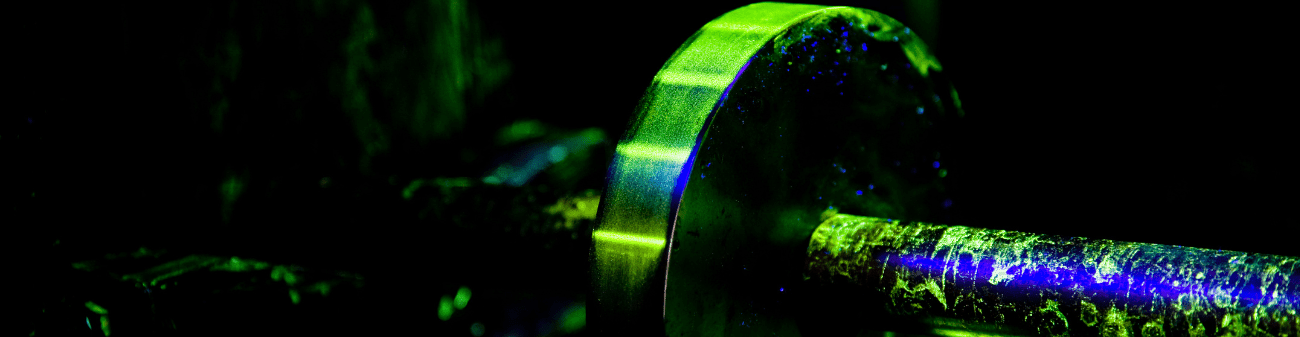
- Fluorescent (Type 1): Ideal for inspections requiring high sensitivity, such as in the aerospace industry. This type of liquid glows under ultraviolet light, facilitating the detection of micro-discontinuities.
- Visible (Type 2): Easy to apply and requiring no special lighting, it is perfect for routine or low-complexity inspections.
2. Removal Methods
- Water washable (Method A): More practical and faster, suitable for large pieces or those with complex geometries.
- Post-emulsifiable: Provides greater control over the process, as an emulsifier is applied before removal with water. It is recommended for situations where precision is essential.
3. Operating Conditions: The environment where the test will be performed directly influences the results. Temperature, humidity, and lighting must be within the parameters indicated for each type of penetrant liquid.
4. Compliance with Technical Standards Standards such as ASTM E-165 are essential to ensure the safety and effectiveness of the process. They describe the requirements for correct application and the procedures to be followed.
Selecting the appropriate penetrant testing process is essential for obtaining reliable and safe results. By considering factors such as material type, environmental conditions, and regulatory requirements, you ensure an effective and high-quality inspection.
If you still have any questions, please contact our technical team. We’ll be happy to help!
